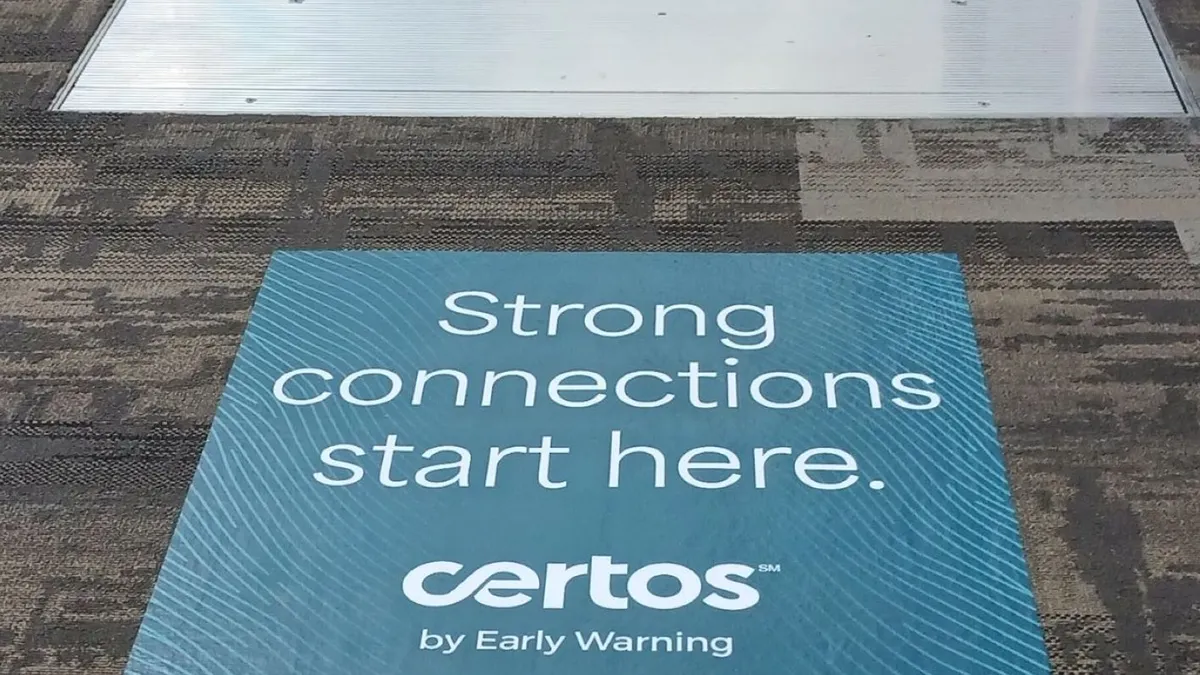
SAN DIEGO — When Early Warning Services unveiled the Certos brand earlier this month, it may have seemed like the company was adding a new unit, but it wasn’t.
The company was simply getting reacquainted with its fraud prevention roots and rebranding that part of the business that gave the company its start back in 1990 when the “early warning” moniker reflected efforts to reduce risk and fraud for banks.
With the need for all industry players to embrace payments modernization, including real-time transactions, and the rising threat of fraud, EWS management sought to reassert its role in providing fraud prevention services.
“Certos brings together decades of trusted fraud prevention capabilities under a unified brand,” the company said in the April 16 rebranding release, noting the operations screened $11 trillion in payments activity last year and sifted through 100 million new bank and credit union account openings.
Ben Chance, who was appointed last year to lead the division that became Certos, explained in an interview at the Nacha Smarter Faster Payments Conference this week in San Diego that fraud is as prevalent today as it was ten years ago. As he looked across the exhibit hall booths at the conference, he noted that a substantial portion were aimed at fighting fraud.
“The industry is at this point where we really, as an industry, need to reinvest in our fraud tools and our fraud capabilities and keep up with the pace of innovation that we're seeing from threat actors,” he said.
While the Scottsdale, Arizona-based company may be better known for its Zelle digital payment services and its digital wallet Paze, the newly dubbed Certos division is its largest by headcount, including almost half of its 1,600 employees. The company works with about 2,500 financial institutions, including the 20 biggest U.S. banks, Chance said.
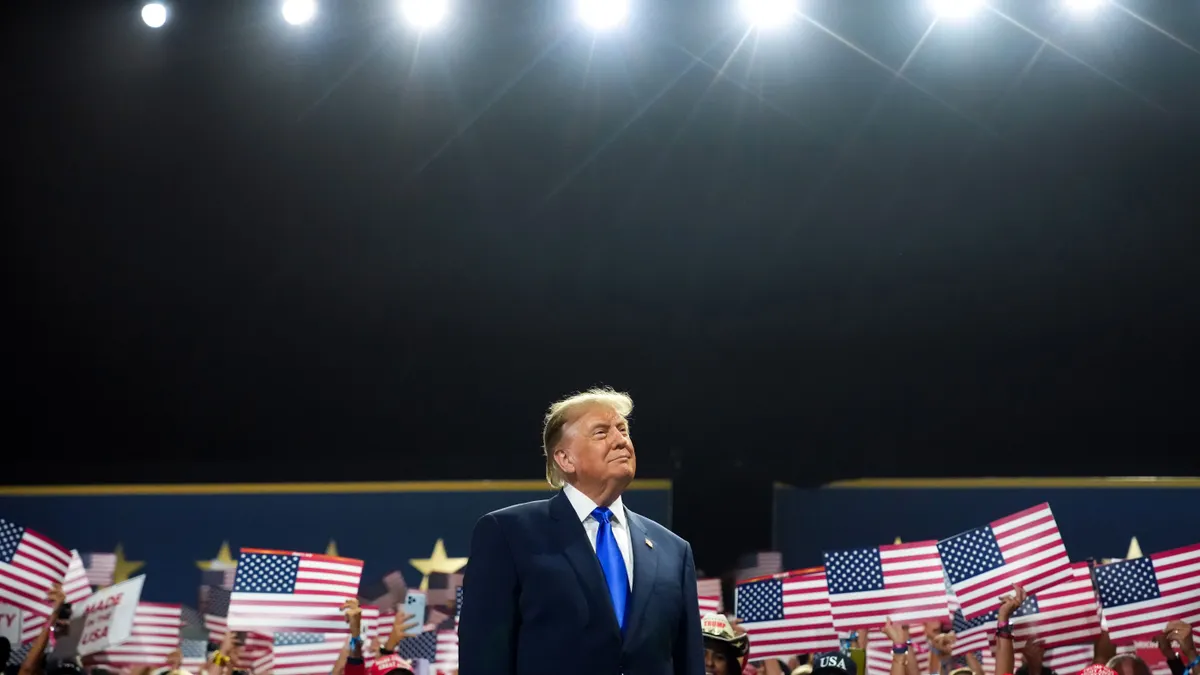
The industry’s modernization trend was pushed along last year by President Donald Trump’s executive order on payments modernization. The order demanded that the federal government shift increasingly to digital payments, but also pressured U.S. companies, which still use a significant amount of paper checks, to do the same.
Since the Federal Reserve launched the instant payments system FedNow in 2023, becoming the second such U.S. system, in addition to the privately held RTP network, there has been more impetus to speed up transactions. Those systems can process payments in seconds as opposed to slower methods that sometimes still take days.
“The industry is changing – everything is moving towards real-time and faster payments,” Chance said. “So, we really needed to have real-time capabilities that would support those faster payments processing and account opening.”
In 2024, the company reorganized into three units, after it appointed Cameron Fowler as CEO in 2023. It named general managers to lead each of them, with Chance heading up Certos, Denise Leonhard leading Zelle and Serge Elkiner overseeing Paze, with all three reporting to Fowler.
Chance and his colleagues are beating back some challenges to the Early Warning Services name in recent years. The company has faced congressional criticism and litigation over scams and fraud perpetrated through its Zelle system, though management has argued such problems affect only a tiny fraction payments.
Still, last year New York Attorney General Letitia James filed a lawsuit against Early Warning Services, alleging the company allowed fraud on its Zelle network for several years, costing consumers more than $1 billion in losses.
The Consumer Financial Protection Bureau filed a similar lawsuit in December 2024 during the Biden administration, alleging the company let fraud “fester” on Zelle, but the litigation was dropped last year under the Trump administration.
Reasserting its place in the anti-fraud realm is a responsibility for the company, as Chance sees it.
“What we saw was not just an opportunity, but an obligation, to retool and to rethink how we were approaching fraud, and what could we do in service of reducing that,” Chance said.
“That’s good for consumers, that's good for small businesses, that's good for financial institutions, and frankly, it's good for the American economy, because we want everyone to be able to trust the payment ecosystem.”