SAN DIEGO — American Express aims to lead the payments industry toward a shared standard for agentic commerce, partly by setting an example with its agentic offering for protecting consumers who use the artificial intelligence-powered transactions.
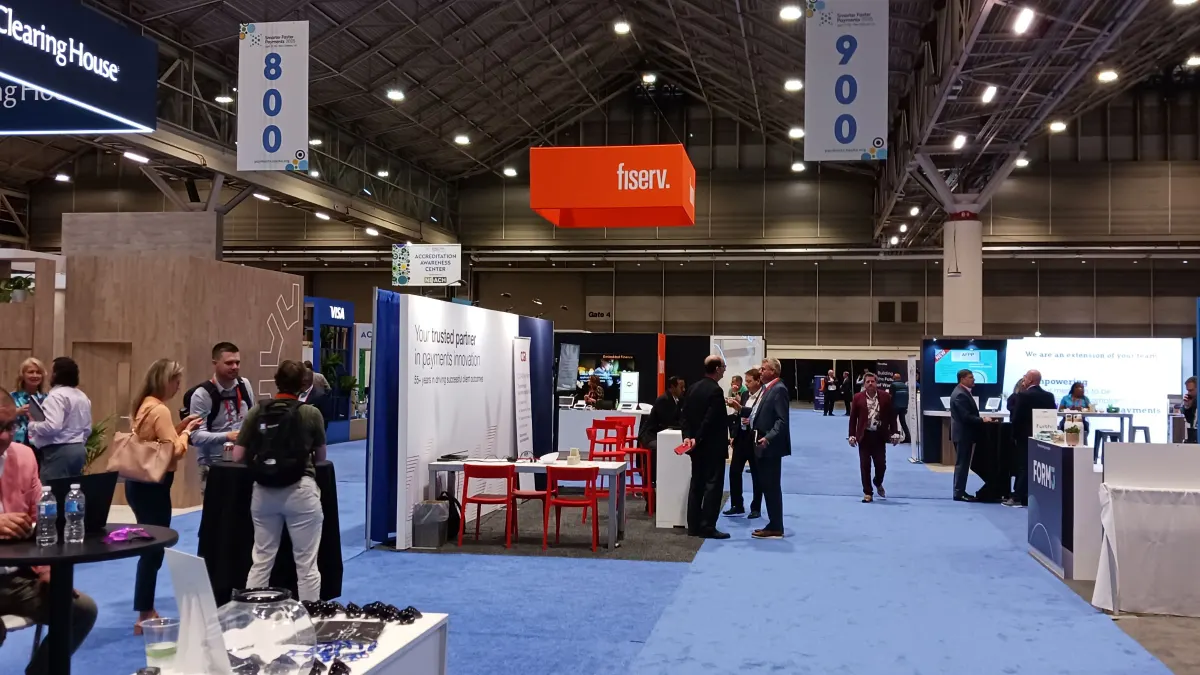
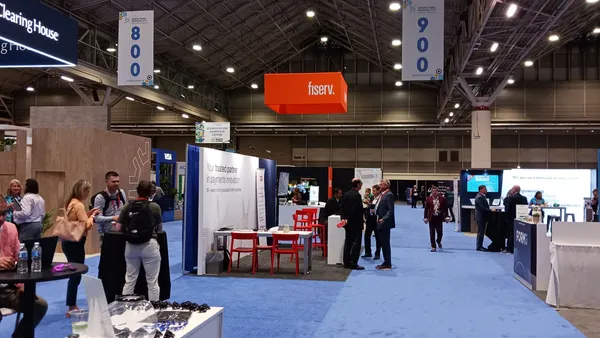
That was the takeaway for attendees at a Nacha Smarter Faster Payments panel discussion Tuesday where two Amex executives provided more information on the card company’s evolving agentic service.
The world of agentic commerce involves AI agents responding to consumer requests for specified purchases. Companies are still developing such bot-driven offerings, with few consumers actually executing transactions at this point. Eventually, the expectation is that the payments would be automated as well.
That type of bot e-commerce in the U.S. could amount to somewhere between $190 billion and $385 billion by 2030, investment bank Morgan Stanley estimated in December.
Amex Senior Vice President Stefan Olofsson, who is general manager of Amex’s global network, explained to listeners during the panel that Amex “intentionally” took its time exploring the agentic issue, while peers ran ahead, because the company wanted to be sure it was meeting the needs of all participants in the payments ecosystem, he said.
The result was an announcement from Amex earlier this month that explained how it was structuring the agentic commerce experience for its card holders, their agents and merchants. Importantly, the card company purported to be the first among peers to offer protections for card holders troubled by a wayward bot.
If an American Express card holder authorizes an AI agent to make a purchase, and the bot sends the customer’s “authenticated purchase intent,” the card company “will protect eligible customers from charges related to AI agent error,” Amex said in an April 14 press release, noting that terms and conditions will apply.
“Our goal is to ensure that when an agent acts on a Card Member’s behalf, the identities of both the human and the agent are authenticated and intent is clear,” to safeguard card holders from “registered agent error,” the release said. It’s an attempt to build “transparency, accountability and confidence,” the release said.
Disputes will emerge
Olofsson doubled down on that notion during the panel discussion, titled “Agentic Commerce Is Here — Are Disputes Soon to Follow? He said: “The card member needs to trust that their card details, or membership details, are secure within the AI environment [and] the merchant needs to trust that the AI is not going to generate [a] rise in disputes or chargebacks and issues for them.”
To pull that off, it’s likely merchants will want assurances that they can handle AI transactions similarly across card companies, including Amex’s rivals Visa and Mastercard. While those larger competitors have announced moves toward their own agentic protocols, Amex appears to be plugging for a shared approach that will make it easier for all parties to the transaction to work together.
“Agentic commerce only works if the ecosystem works together,” Olofsson said, pointing to the need for interoperability. “No single player owns the full end-to-end journey – that means we need standardization and secure transactions between agents and payment systems,” he explained.
When asked about teamwork among the card companies after the panel discussion, he declined to elaborate.
During the panel discussion, he noted some industry players have come together in an effort to set standards, including Amex and Stripe, as well as artificial intelligence firm OpenAI and organizations such as chip technology standard-setter EMVCo and the passkey proponent Fido Alliance.
Visa, Mastercard weigh in
When Visa CEO Ryan McInerney was asked about agentic fraud during a Tuesday earnings call and the Amex effort to shield its customers, he suggested his company would offer similar protections.
“This is all very early, and I think as the agentic commerce use cases and threat vectors start to mature, we'll adapt and evolve our capabilities and our rules, as we have historically,” McInerney told analysts on a webcast.
Visa’s CEO also seemed to suggest some level of cooperation will be required of participants involved in agentic commerce. “As all of this starts to mature and evolve, we’ll evolve our rules with full buy-in from the entire ecosystem,” he said.
A spokesperson for Mastercard, the no. 2 U.S. card network, said that the company would offer the same protections for its agentic tool, called Mastercard Agent Pay, that it has provided for card services.
“With Mastercard Agent Pay, consumers and merchants should expect the same brand promise they trust today – strong security, fraud protection and dispute resolution – whether a payment is made by a person or an AI agent,” the spokesperson said by email.
Olofsson’s colleague on the panel, Judy Nguyen, Amex’s vice president of enterprise payments, underscored that the technology is still nascent. To help it grow, trust and transparency will be “critical” components for customer-authorized transactions to known recipients, with data to back it up, she said.
For now, agentic payments are mainly being used for repeat and low-value purchases, mainly at large retailers, and for subscriptions and bill payments, she said, predicting that will continue to be the case for the next 12 to 18 months.
In the meantime, there will be more experimentation with agentic commerce and the industry will have to consider how different payment rails offer similar protections, Nguyen added. Consumers engaging in agentic transactions will likely have the same expectations for protections whether they’re using cards or pay-by-bank, she said.
“The liability framework needs to be in place, and needs to be made clear to the customer, in order for them to feel comfortable with that transaction,” she said.
Justin Bachman contributed to this report.