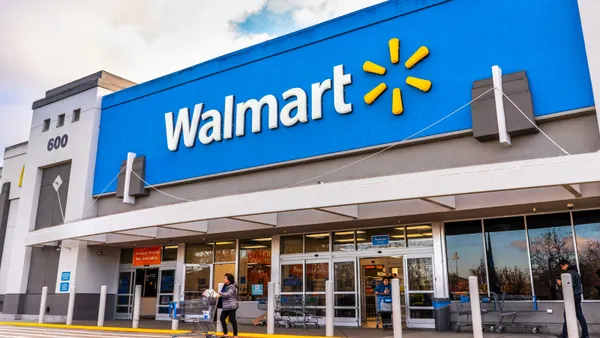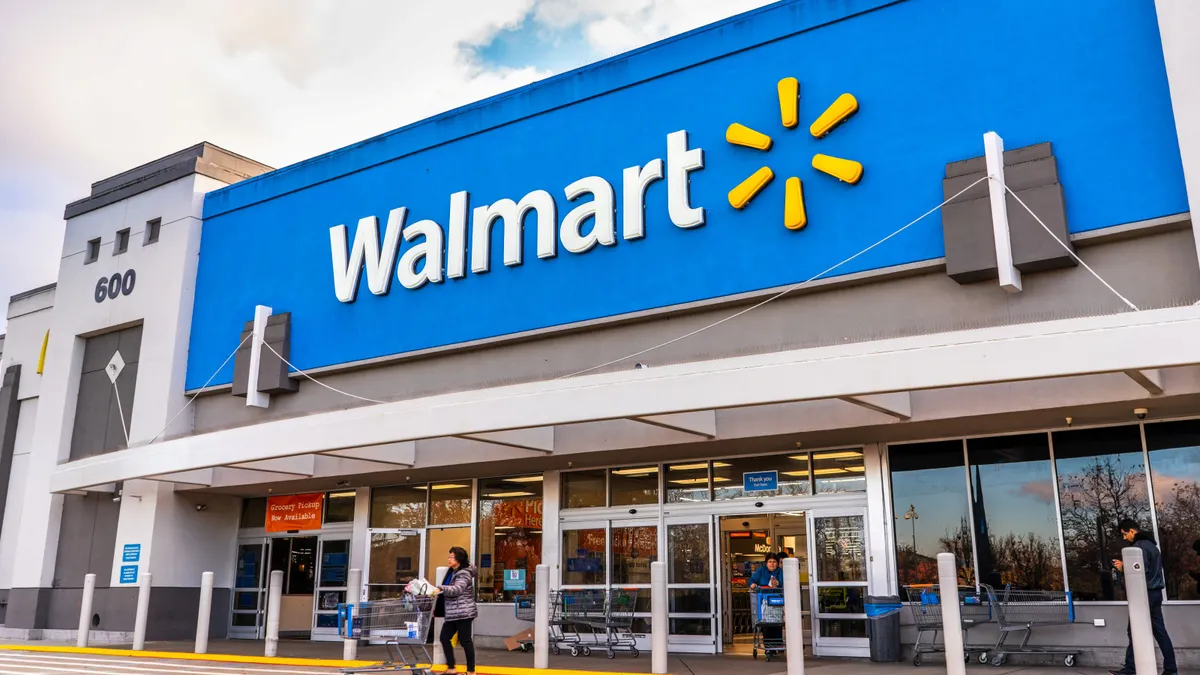
Walmart and about 1,000 other merchants are asking a judge to reject final approval of a credit card fee settlement, arguing that it gives Visa, Mastercard and large banks “sweeping” immunity while offering merchants “temporary and meager relief.”
The largest U.S. retailer renewed its battle Monday against the settlement, asking a federal court to reject it, while joining with Circle K and the National Association of Convenience Stores in asking U.S. District Judge Brian Cogan to allow them to opt out and not be bound by the settlement, citing their constitutional rights.
“There has never been a mandatory (class action) settlement like this — one which would rework the payments system at the heart of the U.S. economy, based on speculative economic theory that has not even had the benefit of adversarial testing,” Walmart said in its 299-page legal broadside against the pact.
Walmart, Circle K and NACS said that forcing them to participate in the class unwillingly raises constitutional concerns under the Fifth Amendment’s “takings clause,” which prohibits the government from imposing economic disadvantage without proper compensation.
“NACS members are differently situated from other class members under the settlement specifically and are being treated inequitably by the settlement, warranting decertification if the settlement is approved and opt-out is not permitted,” the association and Circle K wrote Monday in their decertification motion.
Walmart has filed similar class decertification requests before, most recently in late 2025, which the court has declined. The latest request, if granted, would dissolve the group of about 12 million merchants designated as plaintiffs for the class action.
Merchants detail faults
Separately, a group of 29 merchants – including The Cigna Group, DoorDash, General Motors and Peet’s Coffee – also asked Cogan on Monday to reject the settlement, joining more than 900 merchants and trade associations that filed a similar objection on Thursday. They include the National Grocers Association, the National Restaurant Association and NATSO, the association that represents truck stops and travel centers.
In their filings, they called the settlement “inadequate” and said it “entrenches” the card networks’ “anticompetitive system of fees and rules.”
Merchants and their trade groups who wanted to offer their views of the proposed settlement had until Monday to file their comments with Cogan, who is overseeing the multidistrict litigation in the Eastern District of New York.
Cogan gave the pact preliminary approval in June, and subsequently set a Nov. 16 hearing for arguments on whether the pact should be granted final approval. It’s possible that a decision on final approval may come by year’s end; Cogan ruled about six weeks after a hearing in April on the settlement’s merits.
The interchange fee litigation dates to 2005 and follows two prior settlements, both of which were nixed by courts, including the prior settlement proposal that was scotched in June 2024.
This proposed settlement would trim credit interchange fee rates by 0.1% for five years and impose a 1.25% rate for standard consumer cards for eight years. It would also give merchants the right to decline some higher-cost Visa and Mastercard premium and commercial credit cards – a departure from the networks’ “honor all cards” rule.
In 2024, merchants paid a 2.35% fee on Visa and Mastercard transactions, according to a weighted average reported by the research organization Nilson Report last year.
Card swipe fees applied to transactions collectively have increased 80% since the 2020 COVID-19 pandemic, to a record $198 billion last year, according to the Merchants Payments Coalition.
Changes under the pact
Merchants would also gain new rights to add surcharges and offer discounts for credit cards as a way to steer customers away from cards with higher interchange fees, under terms of the agreement crafted by the two sides’ lawyers.
The merchants opposing the settlement also contend that it is “riddled with loopholes that will make the relief largely ineffective.” Among those, the merchants say the settlement would allow “Visa and Mastercard to increase their network fees anytime ‘in response to market conditions.’”
The settlement also doesn’t preclude the networks from creating new types of merchant fees and that, because of the agreement’s liability release terms, would allow Visa and Mastercard legal immunity for any future fees they imposed, the 1,000-member merchant group wrote.
A Visa spokesperson declined to comment Monday on the merchants’ filings and pointed to a company statement when Cogan initially approved the settlement. “We believe the proposed settlement would provide U.S. merchants of all sizes with meaningful relief, more flexibility, and options to control how they accept payments from their customers,” Visa said in June.
A Mastercard spokesperson also nodded to the network’s comments from June that the “settlement agreement delivers on the expectations of the court and balances the interests of all parties involved.”
In their joint objection Monday, the National Retail Federation and the Retail Industry Leaders Association also cited constitutional “infirmities” with the pact.
The settlement “has traded true antitrust reforms that would apply competitive pressure to interchange fees for a series of half-measures that will yield varying, de minimis, or no benefit to millions. In return, it demands an incredibly broad release from a mandatory class with no right to opt out,” the retail groups wrote.
Some small businesses, including a convenience store and gas station, wrote to support the settlement.
“This agreement, which lowers swipe fees and gives businesses like mine more flexibility in how we accept cards and price around processing costs, would provide meaningful relief for an operation my size,” wrote Perry Patel, the owner of Tru Blue, a convenience store and gas station in Exmore, Virginia.
“Small businesses such as ours deserve every advantage available, and this settlement offers exactly that,” Ridge Fuller, owner of Big Daddy Automotive of Berryville, Virginia, wrote in an Aug. 27 letter. “It lowers costs to small businesses by reducing swipe fees without giving up the secure, dependable payment experience that make electronic payments a viable option.”
White House interest
Others found fault in the settlement. The FMI - The Food Industry Association, which represents food makers, grocers and pharmacies, said in its filing that the settlement “does not provide the meaningful relief from or permanent reform of the anticompetitive Visa-Mastercard duopoly that grocers have sought for over two decades.”
Last year, 42% of grocery purchases were made with a credit card, and 76% of all online grocery orders were paid with a credit card, according to data the association cited in its Aug. 28 letter from Stephanie Harris, chief public policy officer and general counsel.
In her letter, Harris also contrasted U.S. credit card fees with the European Union, which caps such fees at 0.3% per transaction, she wrote.
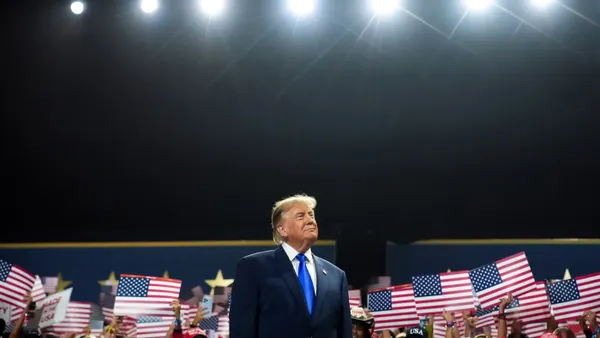
Debate over the settlement comes as President Donald Trump has been agitating this year for Congress to find a way to lower credit card fees, including pushing for passage of the Credit Card Competition Act.
The Republican president again mentioned the issue last week at his political convention in Dallas, while Vice President JD Vance brought up the Credit Card Competition Act on Monday while campaigning in Kansas for the bill’s Republican sponsor, Sen. Roger Marshall. Vance was a co-sponsor of the legislation when he was in the Senate, and called it “an issue that’s close to my heart.”
Marshall “has been the leader on the fight against Wall Street to bring down out-of-control credit card swipe fees, which is going to make life affordable for everyday Kansans and everyday Americans,” Vance said, according to a video clip a Marshall spokesperson posted on the X social media site.