Toast, Square and other point-of-sale hardware providers have resorted to sharp discounting in recent months, analysts say.
Toast and Block-owned Square have led the price-cutting push, sparked by efforts to expand their locations, merchants’ upgrade needs and more expensive equipment, Robert W. Baird analysts said in a client note following their conversations last month at the Western States Acquirers Association conference in California.
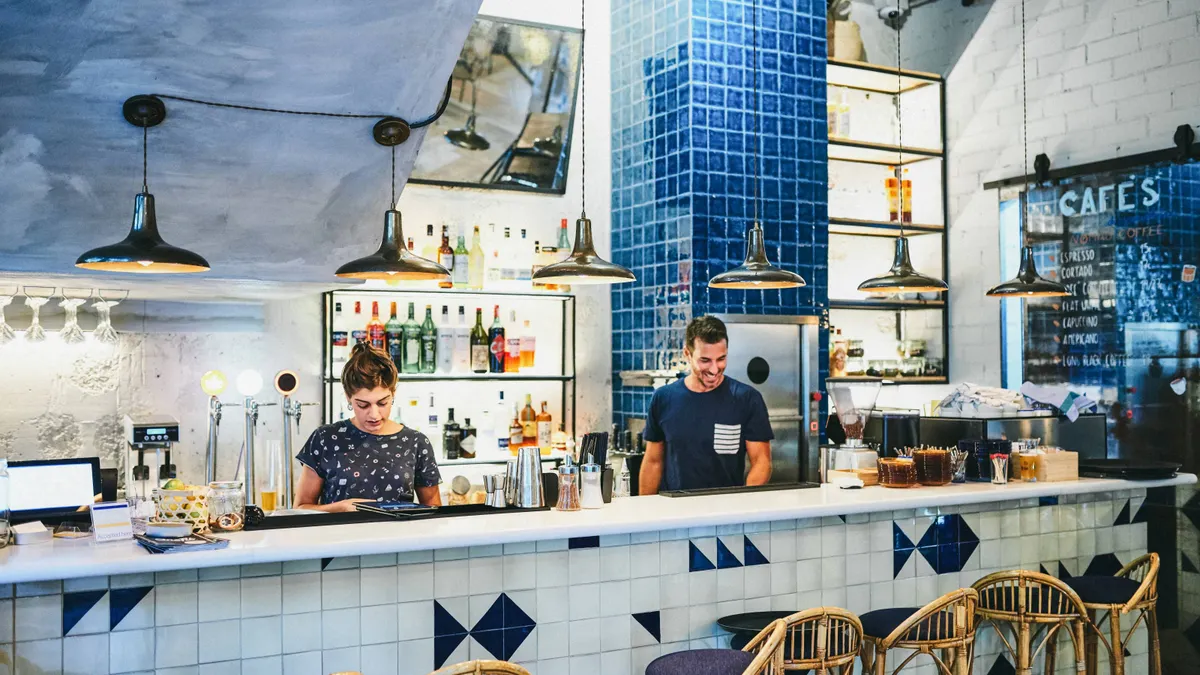
Toast has taken a “proactive” approach to driving equipment into its core business of restaurants, and has used the lure of free hardware coupled with software discounts to do so, said Jacob Haggarty, an equity research associate with Baird Equity Research.
“For Toast, if you get someone on the platform through a discounted hardware, now you’ve got them ingrained in your software,” Haggarty said in a Sept. 28 interview.
Baird analysts called out the discounting in a Sept. 20 client note following their discussions at the three-day acquirers’ event with more than 20 merchant acquirers, independent sales organizations, software vendors and POS providers.
Toast and Square generally rely on direct sales, while Global Payments and Fiserv sell their Genius and Clover POS systems, respectively, primarily through ISOs, Haggarty said. The competitive POS field also includes players such as Shift4 Payments, NCR Voyix and Lightspeed Commerce.
“It’s a very chaotic industry, especially the pricing,” said Cliff Gray, a Chicago-based payments consultant. “In a macro sense, this is business as usual, but I find it particularly chaotic lately.”
Toast has about 180,000 merchant locations using its POS systems, while Square counts about 4.5 million merchants in its seller network.
Spokespeople for Toast and Square did not respond to requests for comment on the topic. Toast President Elena Gomez told analysts in August that the company will invest to propel “continued share gains in the core” business.
The hardware discounting equates to a strategy of “give away the razor and charge for the blade” for merchants who want to install new equipment for several reasons, said Ken Musante, president of Napa Payments and Consulting, a payments and processing consulting firm in Napa, California.
“What is new is the extent and size of the giveaways,” he wrote last week in an email.
Restaurants, for example, are adding far more hardware, including additional POS stations, kitchen printers, handhelds and pay-at-the-table devices, Musante said. “None of these developments individually are revolutionary, but each generation provides the merchant with greater functionality,” he wrote. “It also means that today's POS deployment can be considerably more expensive.”
Hardware itself is becoming more expensive due to memory chips and processor costs, Musante added. Executives at both Toast and Apple mentioned such costs as headwinds on their most recent earnings calls.
The lifetime value of a merchant to a POS seller is also a critical factor in assessing potential price breaks, Musante said. While a POS vendor may offer its hardware for free, they can make the deal financially remunerative through software and processing revenues specified in the merchant’s contract.
“If a provider believes a merchant will generate processing and software revenue for a number of years, subsidizing several thousand dollars of hardware can make economic sense,” he said.
Merchants are also upgrading their POS systems because they want these to do far more than just process payment cards – everything from inventory tracking to financial reporting to managing employees’ schedules, Musante said. “This can also make the merchant more valuable if additional services can be sold,” he noted.
POS sellers make up their discounts in processing or, in a trend becoming increasingly common, from “dual pricing,” in which a merchant charges one price for cash transactions, and another price for card payments that carry a processing fee, Haggarty said.
“Whoever’s selling you your point of sale is going to take the extra … fee that they charge on the card,” he said.
Another factor influencing merchants' POS needs is new data-reporting requirements from card networks Visa and Mastercard, Gray said in an interview Thursday. He founded Lakeland Scientific, a payments consulting firm, last year.
Visa imposed a new program last year that collects more detailed information from merchants, with rival Mastercard planning a similar effort that takes effect in 2027, Gray said.
Those programs are pushing many merchants to upgrade their POS hardware to comply, just as some want to integrate more artificial intelligence-enabled capabilities in their systems, he said.
Merchants that accept credit cards must comply with the network mandates, Gray said. Previously, most retailers did not face such compliance.
Beyond restaurants, Boston-based Toast is focused on growth in the retail and international areas, executives have said. Last week, the company announced a new POS product for gasoline retailers that integrates payments at the pump with a fuel seller’s other systems.
Toast was motivated to move into fuel retailing because about 80% of convenience stores are attached to gas stations, and many are smaller businesses, Toast CEO Aman Narang said last month at the Goldman Sachs Communacopia + Technology Conference.
“I thought of gas stations initially, I guess, as all Shell and Chevron,” he said. “Half the market is actually SMB, and that really speaks to our strength, and so we did the work to integrate into the fuel controller.”