Dive Brief:
- Mastercard has partnered with AI travel-booking company Booked AI and travel retail firm Travelport to enable travel reservations via an artificial intelligence agent, the card giant said in a press release Thursday.
- To facilitate the transaction, Mastercard uses its verification tool to confirm the specific booking amount and the customer’s intent provided previously to an agent. Without that consent, the company would have halted the transaction and asked for the customer’s approval again, the company said.
- When travelers confirm they want to book travel through Booked AI, Mastercard uses its AI agent payment service to mask the customers’ payment information with a digital token and authorize the transaction, per the release.
Dive Insight:
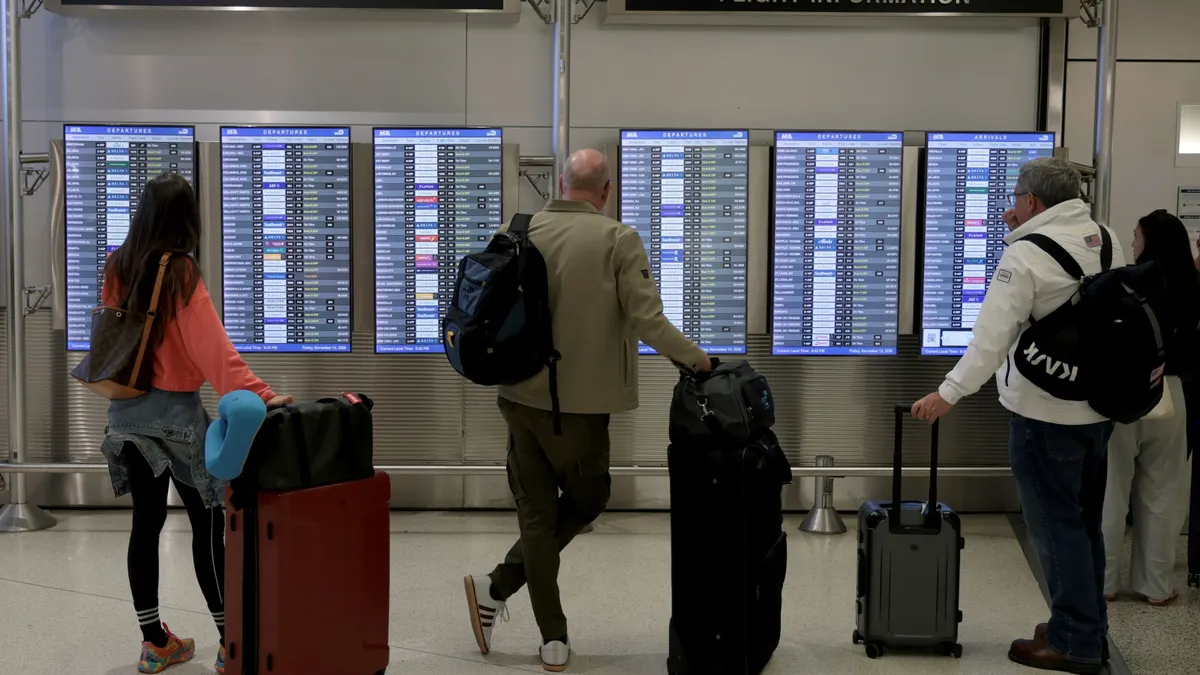
Through Mastercard, Booked AI and Travelport’s travel booking test, the three companies were able to search for, reserve, book and buy tickets for a major airline flight — all while protecting customers’ card information, the Purchase, New York-based card network said. The exercise proved that AI agents could purchase plane tickets while safeguarding consumers’ payments, the company said.
“By connecting innovative AI experiences with established travel and payments infrastructure, we accelerate adoption while maintaining the security, reliability and control that travelers and travel businesses expect,” Mastercard’s president of global partnerships, Eimear Creaven, said in the release.
In addition to building its own agentic commerce services, Mastercard has been developing tools for other companies to do the same. Earlier this year, the company said it would introduce software that its business clients could use to create, pilot and integrate AI agents in their workflows. The AI agents are meant to strengthen businesses’ security, payments and customer service operations.
As Mastercard attempts to put agentic AI in the hands of corporate clients, research by a competitor suggests a gap between companies’ willingness to adopt it and their ability to do so. In an American Express survey released last month, 83% of 502 executives surveyed said they view agentic commerce as an opportunity for their businesses, but roughly four in ten are testing or incorporating the technology.
Like Mastercard, other payments giants have teamed up with tech companies to facilitate agentic AI commerce. In April, digital processor Stripe began allowing product purchases on Google’s AI search app Gemini, allowing AI agents to access their customers' digital Link wallets.
As Mastercard verifies agentic AI transactions, other payments industry heavyweights have expressed concerns regarding customer service issues that can arise from the technology.
During the Nacha Smarter Faster Payments panel in April, Amex Senior Vice President Stefan Olofsson called for an agentic commerce standard that could allow secure transactions between payments providers and agents.
At the Money 20/20 conference last month, PNC Financial Services Group CEO William “Bill” Demchak took tech titans to task for failing to consider the problems agentic transactions could pose for payments providers and consumers alike. “This isn’t like normal technology where you’re allowed to break stuff and figure it out later,” Demchak said during the conference. “You’re messing with people’s lives. It’s money.”
Those foreshadowed challenges have already begun to materialize. Due to cybersecurity concerns and possible federal regulatory violations, United Airlines said last week it is prohibiting “unauthorized” AI agents from reserving flights for customers.