The Federal Reserve has been trying to increase adoption of its FedNow instant payments system, and some regional Fed bank leaders are taking up the campaign.
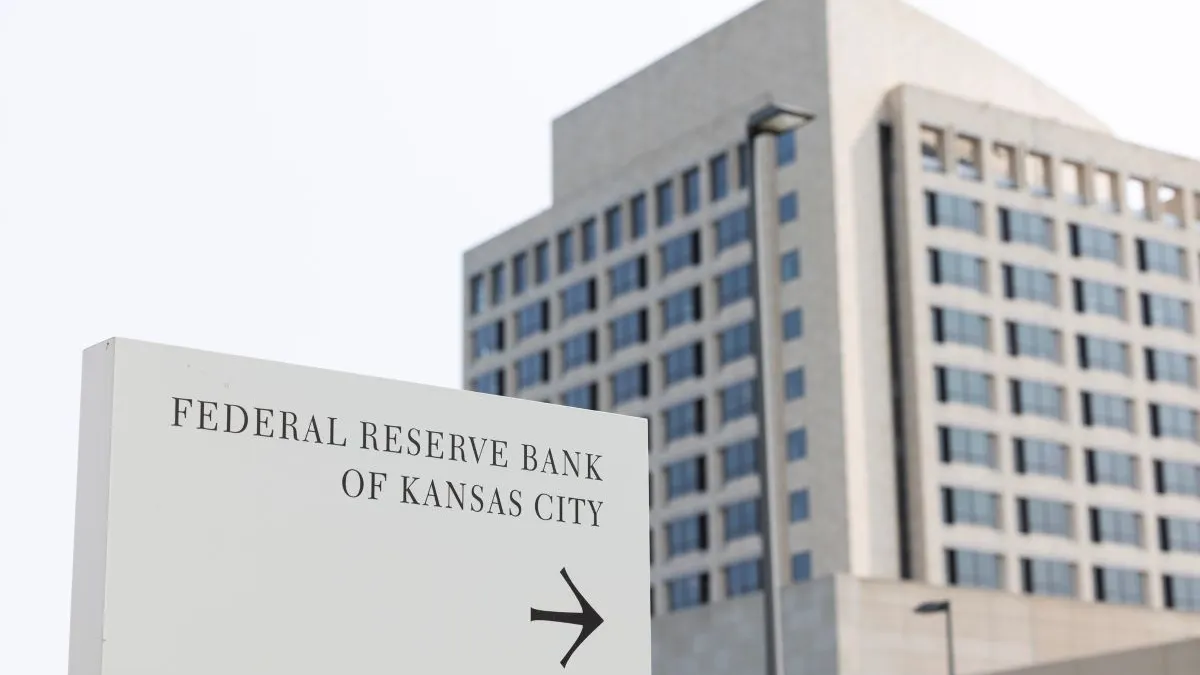
Kansas City Federal Reserve Bank President Jeff Schmid addressed the issue in a speech last week at a National Credit Union Management Association conference. While he talked mainly about the economy, he devoted a significant chunk of the address to encouraging the credit union audience to consider adopting faster payment practices.
“Why do instant payments matter now?” he asked attendees, according to the text of his speech, delivered to the group in Hawaii on Nov. 15. “Because the market has changed.”
Today, 78% of consumers “prefer faster payments when given the option” and 66% of businesses “are likely to use instant payments if their financial institution offers them,” Schmid said, citing Fed research.
Real-time payment systems, like FedNow, allow payments to move within seconds, as opposed to days for some legacy systems. FedNow is also available for use around the clock and on weekends. While that makes such systems more expedient to use, it also presents difficulties if an errant payment needs to be reversed.
Federal Reserve officials have been trying hard to persuade U.S. banks and credit unions to sign up for FedNow since it launched in July 2023, just weeks before Schmid took office the following month. The system is available only to financial institutions in the U.S.
FedNow adoption by financial institutions has been slow-going. In September, the Fed announced it would offer a discount on FedNow fees, starting Jan. 1, 2027, seemingly to spur more interest. Nonetheless, only those enrolled in certain Fed service programs and meeting specified FedNow volume thresholds, are eligible for reduced fees.
Currently, about 2,000 of the approximately 8,400 financial institutions in the U.S. are FedNow participants. That means only about a quarter of the ever-consolidating industry has signed up to be part of the Fed’s faster payments system over the past three years.
That could be partly because the private sector had already created a real-time payments system in the form of the RTP network in 2017, giving it a first-mover advantage in attracting banks and credit unions.
With RTP owned by The Clearing House, which is in turn owned by some of the largest banks in the world, FedNow was expected to have more appeal for smaller financial institutions that might not want to join a network owned by their larger rivals.
How big banks use FedNow
Many of the major U.S. banks, including seven of the ten biggest, also participate in FedNow, giving them a back-up system for faster payments.
For instance, Capital One Financial isn’t interested in “picking a winner” between FedNow and RTP, but rather using both in case one system has a hiccup, said Capital One Managing Vice President Avik Chatterjee, who oversees payments at the bank. He has observed that other banks are doing the same, he said in an interview last month.
“What we want to strive for is, give the redundancy of real-time rails for our customers,” Chatterjee said. “We definitely want to participate on both the rails.”
While the big banks account for the majority of the volume that passes over FedNow, Schmid noted that smaller financial institutions – those with less than $10 billion in assets – make up 95% of FedNow participants.
Still, Schmid presented statistics that show credit unions aren’t necessarily keen to engage with FedNow. Only about 600 credit unions, of some 4,200 in the country, had joined FedNow as of the end of July, equal to about one in seven credit unions nationwide, he said.
“There is room to grow, but the momentum is real,” he observed. “Credit union participation is up more than 40% year-over-year.”
He emphasized that more participation is important because the benefit of the system grows with more endpoints. “A payment network becomes more valuable with every institution that joins, and especially with every institution that can both send and receive,” Schmid said.
Use cases for instant payments that have been gaining ground over the past few years include quick payments to workers through earned wage access services. Also, because real-time systems operate around-the-clock, they are useful for the settlement of transactions that sometimes take place on weekends, like auto loans for the purchase of a car.
It makes sense for consumers and businesses to embrace faster payments, partly because such payments lower risks associated with slower settlement, especially for small businesses that crave price certainty, Schmid said. “Faster access to funds improves liquidity for households and businesses,” he said.
However, of the financial institutions that have chosen to be a part of FedNow, many are hedging their risks by signing up just to receive real-time transactions, but not to send real-time payments. That means they can collect those payments without letting them flow out.
Using FedNow to counter fraud threats
The Kansas City Fed president painted a picture of instant payments being more insulated from fraud risks than some other forms of payment, namely paper checks.
With that comment he was likely trying to counter a concern that banking and financial professionals have had since the advent of real-time payments: That faster payments would result in faster fraud.
It’s an issue that Matt Clark, who is the chief revenue officer for business-to-business payments at the check and fintech company Deluxe, heard industry counterparts talking about earlier this month at the Association for Financial Professionals industry conference. While those professionals are eager to participate in faster payments, they’re balancing that desire with caution related to fraud, he said.
“We'll obviously continue to shift towards faster payments, but there is still that risk of increasing your fraud numbers by allowing that faster payment,” Clark said in an interview Thursday.
Schmid urged the listeners in the audience to consider how they might “offer speed without sacrificing safety.” In addition to security tools built into FedNow that use historical data to spot problematic patterns in real-time, the system lets financial institutions control how they use the system, he said.
“On the sending side, you set your own limits, your own controls, and your own hours, based on what fits your members and your operational capacity,” Schmid said. “What you commit to is being ready to receive, around the clock, so that when someone sends your member money, it arrives.”
Further touting FedNow’s protections, he said the Fed is working with the private sector to keep improving FedNow’s risk management features.
“Efficient and safe payments are the circulatory system of the economy,” Schmid said. “When money flows reliably, other products and services can deliver their full value. When it doesn't, even the most thoughtful lending program or polished mobile app will be constrained.”