Dive Brief:
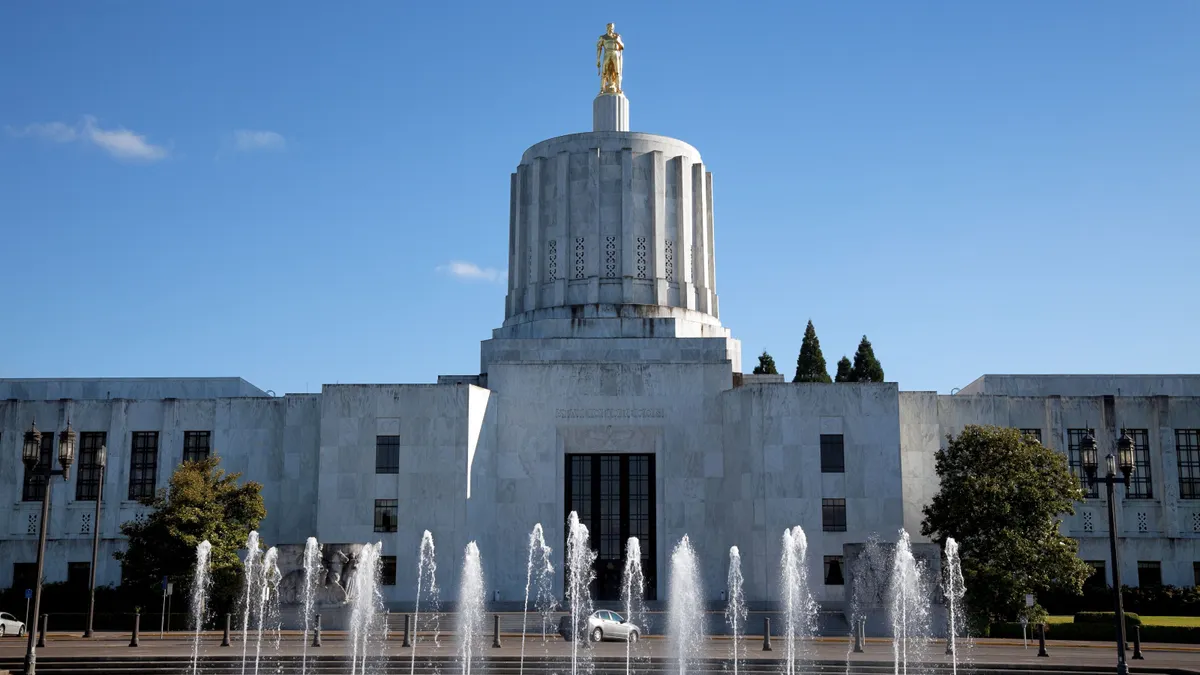
- Oregon has proposed requiring nonbank buy now, pay later financing companies to obtain a payday lender license or a consumer finance license to operate in the state under a proposal it issued last month.
- The type of license would depend on the length of time that the consumer signing up for the financing has to repay it, and the rule would apply regardless of the fees or interest that apply to the offering, including if it’s a “nonrecourse loan,” the state said.
- The American Fintech Council objected to the proposal Monday, saying it had sent a letter to the Oregon Department of Consumer and Business Services asking it to reconsider the idea.
Dive Insight:
Oregon would join a handful of states that have sought to regulate BNPL, an installment payment option increasingly used by consumers over the past decade to pay for goods and services over time. Klarna and Affirm are among the companies that offer such financing options, sometimes without fees, but also sometimes with interest charges.
Like measures in other states, including New York and Illinois, the Oregon move is aimed in part at protecting consumers. Illinois enacted its new BNPL law last month, and New York also pursued new BNPL rules earlier this year.
In addition to defining terms relevant to BNPL financing and explaining details of oversight, the Oregon department’s draft bulletin on the rule said simply: “A nonrecourse loan does not obviate the need for an Oregon License.”
By contrast, the council urged the state to be narrower in its approach to buy now, pay later services, customizing regulation to the particulars of BNPL financing. “AFC encouraged the Division to adopt a more tailored regulatory approach that reflects the unique structure and consumer protections of responsible BNPL products,” the council said in a Monday release.
Klarna, which is one of the biggest BNPL players in the U.S. despite its main offices being in Sweden, also knocked Oregon’s proposal.
"We support smart BNPL regulation, but Oregon's draft bulletin misses the mark,” a spokesperson for Klarna said by email. “Outdated assumptions lock consumers into incumbent banks, limit choice, while not actually offering real consumer protection. We're committed to working with regulators on a better path forward."
An Affirm spokesperson declined to comment.