Dive Brief:
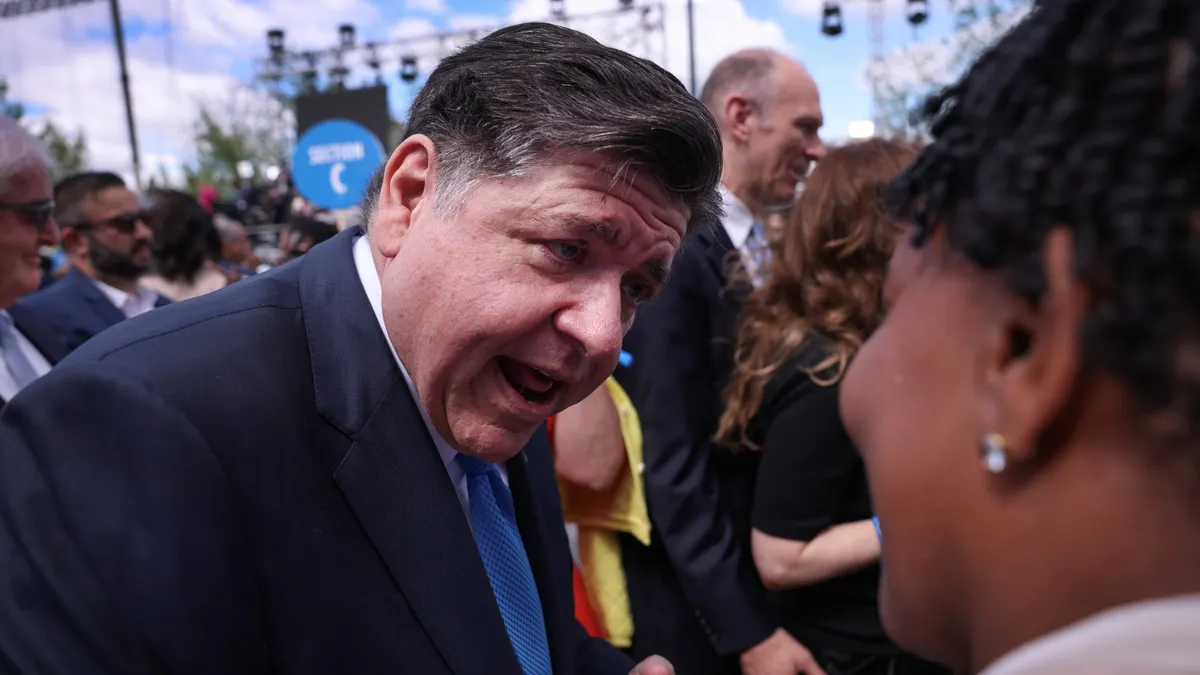
- Illinois Gov. JB Pritzker on Thursday signed a bill mandating regulatory oversight of buy now, pay later companies, enacting rules to oversee the industry.
- The Buy-Now-Pay-Later Loan Consumer Protection Act requires BNPL providers to register with the state and to create processes for dispute resolution and refunds to consumers. The law takes effect immediately, but BNPL providers have until Jan. 1, 2028, to comply, according to a Thursday press release from Pritzker’s office.
- “As these products become more common, we have a responsibility to ensure that consumers have the information they need and that lenders operate under clear rules and standards,” Pritzker said before he signed several bills oriented around consumer protection.
Dive Insight:
The Illinois BNPL law is similar to a measure New York legislators passed last year. The Illinois law requires disclosure of costs associated with a BNPL loan and makes lenders assess a borrower’s capacity to repay.
“For far too long, the buy now, pay later industry has operated like the Wild West,” said Sen. Michael Hastings, a Democrat and an attorney from Frankfort, Illinois, who sponsored the Senate version of the bill. “It promises affordability at the checkout line while delivering hidden fees and debt traps that working class families can’t sustain,” he said at the bill-signing event, which was streamed online.
Illinois lawmakers pursued the legislation because “more families are now using these ‘convenient’ plans for groceries (29% and rising), rent and daily essentials just to make ends meet,” Matt Marshall, a spokesman for the Illinois Senate Democratic Caucus, said Tuesday in an email.
Pritzker was joined Thursday by Democratic state lawmakers and Attorney General Kwame Raoul at Concord Music Hall, a Chicago live music venue. The site was selected to highlight two of the other four bills Pritzker signed at the same time, including bans on computer bots purchasing live event tickets and on ticket resellers from selling tickets they don’t have.
Last week, the governor signed into law the Digital Asset Tax Act, which levies a 0.2% tax on cryptocurrency transfers by Illinois residents starting on Jan. 1, 2027. That provision was included in the state budget, which Pritzker signed on June 16.
Also Thursday, Pritzker signed the Junk Fee Ban Act, which prohibits businesses in Illinois from advertising prices that do not display all mandatory fees or other charges. The law targets such expenses as hotels’ “resort fees” and fees that rideshare and food-delivery companies often charge but do not display in their price.
Such fees average $3,000 per family annually, Raoul said.
Separately, Illinois lawmakers have sought to reduce payment card interchange fees in an effort to lower consumer costs by banning card fees on the tax and gratuity portion of bills.
The state’s Interchange Fee Prohibition Act has been mired in litigation since 2024, and legislators have voted twice to postpone the law’s implementation.