Dive Brief:
- International Money Express sued Western Union on Tuesday seeking to enforce the terms of its $500 million merger agreement that Western Union abandoned earlier this month. Western Union contracted “a bad case of buyer’s remorse” over the 2025 deal as the remittance business deteriorated, according to the lawsuit.
- Western Union gained at least $50 million in annual cost savings and financial improvements by studying Intermex’s operations during the merger planning period, according to the lawsuit. “By walking away, Western Union got that value at the expense of Intermex’s stockholders without having to pay those stockholders a dime,” Intermex said in the lawsuit filed in Delaware.
- Western Union “stands by its decision to terminate the merger agreement and strongly disagrees with the claims asserted by Intermex in its lawsuit,” a spokesperson said Tuesday in an email. “We believe we acted in accordance with the terms of the merger agreement and intend to vigorously defend against the lawsuit.”
Dive Insight:
The lawsuit filed in the Delaware Court of Chancery alleges breach of contract by Western Union for not completing the deal, and seeks to enforce the merger agreement, along with injunctive relief and damages.
“Intermex believes Western Union’s purported termination is invalid given that all conditions to the closing have been satisfied,” the company said Tuesday in a press release.
The merger deal dates to August 2025, when Western Union agreed to pay $16 per share for Miami-based Intermex, which was founded in 1994 and enables money transfers from the U.S. and four other countries to about 60 nations, with a network of thousands of bank and retail locations.
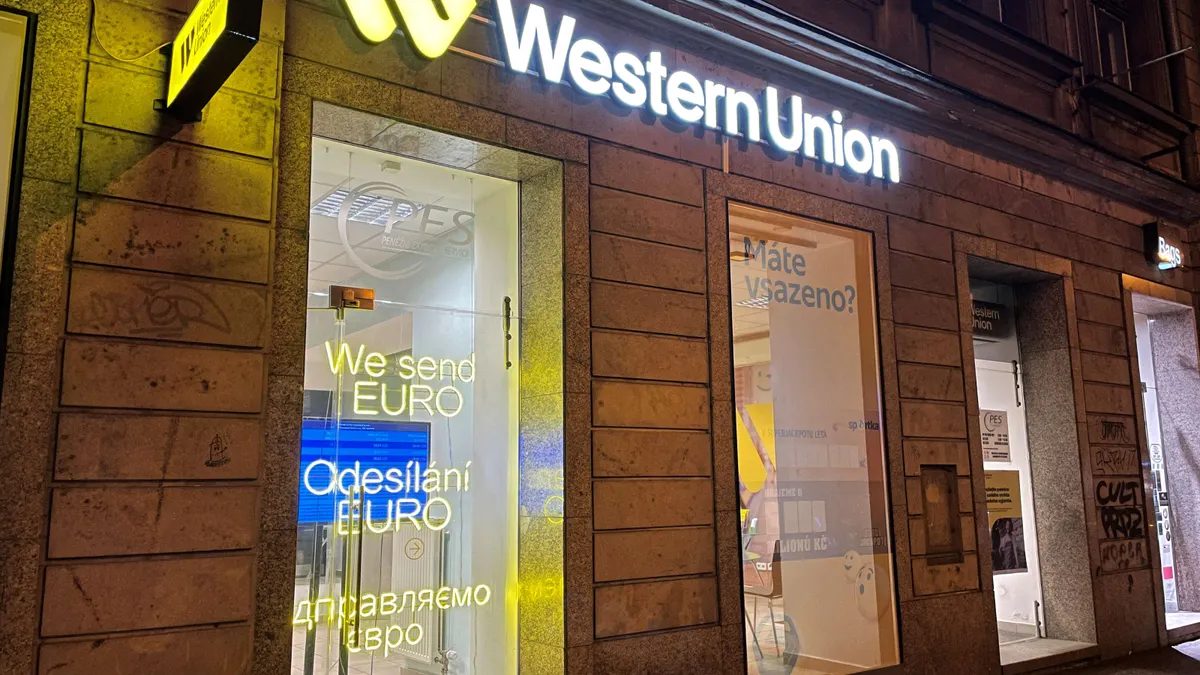
Denver-based Western Union, which provides cross-border payments services and has roots reaching back more than 100 years, provides remittance services at locations worldwide.
On Aug. 14, the California Department of Financial Protection and Innovation – which had earlier approved the transaction – suspended an approval it had granted only two weeks before. That decision occurred the same day New York regulators approved the merger, with conditions.
Intermex said Western Union “seized” on the August California DFPI decision “as an opportunity to escape the deal and abscond with hundreds of millions of dollars in synergies, while leaving Intermex a wounded company,” according to the lawsuit. “Rather than using its reasonable best efforts to fix the problem in California, Western Union sat on its hands and let the clock run.”
The company had “insisted on control of the regulatory process,” Intermex said in the lawsuit, but failed to engage in constructive talks with the California agency, which is led by Rohit Chopra, the former director of the Consumer Financial Protection Bureau. The DFPI approved the merger, with conditions, on Nov. 10.
“Western Union deliberately stalled, offering nothing and leaving it to DFPI to propose conditions on its own, knowing that every day of delay brought it closer” to the Nov. 10 date, which permitted termination of the agreement if the deal had not closed.
However, Western Union CEO Devin McGranahan “met privately with Secretary Chopra, without Intermex, in discussions that, upon information and belief, addressed whether the $16 price was too high,” Intermex said in the lawsuit.
McGranahan also held a town hall meeting on Oct. 13 with Intermex employees and said the Nov. 10 closing date would be extended if necessary, according to the lawsuit.
The remittance business has been turbulent over the past two years amid U.S. changes in immigration policies under the Trump administration, plus the longer-running industry shift from physical money-remittance stores to digital channels.
Last year, remittances to Mexico – the largest remittance recipient in the Americas – fell for the first time in 11 years, declining about 4% to $62.5 billion, according to the lawsuit.
These changes were caused by reduced migrant workers in the U.S., “which multiple industry analysts have attributed as a significant factor in declining remittances,” Intermex said in the suit. Intermex also cited a 1% excise tax on remittances the U.S. imposed on Jan. 1, along with the industry move from retail to digital channels.
“Western Union came under intense pressure from its stockholders to find a way to escape from the deal it had agreed to a year earlier,” the lawsuit said.