A proposed settlement to end decades of litigation over card interchange fees faces uncertain odds of approval, with some of the largest U.S. retailers, including Walmart, arrayed against it.
The pact might also be the best one that merchants, the card networks and banks can achieve, lawyers said.
The question hanging over the settlement is whether a federal judge finds that it contains suitable modifications from prior efforts that courts rejected in 2016 and 2024, said Paul Kaplan, an antitrust attorney with the law firm Greenspoon Marder, who is not involved with the case.
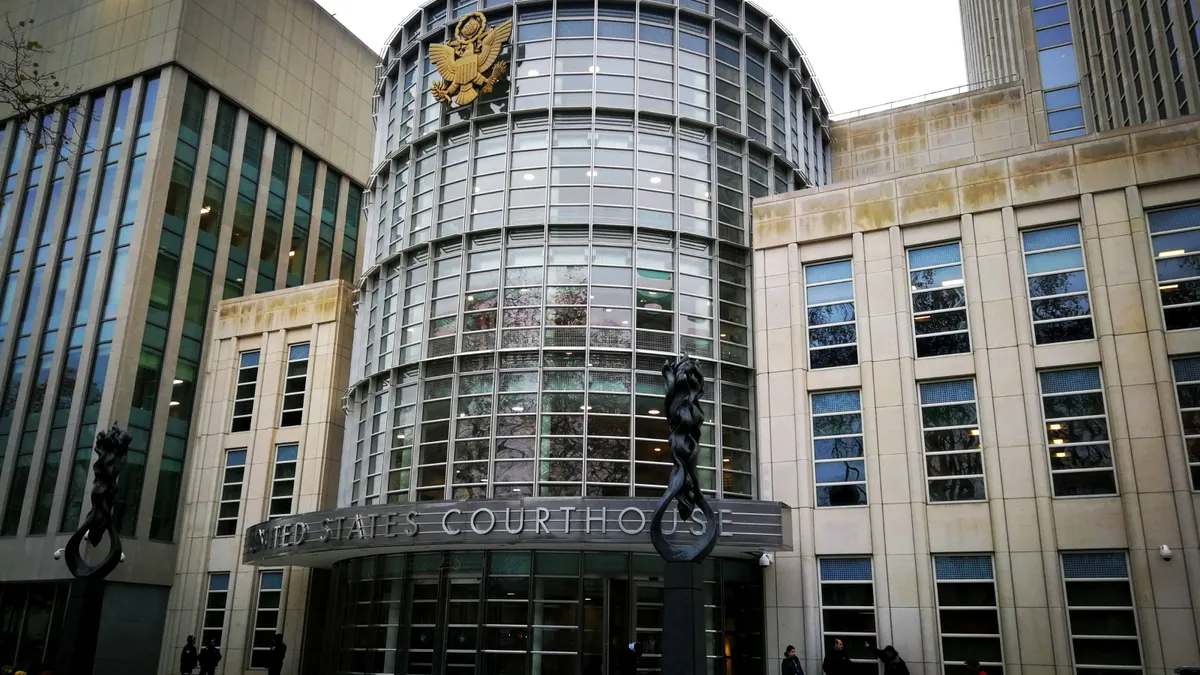
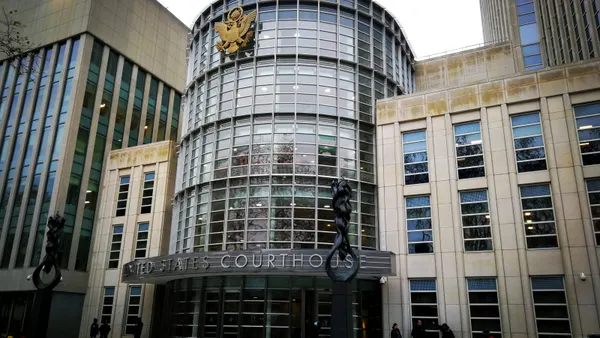
The litigation, which consolidated multiple merchants’ claims into a federal court proceeding in Brooklyn, New York, dates to June 2005.
“This is likely to be approved because there have been some significant improvements over the last two and, more importantly, over the last one,” predicted Lloyd Constantine, a New York attorney who represents dozens of merchants that sued the card networks.
Objecting plaintiffs will articulate their views April 27 at a hearing in the antitrust case before U.S. District Judge Brian Cogan in Brooklyn. Visa and Mastercard, the two largest U.S. card networks, will also have a chance to speak and “should be prepared to address class members’ objections,” Cogan said in a March 31 order.
No trial date had been set in the case, a point of contention for some of the pact’s foes, who say having no such deadline reduces plaintiffs’ leverage in negotiations with the card networks and banks over the injunctive relief.
A related 2013 case in Manhattan over monetary damages for 65 merchants concluded last week when the final plaintiff in that group reached a settlement with the card networks and banks. That group had opted out of an earlier settlement reached by another group of merchants.
Revised card-fee terms
The proposed settlement in the Brooklyn case, unveiled in November, would trim credit interchange rates by ten basis points for five years and impose a 1.25% rate for standard consumer cards for eight years. It would also give merchants the right to decline some higher-cost Visa- and Mastercard-branded credit cards – a departure from the networks’ “honor all cards” rule – and the ability to add surcharges on some cards.
A scuttled agreement from 2024 would have reduced fee rates by seven basis points for five years.
Still, plenty of merchants with large stakes in the battle are incensed over a proposal they say does little to fundamentally revamp the card networks’ interchange fees.
The National Association of Convenience Stores, the National Grocers Association, the Retail Industry Leaders Association trade groups, as well as mega retailer Walmart and dozens of other merchants, filed objections late last year.
The proposed settlement fails to achieve “real competition for merchant acceptance of Visa and Mastercard cards,” Walmart said in a statement last week via a company spokesperson. “Walmart will continue to advocate for reforming the payment network rules and deliver lower costs to all merchants and consumers.”
To be sure, a judge’s thinking is difficult to predict, though discussion at hearings can sometimes provide hints. Federal courts enjoy “very broad discretion” to assess proposed settlements on whether they are “fair, adequate and reasonable” to the parties, which is the legal standard for review, said Kaplan, a former adjunct professor of antitrust law at Fordham University School of Law.
One factor for the court “depends on how adamant the opposing parties are and can they prove that this is not a substantial change from what had originally been turned away,” he said.
Interchange loopholes?
The settlement requires “more detail” to avoid loopholes by which the networks could create new interchange categories, contended Eric Cohen, chief executive of Merchant Advocate, a Hoboken, New Jersey-based firm that helps merchants reduce their card-processing fees.
The settlement could fall flat for many smaller merchants that won’t be able to navigate the technical details of how to surcharge certain cards, he said.
“I still think there’s too many things that are not figured out,” Cohen said last week in an interview. One potential loophole would be if banks were to create new card types with greater rewards “and create a new interchange category” to replace some of their current cards, he said.
As a result, Cohen said he doesn’t expect the settlement to be approved in its current form.
Walmart said in its Dec. 12 filing that the pact “doubles down on the fundamental flaws” from the prior proposed settlement. A suitable settlement would allow merchants to reject cards from particular issuers, Walmart said.
Part of the problem is merchants being forced to negotiate with only the card networks, the retailer said. “To achieve a market compliant with the antitrust laws, Walmart must be able to negotiate interchange rates directly with issuing banks, bargaining for lower rates in exchange for Walmart’s business,” the company said.
Doug Kantor, general counsel for NACS, the convenience stores’ trade group, said in an interview April 9 that “the settlement does absolutely nothing to require or incentivize banks to compete with each other, which is the central problem in all of this.”
The current proposal is “substantively indistinguishable” from the one rejected in 2024, Jonathan Paine, CEO of the National Lumber & Building Material Dealers Association, said in a Dec. 22 letter to the court. “The modifications are limited to provisions that defendants know will provide little or no actual benefit to businesses,” Paine wrote.
One option open to Cogan would be to deny preliminary approval of the settlement and offer recommendations on how the agreement could be improved, Kaplan said. That was the path U.S. District Judge Margo Brodie took in 2024 when she rejected a previous proposal, recommending various areas where the settlement needed improvements, especially in its treatment of large merchants.
However, another settlement rejection could lead to a trial in the case. “A trial would be the right next step,” Kantor said. No trial date has been set. “These settlements have shown they are not moving in a positive direction.”
A proposed settlement more than a decade ago – which U.S. District Judge John Gleeson approved in late 2013 – led to two classes of plaintiffs for monetary damages. Gleeson allowed plaintiffs to opt out of the damages class to pursue their own monetary settlements with the networks. But he ruled that they could not depart from the injunctive relief class.
A federal appeals court rejected that settlement in 2016.
Congress weighs card legislation
In its December filing, Walmart and several large retail trade associations asked Cogan to split the class of plaintiffs so that large merchants could pursue their own needs with respect to the networks. The retailer, and others that objected to the proposal, said they had been shut out of the negotiations between the class counsel and networks. That request remains pending.
Tyler Martinez, litigation director for the National Taxpayers Union Foundation, noted that the settlement comes amid debate in Washington over the Credit Card Competition Act. The foundation's sister organization, the National Taxpayers Union, has lobbied Congress on card interchange issues.
The bill would give merchants a network option besides Visa or Mastercard through which to route customer payments. The legislation got a renewed push in January after President Donald Trump endorsed it. The legislative efforts could spur the networks and banks to seek a new proposal with merchants if Cogan rejects their third effort.
“My best prediction is that they come up with a solution, eventually, that a court approves it and then that lowers the pressure on a legislative mandate,” Martinez said April 13. He is not involved with the case.
The court’s decision is also subject to appeal with the Second U.S. Circuit Court of Appeals, Kantor and Kaplan noted. As he weighs the matter, Cogan is also likely to consider the notion of “judicial economy,” the efficient allocation of a court’s limited resources after 21 years of litigation, Kaplan said.
The judge may take the position that he’s “sort of sick of this case sticking around for so long,” he suggested.
Correction: This article has been updated to correct the name of the NTU entity that has lobbied Congress on card interchange issues. It's the National Taxpayers Union.