Dive Brief:
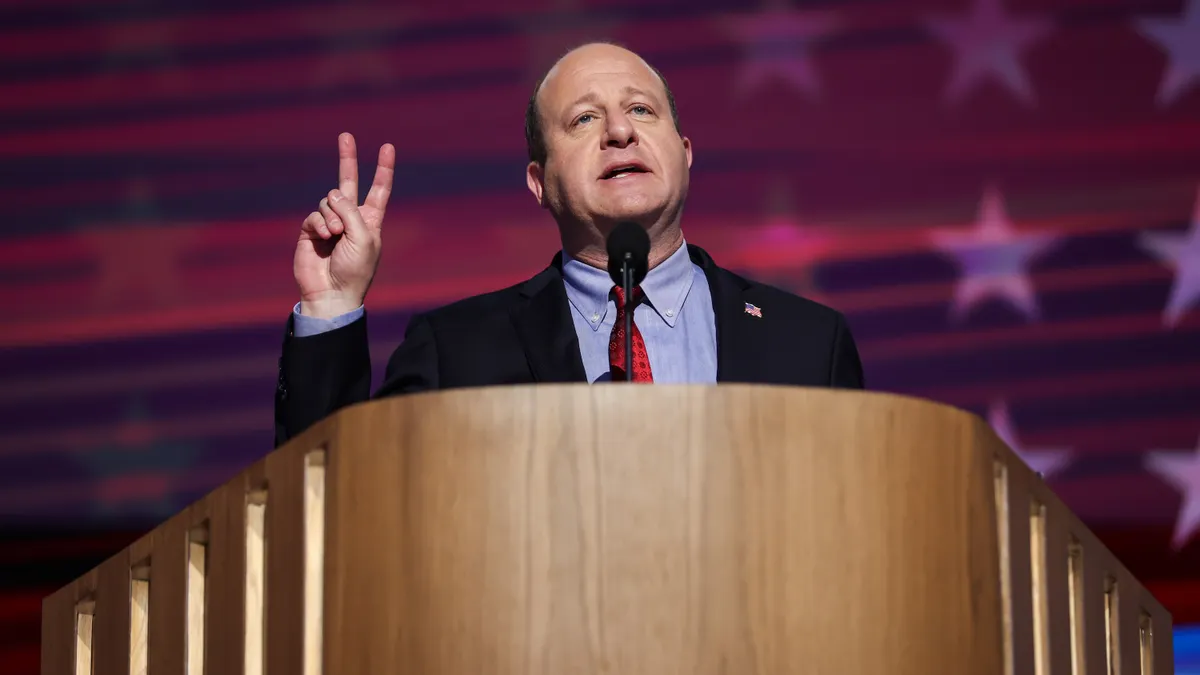
- Colorado Gov. Jared Polis vetoed a bill Wednesday that sought to prohibit card networks from imposing interchange fees on the tax portion of credit and debit card transactions. The bill would have exempted cards issued by banks with less than $60 billion in assets.
- Polis, a Democrat, derailed the legislation even though members of his own party that control each of the legislature’s chambers had sponsored and voted for the bill last month. In a letter explaining his decision, Polis said he agreed with some aspects of the bill, but questioned its benefit, especially given litigation delays stalling implementation of such a law in Illinois.
- “Ultimately the bill presents too much risk to Colorado’s business environment and consumers, with limited upside for our small businesses, for me to be comfortable signing,” Polis said in the letter. While he emphasized his support for restaurants in the state, he said the law could “create chaos” for small businesses, the tourism economy and consumer card use.
Dive Insight:
The move by Colorado’s governor came after the legislature, which is controlled by Democrats, passed the bill last month. The Colorado House supported the bill 44 to 20 on May 6, while the Senate’s vote was tighter at 18 to 17 to pass the legislation, SB26-134, on May 1, according to the legislature’s bill-tracking website.
Polis said he appreciated the legislators’ efforts, noting “the card network industry is ripe for disruption,” but he suggested the issue would be better tackled at the federal level. “It is quite possible this bill would never go into effect,” the governor said, pointing to federal agency opposition to the Illinois Interchange Fee Prohibition Act, which also would have nixed interchange fees on the tip portion of tabs.
The Office of the Comptroller of the Currency issued an interim final rule last month preempting the Illinois law.
Polis questioned how the law could be implemented if Colorado transactions became a unique situation in the global payment system and worried about side effects, like forcing consumers to swipe differently or leading small businesses to revamp their payment systems.
“This could create chaos for our business environment, our tourism-dependent economy, and consumers that want to make purchases easily and efficiently,” he said.
Trade groups for card companies and financial institutions applauded the veto, though those representing merchants were not pleased.
The governor’s “veto protects the payment systems Coloradans rely on every day and prevents a policy that would have increased costs and disrupted commerce across the state,” Electronic Transactions Association CEO Jodie Kelley said in a press release Wednesday.
The law “would have imposed unworkable mandates and forced credit and debit cards to operate differently in Colorado than virtually anywhere else in the world,” the Electronic Payments Coalition said in a Wednesday press release.
Financial institutions also weighed in with their praise, throwing their usual recriminations at retailers for driving legislative efforts to curb interchange fees. “A prohibition on interchange fees shifts the payments system away from consumers and toward retail giants who stand to reap the benefits,” said America’s Credit Unions CEO Scott Simpson.
The American Bankers Association took the governor’s move as an opportunity to warn other states considering similar legislation. “The governor's action, as well as a federal court ruling in Illinois this week, should send a clear message to any other state contemplating similar legislation that it is a mistake,” the association said in a Thursday statement from ABA President Rob Nichols.
Banks that issue credit cards collect interchange fees every time a consumer swipes a debit or credit card, while card networks, including Visa and its smaller rival Mastercard, that route the transactions also take in fees of their own. Restaurants, retailers and other merchants pay the fees, and have pushed for lower interchange fees for decades, casting Visa and Mastercard as monopolistic culprits in escalating the fees.
The merchant trade groups were unsurprisingly disappointed by the Colorado governor’s action.
“Colorado legislators stood up for small businesses and consumers, but this veto leaves them stuck paying inflated, price‑fixed swipe fees not just on their purchases but on top of sales taxes, too. Coloradans deserved relief, and this decision denies them more than $200 million a year in lower prices,” National Association of Convenience Stores General Counsel Doug Kantor said in a Merchants Payments Coalition press release Thursday.
That coalition estimated that Colorado consumers pay $217.5 million annually in card swipe fees tacked onto bills because of sales tax.
The organization has also long bemoaned the billions of dollars that retailers, restaurants and other merchants pay every year. The coalition has cited industry research firm Nilson Report estimates that credit card and debit card interchange fees, combined, added $198.25 billion to U.S. receipts last year, up about 6% from $187.2 billion in 2024.
The MPC has also pressed for national legislative changes to reduce card fees, but the latest effort, the Credit Card Competition Act bill, has been stymied in Congress despite bipartisan sponsors and support from President Donald Trump.