Dive Brief:
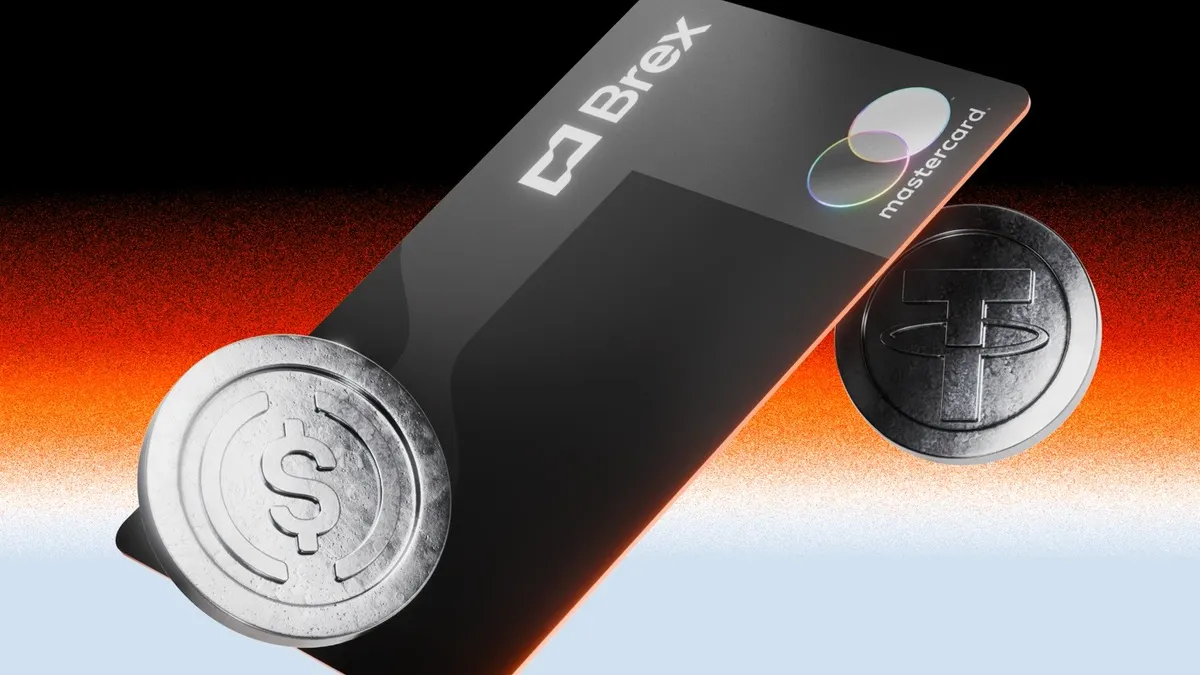
- Euronet, the international payments infrastructure provider, and Fireblocks, the digital asset infrastructure company, are collaborating to enable banks, fintech and other financial firms to create their own stablecoin-funded card offerings, Euronet said in a press release.
- Financial firms that use Euronet’s Ren and CoreCard issuing services can now access Fireblock’s embedded wallet infrastructure that holds and transfers stablecoins, the Oct. 19 release said.
- The companies are providing the service as a white-label offering that financial firms can integrate into their own banking and mobile wallet apps, per the release.
Dive Insight:
Through the partnership, Euronet and Fireblocks aim to bring stablecoin card programs into new markets and bridge the gap between digital assets and traditional card payments, the release said. The two previously partnered last year to offer settlement and pre-funding services for cross-border payments, per the release.
“A decade ago, stablecoins were just a trader’s tool to exit Bitcoin,” Fireblock’s chief payments and network officer, Ran Goldi, said in a release. “Today, combined with global cards, they are the ideal off-ramp for digital assets.”
Along with Euronet and Fireblocks, other major payments players, including card network Visa and processor Fiserv, as well as startups, are also eyeing the stablecoin market.
Earlier this month, MassPay, the Las Vegas-based direct payments company, said it teamed up with Block’s Cash App to provide a real-time payments service to those digital wallet account holders.
In a September interview, MassPay CEO Ran Grushkowsky said the company, which uses digital asset technology to provide payments to gig workers, contractors and marketplace sellers, has seen “growing demand for stablecoins, primarily by large-scale institutions that feel comfortable due to some clearance in the regulation.”
Meanwhile, Rain, the stablecoin infrastructure company, joined money transfer company Western Union’s digital asset network last year and locked arms with its rival MoneyGram in September. Rain enables corporate clients to integrate its digital asset technology into their architecture.
As startups vie for digital asset clientele, established payments providers have been racing to integrate stablecoins into traditional finance.
In July, a consortium of about 140 companies, including payments giants like Visa and digital payments provider Stripe, convened to launch the Open USD stablecoin.
The following month, Visa and its smaller competitor Mastercard joined forces with Circle Internet Group to support Arc, an initiative that seeks to underpin stablecoin transactions in financial markets, real-time payments and agentic commerce.
Though some newcomers and established payments companies alike are working to bring stablecoins into the mainstream financial system, others are wary of embracing the technology.
A Cleveland Federal Reserve Bank survey of 148 companies in its district found that financial firms aren’t embracing stablecoins, because of their satisfaction with current payment methods; little demand from customers; and a lack of familiarity with the digital asset class.