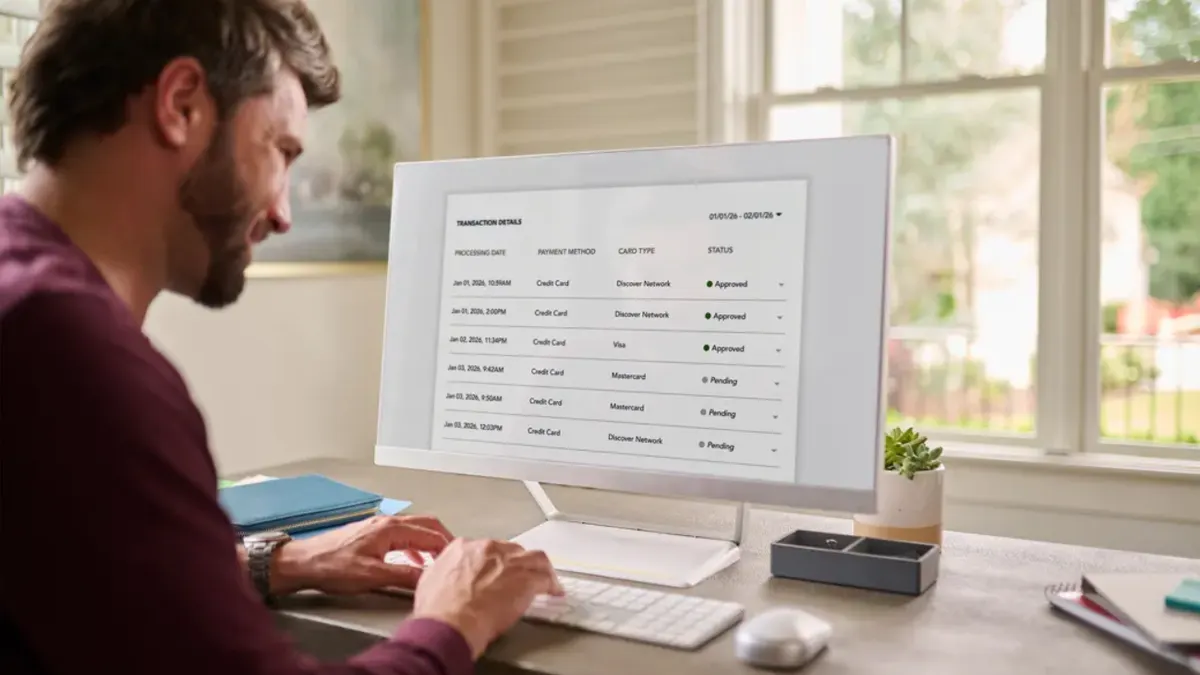

Growth is a priority for retailers of all shapes and sizes. As merchants set their sights on growth, a solid payments strategy is important for expanding into new regions and meeting rapidly evolving consumer expectations. Today’s global shoppers expect payment options and experiences that exceed the capabilities of traditional payment infrastructure, and merchants need digital payment solutions that deliver both flexibility and control.
Payment orchestration offers the adaptability that today’s global commerce environment demands and empowers merchants to manage payments like a revenue engine rather than an operational cost.
What is Payment Orchestration?
Payment orchestration consolidates a merchant’s digital payment providers and processes onto a single platform, centralizing control over functions such as routing, authorization, reconciliation, clearing, billing, settlement, and reporting. A Payment Orchestration Platform (POP) can connect a merchant to a wide variety of independent payment-related services, including payment gateways, processors, and acquirers.
By supporting local payment methods, currencies, and compliance needs, payment orchestration can fuel growth by helping businesses quickly enter new markets. This flexibility allows merchants to tailor payment experiences to regional customers' preferences while maintaining a unified global payments strategy.
Payment orchestration also helps drive growth by enabling merchants to cater to a broader range of customer expectations and preferences — and businesses are taking note. According to S&P Global research commissioned by Discover Network, 20% of merchants (including 28% of those with 10,000 or more employees) indicated a desire to deepen their expertise in payment orchestration.1
Payment orchestration addresses key payment priorities
As businesses grow, their payment needs become more complex. As a result, global merchants are increasingly adopting multiprocessor stacks to gain resilience, reach, redundancy, and better economics to support their growth. However, multiprocessor stacks may also create significant complexity: routing logic, A/B testing, data consolidation, token vaulting, and multi-acquirer reconciliation are heavy engineering lifts. Payment orchestration platforms can simplify this operational burden through a unified integration layer, intelligent routing, tokenization, and centralized reporting.
Payment orchestration can help merchants address key payment priorities as they grow and expand their operations. Discover Network/S&P data shows that 42% of global merchants reported that optimizing the use of multiple payment processors was a top priority, and 40% said the same for improving payments data reporting/usability.
Payment orchestration directly addresses these needs to support business growth. POPs can also help merchants increase acceptance of local and alternative payment methods (cited as a priority by 39% of Discover Network/S&P survey respondents) and improve authorization rates (a priority for 35% overall, increasing to 48% for merchants with 10,000+ employees).
Understanding the advantages and limitations of payment orchestration platforms
The vast majority (93%) of those surveyed by Discover Network/S&P agreed that “payments are a highly strategic area of focus for our company that drives significant competitive differentiation.” And for merchants, distinguishing their business from the competition is essential to driving growth.
Payment Orchestration allows merchants to take greater control of their payment ecosystems by offering more flexibility around monitoring and managing performance. By making strategic decisions about authorization routing, cost management, and payment choice, businesses can identify opportunities to enhance sales performance and operational efficiency. Enterprises that adopt payment orchestration see faster time-to-market in new regions, stronger payment performance, improved analytics, and lower maintenance costs — making POPs a core part of a future-proof payments strategy.
Merchants are also turning to Payment Orchestration to keep pace with rapidly shifting consumer expectations. For instance, POPs enable businesses to better accommodate customer preferences for a variety of payment methods, such as digital wallets and Buy Now, Pay Later (BNPL) programs. Payment orchestration also facilitates seamless online checkout, improving customer experiences and reducing cart abandonment.
While POPs simplify multiprocessor environments, they can introduce new challenges.
Many POPs lack true enterprise scale, rely on cached or third-party bin data, remain heavily e-commerce centric, and may become a single point of failure. Some also require custom development from merchants. And while POPs certainly accelerate modernization, they don’t eliminate the need for active oversight and strong payments strategy, governance, and data stewardship.
Staying competitive in a global marketplace requires navigating an increasingly complex payment landscape. By streamlining payment processing and delivering the experiences consumers expect, payment orchestration can help merchants drive greater growth.
For more insights on payments strategy and trends, visit Discover Network.
1 2025 Global Merchant Survey, S&P Global Market Intelligence, June 2025