Update: March 31, 2026: In a letter Monday to U.S. District Judge John Koeltl, a Justice Department attorney took issue with Visa’s letter as “misstatements of both the governing law and the United States’ position” ahead of a hearing scheduled for Thursday.
“Visa’s position would require the Department of Justice to search for and produce documents from an agency that played no investigative or litigative role in the development or prosecution of this case, instead unnecessarily treating Treasury as a party,” government lawyer Erin Murdock-Park wrote to the judge.
-------------------------------------------------------------------
Dive Brief:
- The Justice Department and Visa have been unable to resolve a dispute about Treasury Department records in the government’s civil antitrust case against Visa, with the card network asking a judge last week to intervene and compel production of documents.
- Visa wants documents about “the acceptance and treatment of debit among various payment methods on pay.gov,” a Treasury Department payment website, Robert Katerberg, an Arnold & Porter attorney representing Visa, said in a letter Wednesday to U.S. District Judge John Koeltl.
- The DOJ contends that Treasury is not subject to party discovery in the case and that Visa must request the documents through a “burdensome” subpoena process, according to Katerberg’s letter. Koeltl has scheduled a status hearing for April 2 to discuss the matter.
Dive Insight:
The Justice Department brought the case in September 2024 in the Southern District of New York, under the Biden administration, arguing that Visa created an illegal monopoly in the market for debit card payments. San Francisco-based Visa has denied the allegations.
Last year, Koeltl denied Visa’s motion to dismiss the lawsuit.
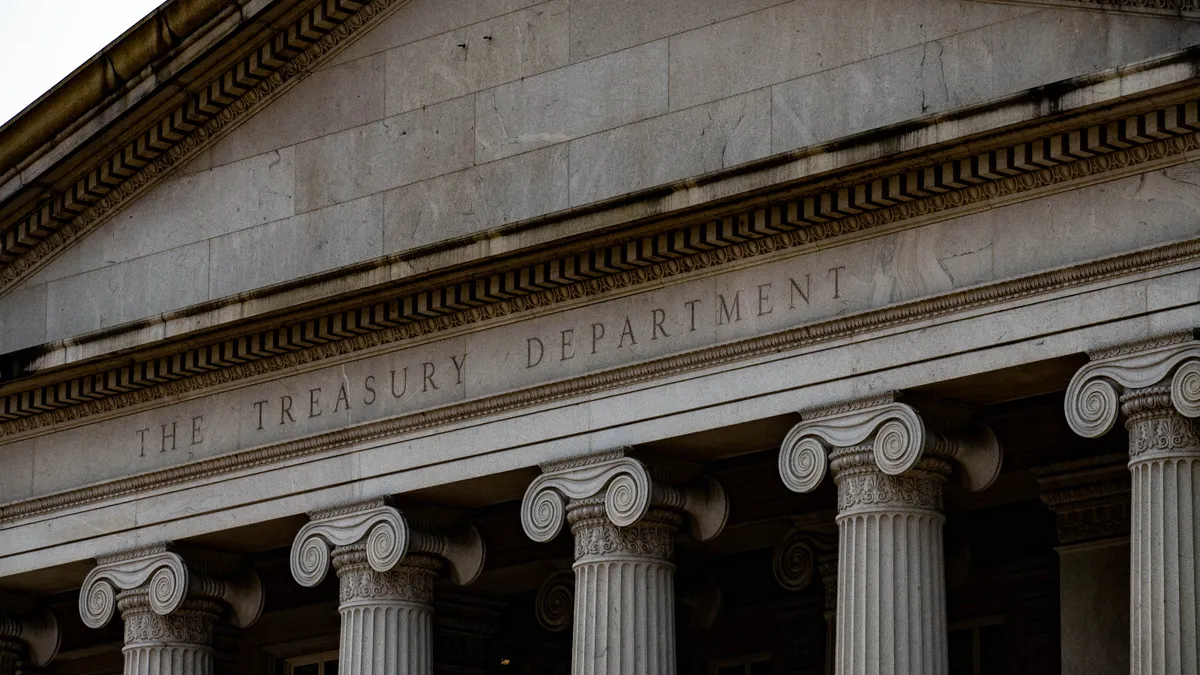
Pay.gov is operated by the Bureau of the Fiscal Service, within the Treasury Department, and allows for online payments to the U.S. government.
“Visa is entitled to relevant party discovery from United States’s agencies involved in the very commerce at issue,” Visa’s attorney wrote. “Party discovery from plaintiff is not limited to the Department of Justice’s own file.”
Visa argues that the DOJ’s position is “undermined” by U.S. vs AT&T, the 1980s-era litigation over the government’s effort to dissolve the AT&T telephone monopoly. In that case, a District Court agreed with AT&T’s position that it could seek discovery information from various parts of the federal government under Section 4 of the Sherman Act as part of its defense.
Given the AT&T ruling, Treasury Department electronic records are subject to civil discovery in the case, Visa argues. “During the parties’ communications, the United States sought to dismiss AT&T as out-of-circuit and outdated,” Katerberg wrote.
“It would strain credulity to suggest that Treasury is not part of the United States. Nor is Treasury an independent agency,” Katerberg wrote.
The Justice Department’s media office did not respond Friday to a request seeking comment.