Dive Brief:
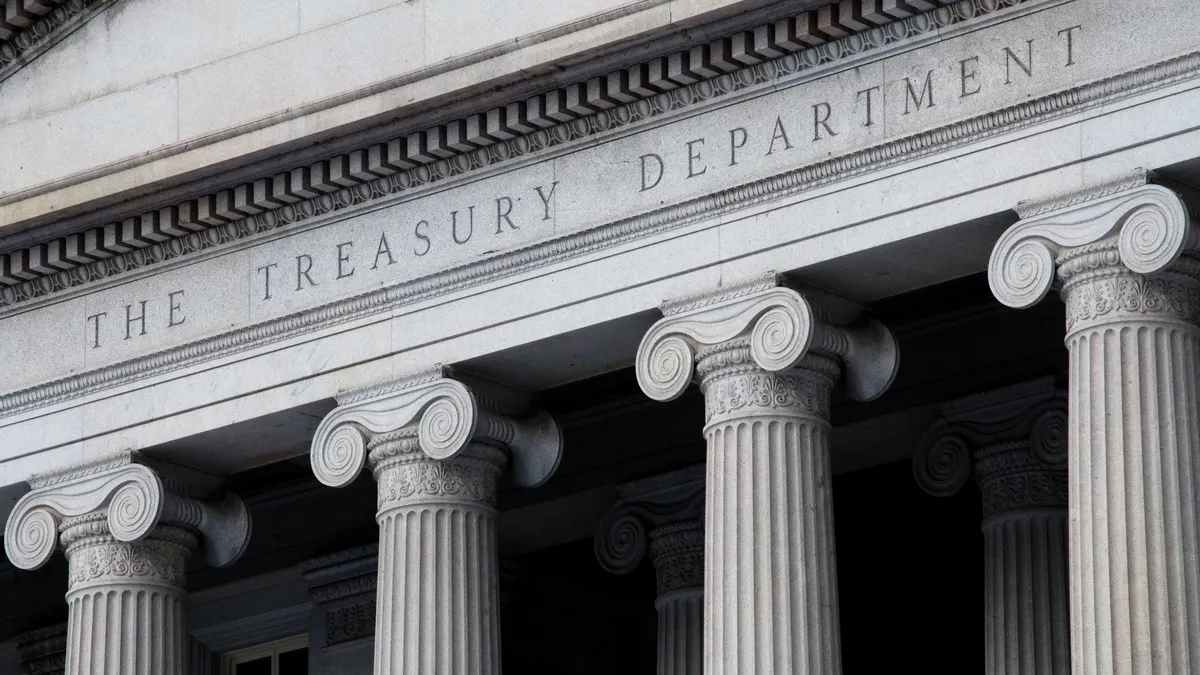
- The Conference of State Bank Supervisors urged the Treasury Department this week to amend its guidelines for regulating stablecoin issuers to ensure states continue to have the “discretion” and “flexibility” to regulate stablecoins issuers beyond federal guidelines, according to a press release.
- The group filed a comment letter with the department on Tuesday, recommending that Treasury allow states to treat federal stablecoin regulations as “a safe harbor for provisions where the statutory floor may be ambiguous” and clarify that states are not prevented from seeking certification for a stablecoin issuer more than a year after implementation of the Genius Act.
- The CSBS also recommended the Treasury Department review federal regulations that may create an “unworkable national regime” to include the Office of the Comptroller of the Currency’s proposed regulations which would allow national trust charters to engage in a broader set of activities not authorized by the Genius Act or the National Bank Act. National trust charters are business licenses issued by the OCC that allow licensees to operate nationally as a fiduciary without accepting deposits or making commercial loans.
Dive Insight:
The CSBS move, which is part of a broader push to keep federal agencies from passing regulations that would preempt states’ authority over stablecoin issuers, reflect the emerging friction between state and federal regulators over stablecoin regulation.
The state supervisors’ comment letter to Treasury officials was in response to the department’s call for comments on its implementation of regulations per the Genius Act.
State regulators, which license and supervise money transmitters, including stablecoin issuers, desire to maintain a say in stablecoin regulation, while federal regulators push for national guidelines.
In May, the CSBS, along with the Money Transmitter Regulators Association, sent a letter to the OCC urging the agency to amend the Genius Act, which regulates stablecoins, to include the application of state consumer protection laws to all stablecoin issuers and digital asset providers. The CSBS also called for the OCC to scale the capital requirements for stablecoin issuers, based on their size, business model, and risk levels.
Signed into law last July, the law (which stands for Guiding and Establishing National Innovation for U.S. Stablecoins) is scheduled to go into effect in January 2027.
“Stablecoins are a developing market, why lock everything into a one-size-fits-all model?” said Brandon Milhorn, president and chief executive officer for the CSBS. “Preserving the flexibility for states to innovate with stablecoins as mandated by the Genius Act is a key component of the dual banking system and is part of the framework Congress mandated in the Genius Act.”
Having the Treasury Department amend its framework for regulating stablecoin issuers “is an important step in ensuring states have the discretion to implement stablecoin regimes that exceed federal guidelines,” Milhorn added in an interview this week.
Washington D.C.-based CSBS represents financial regulators in all 50 states, the District of Columbia, and U.S. territories, and promotes state-level banking authority and preventing federal regulations from preempting state laws.
Part of the friction between states and federal agencies over stablecoin regulation is the perception the OCC is pushing policies that preempt state regulations, says Eric Grover, a payments industry consultant and owner of Minden, Nevada-based Intrepid Ventures.
“The Trump administration is pro-stablecoin and some states see this as leading to federal regulation that is more favorable to stablecoin issuers,” Grover says. “States are pushing for flexibility in setting stablecoin regulations to enforce stricter rules, not looser ones. Otherwise, what’s the point?”
Despite the friction between state and federal regulators over stablecoins, some payments experts argue that enabling states to have the option to enforce stricter rules on top of federal regulations is a positive.
“It’s worthwhile to have state flexibility because the states can serve as an incubator for laws and regulations that eventually get adopted at the federal level,” says Aaron McPherson, a consultant and principal at Newton, Massachusetts-based AFM Consulting LLC. “State regulators have direct experience regulating money transmitters and they don’t want to lose that power [over stablecoins].”