The U.S. nickel may be heading for a makeover as Congress takes a fresh look at the coin’s expense.
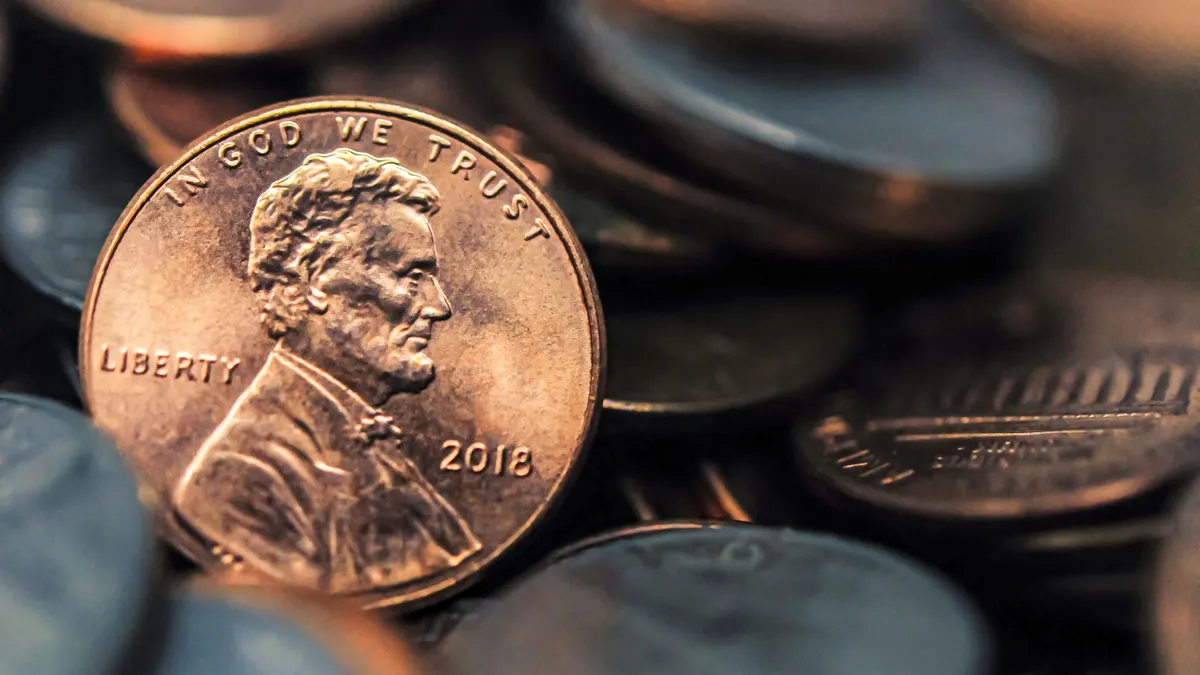
With the U.S. ending penny production last year, the House and Senate recently approved two versions of the Common Cents Act to provide a rounding framework for cash transactions in the absence of 1-cent coins.
Beyond its rounding provisions, the legislation could also tweak federal law pertaining to the nickel’s specifications, allowing the Treasury Department to explore zinc as a copper replacement as a way to lower the coin’s production cost. President Donald Trump has not commented on the legislation but early last year directed the Treasury to stop minting pennies.
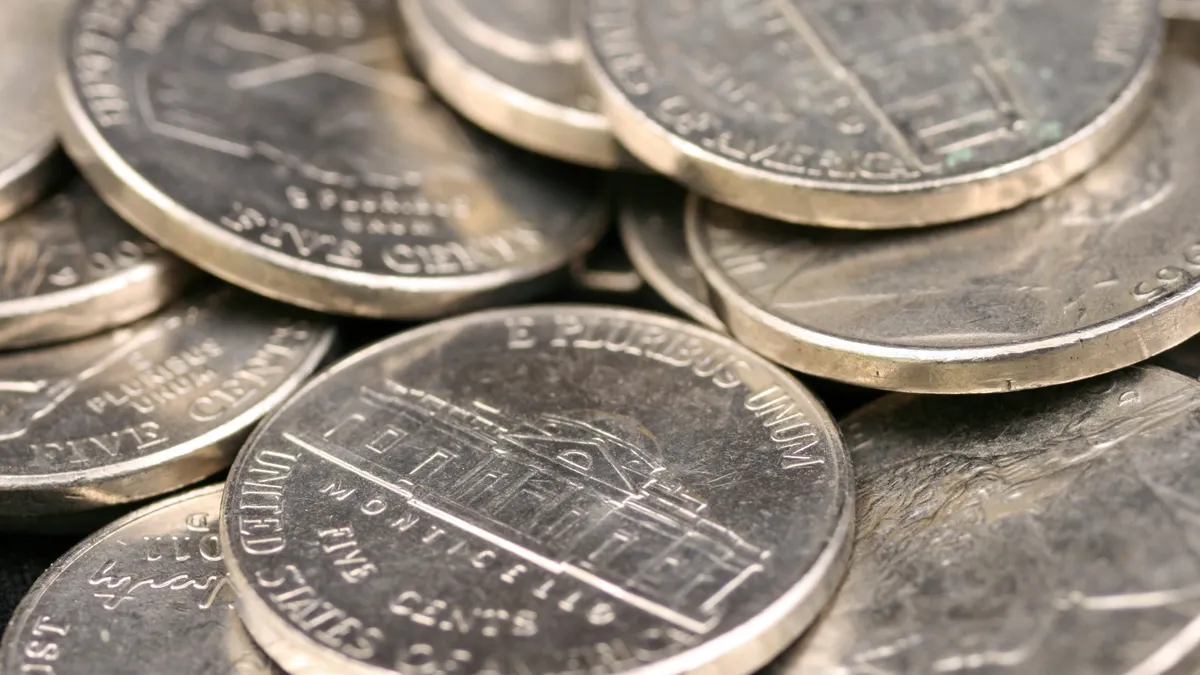
A nickel is actually 75% copper with the rest being nickel, according to the U.S. Mint. Its weight is set at 5 grams by law, but the Common Cents Act would allow a retooled nickel to weigh 4 to 6 grams.
“In 1866, Congress mandated the nickel be produced from an alloy of copper and nickel, and we haven’t updated the composition since,” Oklahoma Republican Rep. Frank Lucas said last month on the House floor, supporting changes to the nickel as he encouraged colleagues to approve the Common Cents Act.
The legislation awaits a second House vote due to a slight change in the Senate version.
The nickel, which was introduced in 1794, cost 13.3 cents to produce in the 2025 fiscal year, the 20th consecutive year above its face value, the Mint said in its latest annual report. The penny was the only other coin that cost more to make than its face value, the agency said.
Part of the higher cost is due to copper prices, which have surged to records since 2024, according to the International Energy Agency. The sharp inflation for copper has heightened legislators’ interest in finding a more cost-effective composition for the nickel.
Ironically, the penny’s demise could increase the government’s overall coinage expense if demand for nickels increases, the Congressional Research Service wrote last year in a research document about ending penny production.
To save on coin expenses, an Arizona Republican, Rep. David Schweikert, would go even further than eliminating the penny. Schweikert introduced a bill early last year, before the Treasury stopped making pennies, that would suspend penny and nickel production for a decade and then study the effects.
Schweikert’s office did not respond to messages seeking comment on the bill, which has no co-sponsor or Senate companion.
With the end of penny production, demand for nickels will increase, two Democrats wrote in a December letter to officials at the Treasury, Mint and Federal Reserve. The Mint shipped 615 million nickels in the 2025 fiscal year, the lowest number by circulating coins except for the half dollar.
In their letter, Sen. Elizabeth Warren of Massachusetts and Rep. Maxine Waters of California sought information on whether those agencies had estimated higher costs due to nickel demand and whether they’ve found cost savings for nickel production.
The Treasury Department and Mint did not respond to messages seeking comment on potential changes to the nickel.
Spurred by rising metal prices, Congress has been considering the cost of coins for more than 15 years with the Coin Modernization, Oversight, and Continuity Act signed into law by President Barack Obama in 2010.
The law requires the treasury secretary to report coin production costs and to evaluate and test “new metallic materials or technologies for the production of circulating coins.” In 2015, the Mint estimated a $39 million annual savings “by changing the nickel and dime to a plated steel coin,” according to a General Accounting Office report that same year.
However, changing the nickel’s weight and composition poses a billion-dollar question mark for one industry – coin-operated machine vendors. The machines are calibrated to accept nickels and other coins for payments within precise parameters.
“A new nickel with varying characteristics might be incompatible with the existing coin mechanisms,” Lauren Janes, government affairs director for the National Automatic Merchandising Association, said Wednesday in an interview.
NAMA members operate about 2.9 million vending machines in the U.S., including coffee pantries and unattended retail micro markets. However, some of those machines are cashless. A NAMA spokesperson said the group doesn’t have a count of the number of machines that accept coins.
The association, which has about 1,000 members, estimates a cost of $200 to $500 per machine for coin mechanism updates or replacement of older equipment, Janes said. At the higher range, machine changes to accommodate a different nickel could potentially cost the industry $1.45 billion.
The Common Cents Act bills in Congress specify that a reworked nickel “to the greatest extent practicable, has a minimal adverse impact on machines designed to accept coins.”
The debate over whether and how to change the nickel requires far more engineering and measurement of the proposed replacements than has occurred to date, the co-founders of Centsless, a point-of-sale compliance company, wrote last month in a white paper about nickel testing. The Orlando, Florida-based company sells a platform to help merchants with compliant rounding of cash transactions.
For its part, the association will encourage Treasury and Mint officials to test new nickel formulations with current technologies “to promote selection of a composition that creates the least disruption while reducing federal costs,” Janes said.
Editor’s note: This story has been corrected to address a typo in the name of Centsless.