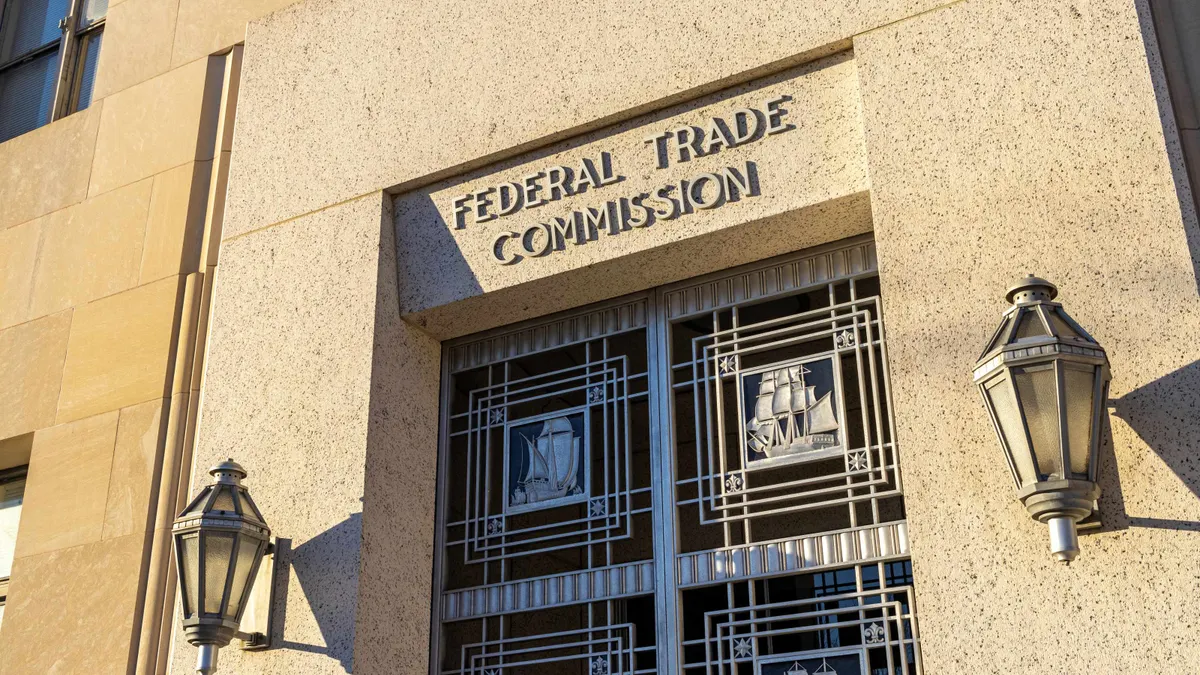
The Federal Trade Commission is fielding comments from the public this month on the possibility of making big technology companies more responsible for policing scam posts.
The federal agency would do that by updating its rule that bars the impersonation of government and business officials to defraud consumers. The agency said in September that it was mulling the possibility as part of an effort to better protect consumers from proliferating online advertisements and online posts that attempt to defraud consumers and all too often succeed.
They’re weighing in on the possibility of the agency drawing technology companies into a shared responsibility for fending off fraud.
Consumers lost $16 billion to fraud last year, including about $3.5 billion in imposter schemes reported by more than one million people, the FTC said in its initial notice exploring a rule update proposal. The overall losses were 25% higher than in 2024, it added.
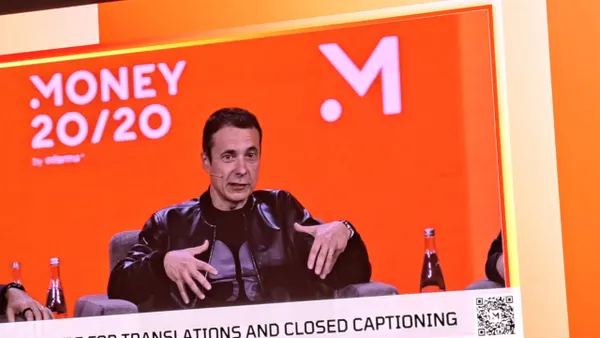
“We’re living in the golden age of fraud,” said Mayer Brown attorney Arun Rao, a former Justice Department deputy assistant attorney general who co-authored a firm post about the FTC proposal.
“The (proposed rule) modification is a response to the proliferation of these types of fraud schemes over the last couple of years, and to try to change the way in which responsibility is assessed, through that rule,” Rao said in an interview last month.
While consumers and banks have absorbed many of those losses, the FTC suggested in its proposal to update the rule that it’s time for the tech owners of online platforms that enable the crimes to step up their efforts to combat the scams.
“In recent years, these scams have been amplified by search engine, social media, and other digital marketplace platforms that profit from optimizing online ads for third parties, regardless of whether the third parties are legitimate, while avoiding the social cost of the impersonation scams furthered by such ad optimization,” the FTC said in its Oct. 1 proposal to explore a rule update.
The federal agency has so far received nearly 200 comments, mainly from everyday consumers. The deadline for public input is at the end of this month.
Criminals use social media, like Facebook, and search engines, such as Google, to place ads that draw consumers to fake advertisements in which they purport to be government or business professionals as a ruse to trick consumers into sending them money. The fraudsters use a variety of methods to receive the payments, often sending them to an account at a bank that quickly shifts the money to other accounts to evade oversight.
A top security executive for JPMorgan Chase, the biggest U.S. bank, called out social media sites last year as ground zero for many scams.
“The proliferation on social media platforms and marketplaces, and the comfort of consumers with transacting on those platforms, have resulted in significantly more fraud occurring through those vehicles,” Greg Hodges, head of trust and safety at JPMorgan’s payments arm, said in February 2025.
The banks have shouldered “some of the responsibility for paying these losses, and I think they're pointing at the platforms and saying, ‘Come on, guys, this is not really a fair situation,’” said Rao, a partner who specializes in litigation and dispute resolution, global investigations and white-collar defense.
In its proposal, the FTC pointed to Google, Facebook and Apple sites, among others, as “examples” of platforms through which scams take place. “These Platforms typically integrate ads for third-party products and services into the platform user experience, such as through posts on social media feeds and search engine results, and often embed hyperlinks into the ads for the interested consumer to use to contact the third party,” the agency said.
Spokespeople for Google, Facebook owner Meta and Apple didn’t immediately respond to requests for comment.
“By targeting platforms’ own ad optimization conduct—such as generating ad copy, images, and video, enhancing listings, and targeting audiences with consumer data—rather than the mere hosting of third-party ads, the FTC could argue that platforms are liable for their own actions that facilitate fraud, not merely as publishers of third-party content,” the post by Mayer Brown attorneys said. “This likely would be a contested issue.”
As part of the FTC’s exploration of the topic, the federal agency asked for comment on questions like “What steps should Platforms take to investigate and confirm a suspected Impersonation Ad?” and “For Platform advertising-optimization tools/services that tailor the ad content or delivery to the consumer, what requirements would be a cost-effective way to prevent the use of such tools/services for deceptive advertising?”
When a federal agency posts requests for comments on regulatory proposals, there’s often a bevy of feedback that arrives just before the deadline. That may be the case in this situation, given not many technology companies, or other businesses, have weighed in yet.
The FTC suggested it plans to make some sort of move despite the proposal’s tentative nature at this point. “The Commission is well-positioned to address this growing threat of online impersonation scams by targeting Platform conduct that furthers the threat,” the agency said in the rule proposal.