Marqeta is attracting business from large companies that want to issue payment cards and other embedded services to deepen engagement with their customers, the fintech’s chief executive said in an interview this week.
Fortune 500 enterprises have recognized the power of card products due to the success and growth of fintechs’ services, CEO Mike Milotich said Wednesday in an interview, a day after the company reported third-quarter financial results and raised its profit outlook for 2026.
From the leader of a company that issues virtual and physical payments cards, his perspective is to be expected.
“People are realizing … that there’s almost nothing more engaging than a card product,” Milotich said. “A lot of these businesses are looking for engagement, they’re looking to drive their core business through a card product, getting you in their app, using their system, (and) their platform more.”
That trend directly benefits Marqeta, an Oakland, California-based fintech that also provides embedded finance services, including payment processing.
The average consumer uses a payment card 2.5 times each day, Milotich said, without providing details. “Besides maybe younger people checking their Instagram or something, there are very few things that people do that frequently,” he quipped.
A large company already has a significant customer base, which makes it easier “to insert a financial product” into its existing platforms, he said.
Marqeta enjoys “a long runway for growth” as the company “has barely scratched the surface (<1%) in a large addressable market of card-based money movement” totaling about $30 trillion, KBW analysts wrote Tuesday in a client note.
However, the company sits at a point where growth from its top clients, including buy now, pay later companies, could decelerate and “new wins could take time to ramp,” they added.
Milotich, Marqeta’s former chief financial officer, was appointed to the top post on an interim basis in February 2025 and became CEO seven months later. The company has about 950 employees, a spokesperson said.
Marqeta’s larger customers also like the ability to have embedded solutions bundled, letting them avoid piecing together multiple vendors for each part of their planned offering, said Milotich, a former Visa executive who has also worked at PayPal Holdings and American Express.
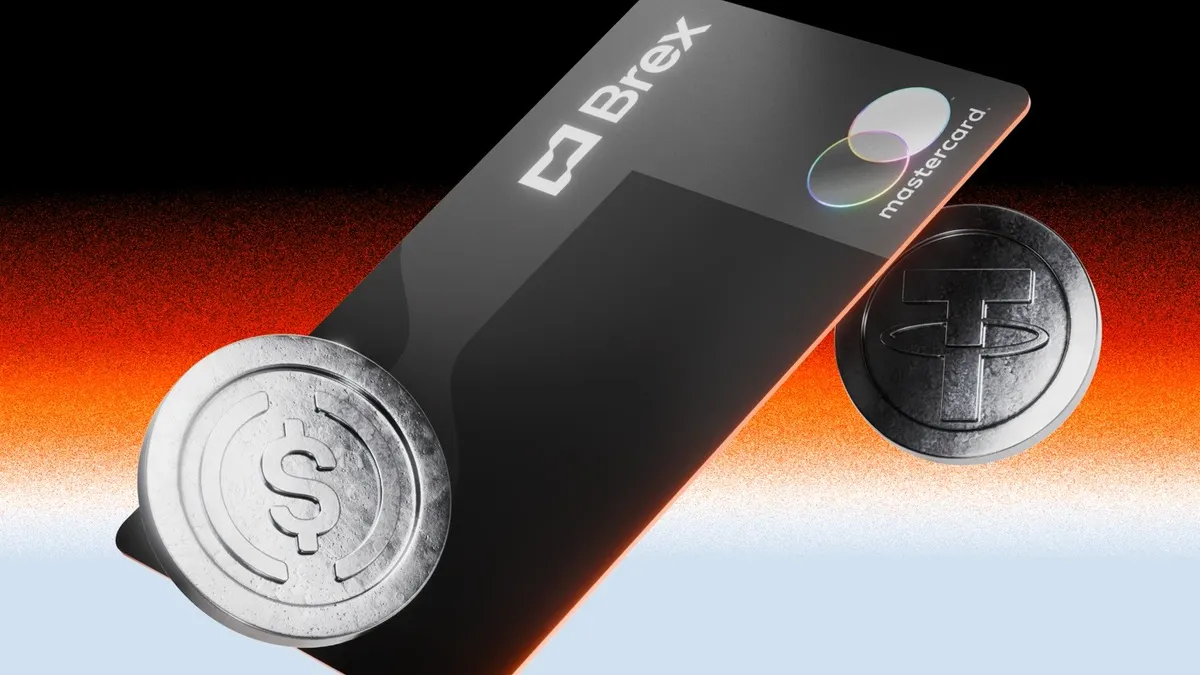
“We can go to any customer and say, ‘If you want to do stablecoin, we have three options for you. We’ve already done the work and integrated, you can pull it through our APIs,’” he said. “That’s sort of where the business is moving.”
Last month, for example, Marqeta and the cryptocurrency platform Coinbase partnered on a stablecoin-backed payment card, allowing Marqeta customers to offer cards that apply stablecoin balances at merchants that accept cards.
The company has also announced a recent partnership with Google, for digital wallet tools aimed at children and parents. Last month, it worked with Square’s parent, Block, to introduce a business credit card for Square sellers – Marqeta’s first product on the American Express card network – as Block consolidated its Square cards.
For the third quarter, Marqeta reported net income of $115.4 million, compared to a $3.6 million loss in the same period last year, with total processing volume rising 29% to $126.5 billion. Revenue was $176.2 million, an 8% gain from the same quarter of 2025.
Block – the parent of Cash App, Square and Afterpay – accounted for 41% of Marqeta revenue in the quarter, down from 45% for the full year last year, according to regulatory filings, as that company has diversified its suppliers. Other Marqeta customers include Affirm Holdings, DoorDash, Uber Technologies and Western Union.