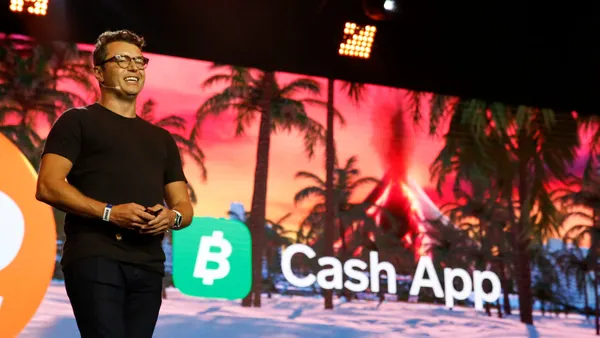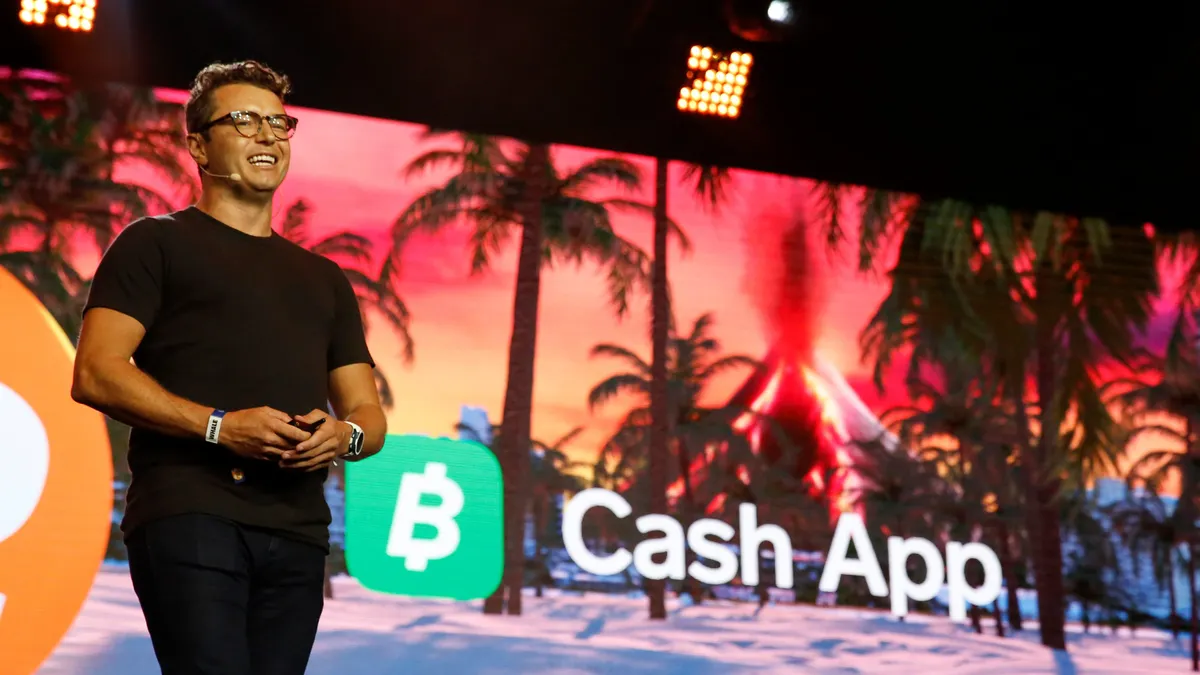
Block executive Miles Suter envisions a day when bitcoin is functional, everyday digital money used as easily as cards and cash for routine transactions.
To get there, Suter – the head of bitcoin and stablecoin at Block – has set out to make payments between millions of American consumers and Square merchants happen in bitcoins.
“We’re in a unique position as a large company with huge segments on both sides of the counter,” Suter said Wednesday, alluding to U.S. consumers and merchants in Square’s point of sale ecosystem. “I believe that there’s no company in the world doing more for bitcoin than Block.”
Suter joined Block nine years ago. The company’s first bitcoin service, bitcoin sales on Cash App, launched in January 2018, with about 24 million active users purchasing the digital currency since then.
But Block has much larger aspirations for bitcoin than merely selling it. Those ambitions are driven by the company’s top executive and long-time bitcoin booster Jack Dorsey.
Enabling bitcoin payments is key, Suter said in an interview. “Jack really believes in the mission of bitcoin as everyday money, and so those are the things I’m always thinking about as we roll out new products and how they can eventually lead to that endpoint.”
To increase awareness of bitcoin, Block launched its first consumer advertising campaign last week in a bid to push the digital currency into the consciousness of what it termed “60 million bitcoin curious Americans,” a figure the company derived from an August survey it commissioned.
The video clips in Block’s “Bitcoin Does” campaign spotlight affordability issues and consumers’ frustration with issues such as inflation, merchants’ transaction fees and rising housing costs. The campaign is mainly being shown on major social media sites, like Instagram, and on Fox Sports television. Ads will also show before two major Hollywood films slated for December releases.
Dorsey, Block’s billionaire founder, has been a bitcoin enthusiast for several years and has overseen expansion of the digital asset into several areas of the company’s business. “I don’t think there is anything more important in my lifetime to work on,” Dorsey said at a 2021 bitcoin conference, CNBC reported.
Block’s effort to promote bitcoin use among consumers comes a year after the company integrated bitcoin payments into the Square point-of-sale services in October 2025. Square also allows merchants to convert part of their card sales into bitcoin.
Another Block business, Cash App, has about 59 million active users of its digital wallet, while Square counts about 4 million sellers on its system. Block offers a 5% discount in bitcoin for Cash App users who pay with the digital currency at a Square merchant.
“I don’t think anybody else has an opportunity to kick off a two-sided marketplace like this,” Suter said of the Cash App-Square interaction. “People have talked about like, ‘Well, maybe bitcoin's relevant finally when you can use it to go buy your daily coffee.’ And now, that’s definitely a reality.”
Block sees consumers’ conversion from traditional fiat money to electronic bitcoin funds as a three-part journey: accessibility to the currency through Cash App; security in its digital wallet; and daily use through Cash App consumers and Square merchants.
“We believe bitcoin needs to be money,” to make it a long-term reality, Suter said.
In terms of bitcoin’s digital cousin, stablecoins, he considers them “a meaningful step on the long-term road towards broad-based bitcoin adoption by the world,” Suter said. Stablecoins are less volatile than bitcoins due to their 1-to-1 backing with fiat currencies.
“It gets people comfortable with this concept of a digital currency,” he said. However, he added, stablecoins “are an extension and a technological innovation of that same” financial system that operates on fiat currencies.
That contrasts with bitcoin, which is a decentralized digital asset that has no government or central bank control and is subject to extreme price swings.
“For me, bitcoin is a more revolutionary, upgraded system,” Suter said. “They’re not necessarily in the same ballpark.”
Stablecoin-payment efforts to date “don’t necessarily have the right posture,” he said, because a digital wallet and POS system may not locate each other or offer the proper incentives for people to try the new payment method.
“We believe in the principles of Bitcoin, and really one of the principles of bitcoin is having a really long-term time horizon, and that’s no shade to stablecoins,” Suter said. “They’re a very useful tool, especially in developing markets. And in the long run, they will assist bitcoin on its path to being everyday money.”
Block’s ecosystem of bitcoin products includes direct sales to customers and transaction revenue through Cash App; a $250 digital bitcoin wallet it launched in April; and a business unit that sells hardware and software tools for bitcoin mining. Direct sales account for the bulk of bitcoin revenues, according to Block’s annual report.
In the second quarter, Block’s gross profit from bitcoin fell 31%, to $72 million, from the same period last year due to Block’s “strategic decision” to trim fees for bitcoin purchases. It also removed fees from purchases over $2,000, and acknowledged that “bitcoin trading dynamics” in the quarter contributed to the profit decline. Block’s bitcoin revenue dipped 13% to $1.89 billion in the second quarter.
Beyond consumers’ comfort and adoption of bitcoin, merchants’ desires for a lower-cost payment rail may ultimately push wider use of the digital coins, Suter said.
“The Square side is still a bit more nascent, but when we do talk to merchants, the thing that they do key in on are those cost savings, and that is what we’ve led with in a lot of our messaging to existing and prospective merchants,” he said, noting that the current card-based system is “really good in a lot of ways.”
“Ultimately, I do think (costly network fees) will be one of the things that helps to kickstart this, but changing the global financial system is probably the hardest thing I could imagine,” Suter said. “And so I just zoom out again, sometimes, and know that this is a really long-term journey and mission that I’m committed to and Block is committed to.”