Block is seeking regulatory approval to operate a national trust bank, joining a copious list of financial technology companies seeking to become banks.
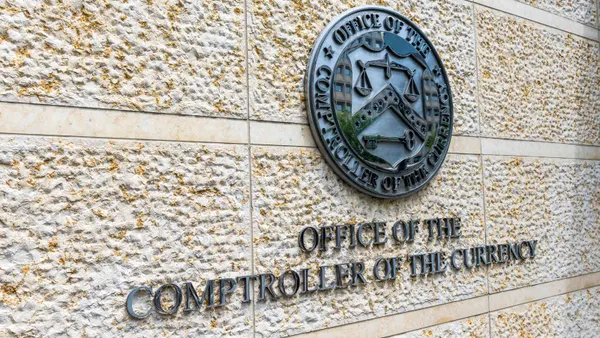
The parent of Cash App and Square said Tuesday it will establish Builders Bank & Trust if granted approval by the Office of the Comptroller of the Currency.
Block’s bank would provide “custody and related fiduciary services, including for bitcoin and stablecoins,” the company said in a press release. Builders Bank would be uninsured and not take deposits or make loans, the company said.
“Building on Block’s experience in the digital asset space, our history with Square Financial Services, and the deep banking expertise of the team we’ve assembled, we believe Builders Bank is well positioned to support Block’s broader vision of economic empowerment,” Lee Woolley, who would serve as the bank’s president and CEO, said in the release.
Woolley is Block’s digital asset strategy lead and the former CEO of Treasury Department Federal Credit Union.
The charter would give Block “a federal supervisory framework for certain custody and related activities currently offered by Block,” the Oakland, California-based company said in the release. Block’s Square point-of-sale business received an industrial loan charter from Utah in 2020, and it established Salt Lake City-based Square Financial Services the following year.
Block isn’t sharing details on the bank’s product offerings at this time, a Block spokesperson said Tuesday in an email.
In May, President Donald Trump signed an executive order requiring federal agencies to “streamline” application processes for fintechs seeking bank charters and other access to “traditional financial services and payment systems.”
Even before that directive, numerous financial technology companies had decided to pursue banking charters during Trump’s second term.
Last week, London-based fintech Revolut received conditional approval from the OCC to establish a national bank in the U.S. In July, the OCC gave final approval for a bank charter to Circle Internet Group, the New York-based stablecoin issuer and platform.
In February, Stripe’s Bridge subsidiary received conditional OCC approval for its charter, allowing it to issue stablecoins, custody digital assets and manage reserves with the agency’s oversight.
Affirm Holdings and PayPal Holdings have both sought bank charters to operate as industrial loan companies, from Nevada and Utah, respectively. Two months ago, buy now, pay later rival Klarna Group also filed for an industrial bank charter from Utah.
Buy now, pay later provider Sezzle also intends to seek OCC permission to operate a national bank trust, CEO Charlie Youakim said last month in an interview, abandoning a prior plan to pursue an industrial loan charter from Utah regulators.
Other firms that have sought, and gained, OCC national trust bank charters include Ripple, Paxos Trust, BitGo Bank & Trust and World Liberty Financial, the cryptocurrency company associated with Trump’s family. In July, the OCC denied the U.K.-based money transmitter Wise’s national trust charter application.
“America and the OCC are once again open for business,” Comptroller of the Currency Jonathan Gould said last month in a press release, heralding the agency’s pace of new bank charters.