Apple is planning significant but subtle changes for its digital wallet and payment tools as the tech giant leans into artificial intelligence to make consumer transactions simpler.
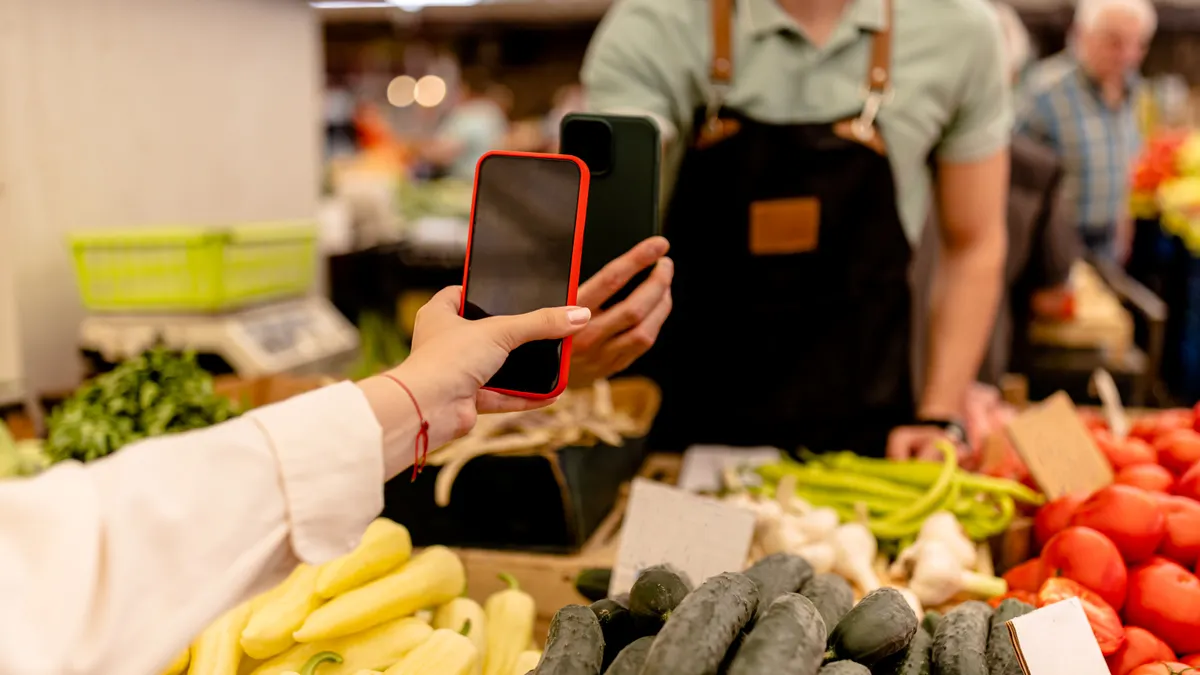
The company’s “tap to share” function planned for release later this year will let shoppers with an Apple device share data such as billing and shipping addresses, or loyalty program rewards details, with a merchant.
That change extends the common consumer sharing of photos or contact information with phone taps into the business domain, noted Kris Winckler, a senior associate with payments consulting firm The Strawhecker Group. That kind of data sharing also helps avoid the need for a consumer to type in a phone number or scan a loyalty card separately, he said Wednesday in an interview.
“All those things kind of just add to making it a lower-friction, better experience for the consumer,” said Winckler, a former payments executive with Bank of the West and software provider Intuit. “People are going to use what's easy. So, if you make that even easier in the normal payment experience, (Apple) is going to get a bigger kind of share.”
Apple revealed the wallet and payment options last week as part of its annual WWDC event featuring software developments integrated into the new iOS 27 release that’s expected in September. Apple used the event to focus attention on its revamped Siri AI – technology the company has significantly reconfigured with Google’s Gemini AI model.
Apple aims to give its wallet more features – especially in terms of presenting more information about loyalty program balances, the funds in a debit account and pay-later options, according to the press release.
Apple spokespeople did not reply to messages seeking comment on how merchants will incorporate the data sharing into their sales process.
AI is likely to play a bigger role in payments because of the myriad ways to pay – credit, debit, buy now, pay later, store charge cards – and the various merchant rewards that come with different cards, said Justin Miller, a partner in the financial services and private equity practices at the consulting firm Bain in New York.
“There’s a lot of different ways to pay for stuff, and at the same time, how you pay is getting more complicated,” Miller said in an interview Wednesday. Smaller merchants’ surcharges and discounts, fueled by interchange costs, affect payment decisions, as do loyalty reward bonuses, he noted. It’s also easy to forget how much money a particular payment account may have.
“Today, we leave that poor consumer to themselves,” Miller said. In the future, “a truly smart AI assistant wallet” could advise which payment method offers the best reward or automatically apply a credit card’s monthly $100 dining credit.
That’s not yet the world Apple or its payment rivals have created, Miller said, but the forthcoming OS release hints at the evolution.
Apple’s wallet changes also will let people swap among their digital payment cards more easily. The wallet will gain more utility for handling identification documents like passports and drivers licenses, while also creating virtual “passes” to replicate physical cards, such as those for the retailer Costco Wholesale or for a gym membership, Apple said.
The arrival of debit card balance information was “sort of hidden” in the barrage of new features, Miller said, but could prove to be a powerful factor helping determine which card a shopper selects.
Bank and fintech card issuers could “broadcast” balance information to the wallet, Miller said. That wallet change opens “an interface for issuers to give us more information that might help influence the consumer's choice of payment vehicle," he said.
While Apple appreciates revenue derived from transactions, that is strictly ancillary to the task of selling devices and drawing more people into the ecosystem, said Aaron Press, a research director for IDC who focuses on payments.
“Everything Apple does around payments is designed to make the Apple ecosystem more attractive and drive adoption of iOS,” Press said Wednesday in an email. “If the user experience of Apple Wallet, Apple Cash, etc., is better, more people will buy Apple devices.”
Apple has a user base of about 2.5 billion active devices, a record the company reported this year. Half of Apple’s revenue is from the iPhone alone, said Tom Forte, a senior consumer internet analyst at Maxim Group in New York.
The multi-billion device base offers further growth for both Apple Pay and the digital wallet in terms of selling new devices, as Apple and Android phone users rarely switch to a rival system, Forte said in an interview Tuesday.
“The good news for Apple when it comes to artificial intelligence is that OpenAI, Anthropic – really, anyone – hasn’t created a hardware device that enables consumers to engage with AI that is superior to the iPhone and the iPad,” he said.
Apple also debuted an AI-driven bill-splitting feature in the new operating system at its event last week. The function offers two options: request funds or a “pay your share” selection, based on the itemized list of menu items on the bill. The diner can send the amount of the meal, with a customized gratuity, to the person who’s paying the restaurant.
However, everyone in the dining group would need to have an Apple Cash debit card for the splitting feature to function, Press noted. PayPal Holdings’ Venmo and Block’s Cash App payment features do the same thing, he said.