A revised settlement with merchants improved sufficiently to win initial court approval Tuesday as Visa and Mastercard shed their “honor all cards” rule.
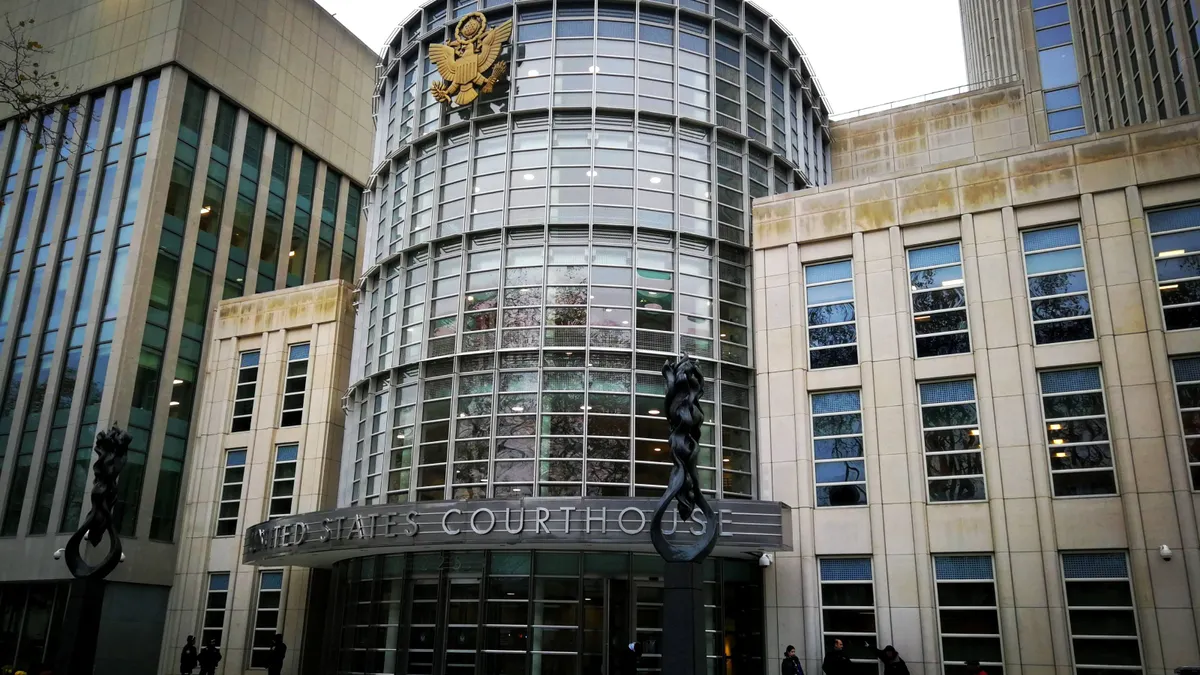
U.S. District Judge Brian Cogan noted the rule change, along with other changes to merchants’ ability to surcharge and discount for payment cards. The revised settlement “provides more extensive relief” than a prior 2024 settlement, Cogan said, “notwithstanding the objections to its adequacy.”
The revised pact “has been improved just enough” to win preliminary approval and will likely gain a final stamp of approval, said Lloyd Constantine, an attorney with Constantine & Cannon. The settlement is also likely to win final approval, he predicted Tuesday night in an email.
Constantine’s New York firm represented dozens of plaintiffs in a damages portion of the same litigation. In April, a federal court approved the last of the networks’ settlements over damages with that group of merchants that opted out of a separate class suing for damages.
Still, the fight is far from over, some merchants who oppose the settlement said.
“Retailers continue to face excessive and ever-increasing swipe fees in a broken payments market that lacks competition,” the Retail Industry Leaders Association said Wednesday in a press release. The settlement “leaves intact the underlying system that enables Visa and Mastercard to dictate the rules and costs that merchants and consumers must bear.”
The interchange fee settlement, announced in November 2025, is aimed at ending 21 years of litigation on the matter. It is supported by the card networks and attorneys for the class of plaintiffs, with the litigation dating to mid-2005.
Here are four takeaways from Cogan’s ruling:
Eliminating the ‘honor all cards’ rule is a big deal
The card networks’ acquiescence on allowing merchants to treat different payment card types differently was “arguably, the central relief” offered in the revised settlement, Cogan said.
“Whether all merchants will avail themselves of that relief is to be seen,” he wrote. “As for whether all merchants can avail themselves of that relief, the answer is clearly yes.”
A merchant’s decision to continue honoring all cards, which would avoid possible consumer confusion at checkout, “and forgo saving money on interchange fees” represents “a sign of competition,” the judge wrote.
This has gone on long enough
One factor judges consider is whether a proposed settlement is “fair, reasonable and adequate.” Part of that determination is how complex, expensive and protracted the litigation is likely to be, absent the settlement.
The swipe-fee case – which dates to October 2005 – “has proven to be a complex, costly, time-consuming case,” Cogan noted.
A trial would last up to two months, Cogan said, adding that while the case “may be trial-ready in the sense that there are no outstanding pretrial motions, it is certainly not trial-ready in the sense that it could be tried tomorrow.”
Beyond a trial, there would almost certainly be appeals of the verdict, further complicating the outcome and occupying judicial resources.
The networks have a decent case
At a trial, the merchants face multiple legal obstacles to establishing legal liability on the part of the card networks, Cogan wrote. They’d need to show that the interchange rules have had “an actual adverse effect on competition as a whole in the relevant market,” Cogan said, citing a 2021 appeals court ruling.
“The Court expressed at the preliminary settlement approval hearing that the Networks may want to consider taking this (case) to trial,” Cogan noted in his ruling, alluding to various legal issues the merchants would face at trial. “This was the Court’s admonition to Plaintiffs, and to the objectors, that establishing liability was not a foregone conclusion.”
More input on the preliminary pact is coming
Several of the merchants’ trade associations noted the preliminary aspect of the approval. The class counsel will publish notice of the settlement, providing another round of commenting from merchants opposed to the terms.
As that process plays out, Cogan will learn more about whether “the various complaints raised are pervasive among the 12-million-merchant class or confined to a vocal minority,” as he put it in his decision.
And even if the court decides to bestow final approval, it’s a near certainty that at least some merchants will appeal. For example, the National Association of Convenience Stores’ top lawyer, Doug Kantor, on Tuesday vowed a review by the 2nd Circuit U.S. Court of Appeals if Cogan approves the deal a second time.