Dive Brief:
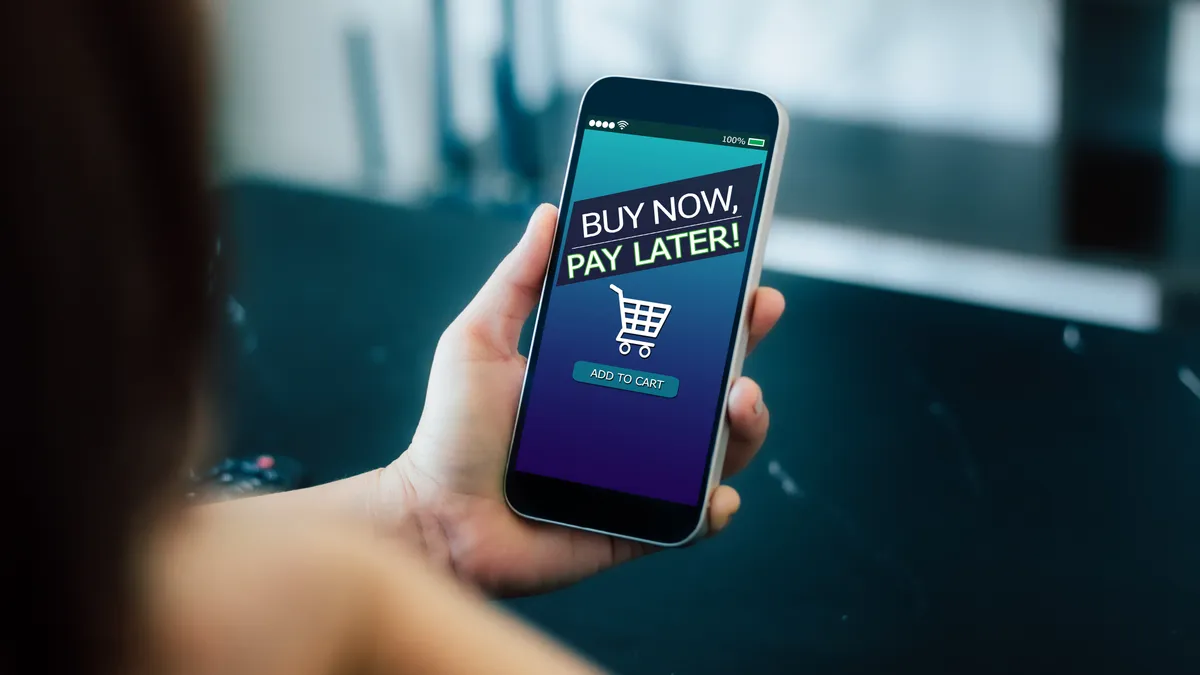
- Buy now, pay later company Zip has received a warehouse facility of about $283 million from Victory Park Capital, the investment firm announced Monday. Atlas SP Partners partnered with Victory Park Capital to facilitate the transaction.
- The two-year deal will support Zip’s U.S. BNPL receivables, allowing the company, which has a U.S. headquarters in New York, to scale and grow its funding capacity, the release said.
- “This funding warehouse will position Zip to support business expansion, maintain strong balance sheet discipline and capitalize on the available growth opportunity in the U.S. market,” Joe Heck, Zip’s U.S. CEO, said in a release.
Dive Insight:
Zip, which was founded in Australia, has also received equity investments from U.S. investors, including $100 million from Y Combinator, CRV and Tiger Global in 2023.
Chicago-based Victory Park, which became a majority-owned affiliate of global asset management firm Janus Henderson Group last year, has has provided financing to Zip over the past decade, extending credit lines that have bolstered Zip’s buy now, pay later offering.
As Zip procures more funding for its payments business, the company has shown signs of growth. In October, the company reported a 32.8% surge in fiscal first-quarter total income to $321.5 million over the prior year, and its total transaction volume jumped 38.7% to $3.9 billion, according to the October earnings report.
The number of merchants and active customers on its platform grew at more modest rates, 9.1% and 5.3%, respectively. The company's BNPL competitors include Klarna Group, Sezzle and Affirm Holdings.
“We continued to optimize our funding portfolio with initiatives to improve capital efficiency, cost of funds, capacity and flexibility in both markets,” Zip Group CEO, Cynthia Scott, said in the earnings release.
As the company nabs financial backing for its expansion, Zip aims to have its BNPL services used in the U.S. for a broader range of services. Zip has been associated with fashion and high-end items, but the company has expanded to add merchants, including Valvoline and Best Buy, in a bid to attract U.S. customers paying for everyday purchases.