Digital payment company Shift4 Payments prefers to work with large merchants because fewer competitors are vying to be the payment processor of choice for big name businesses, the company's CEO said in a question and answer session earlier this month.
“We want merchants that have 70, 100, or 1,000 revenue centers all managed by different software,” CEO Taylor Lauber said on Jan. 12 at the ICR Conference in Orlando, Florida. “When you can connect all those things together the air is very thin from a competitive standpoint.”
Similarly, the Allentown, Pennsylvania-based payment firm eschews businesses with a single location because those firms have so many options other than Shift4, he said.
"If you can download a piece of software on an iPad and run your business, we want to be as far from that competitively as possible," he said.
Companies are popping up all the time to fulfill the payment software needs of those businesses, Lauber added.
Shift4 instead seeks to work with merchants with dozens of locations or vendors and complex software needs, he said.
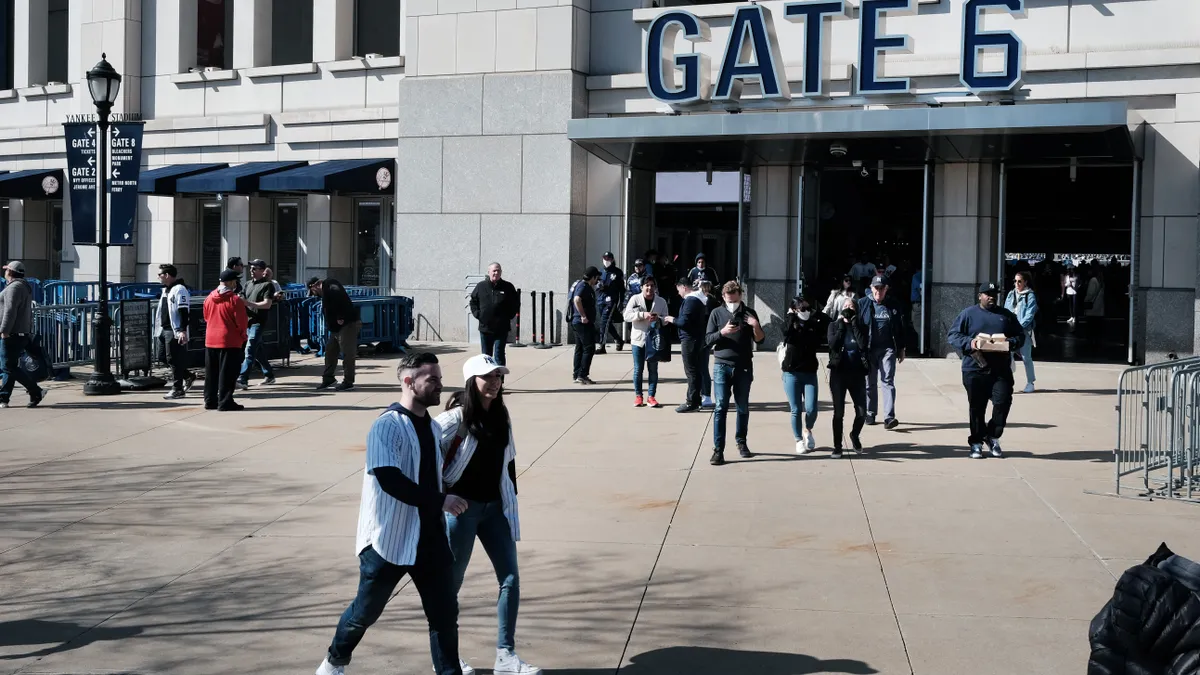
Lauber singled out the New York Yankees, a team with a stadium that seats around 46,500 people and has multiple restaurants and shops selling everything from sports memorabilia to beer and hot dogs, as an example of the clients it pursues.
The company signed an agreement with the storied Major League Baseball team in 2024 to process concession and retail payments at Yankee Stadium in the Bronx and George M. Steinbrenner Field in Tampa, Florida. The latter serves as the team’s practice field during annual spring training.
The payment processor is known for working with professional and major college sports teams and entertainment venues. Shift4 also includes large hospitality groups like Hilton Worldwide Holdings and Caesar's Entertainment as customers, along with the restaurant chain California Pizza Kitchen.
Lauber also shed some light on the company’s acquisition of payment technology firm Global Blue in July.
The merger perplexed some analysts, who said it deviated from the payment processor's traditional playbook. But Lauber said the company had its sights on Global Blue for years before it pulled the trigger.
"We talked about it on and off for six years,” he said.
At first, Shift4 executives felt that the $2.5-billion-dollar price tag for Global Blue was too high, but the payment processor's revenue eventually grew enough that the figure was no longer out of reach, Lauber said.