Dive Brief:
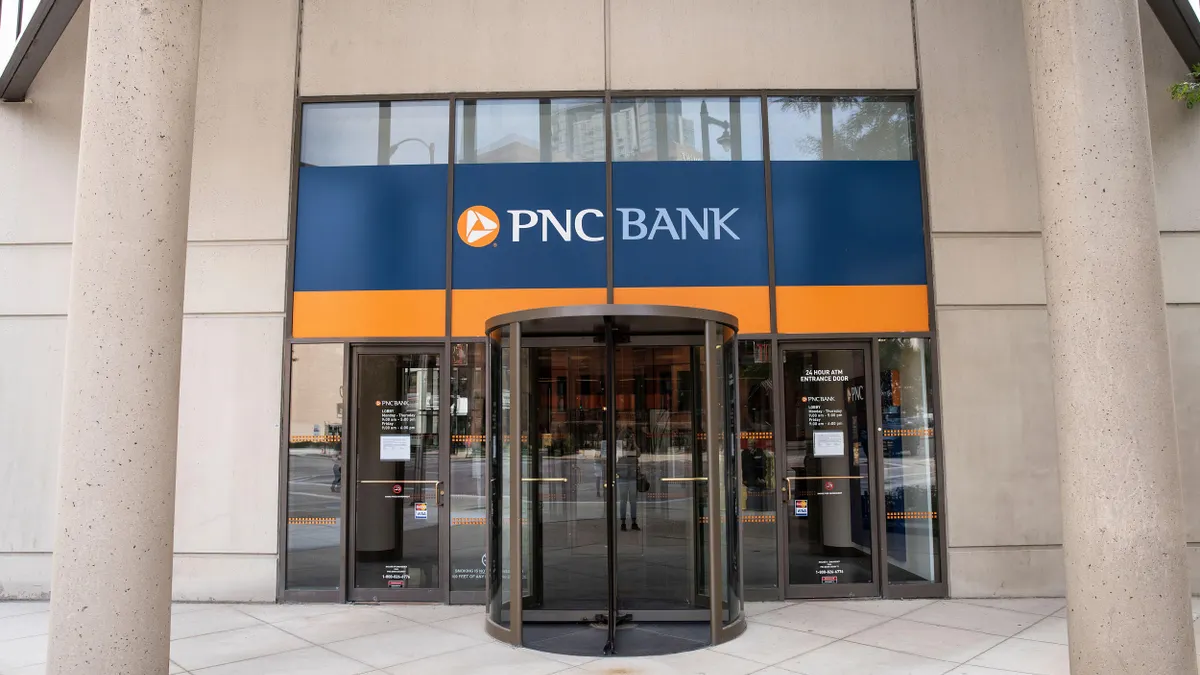
- When PNC Bank joined the Federal Reserve’s instant payments system FedNow in October, more than two years after the federal government’s real-time option became available, it was because of a Treasury Department decision to deliver disaster payments using FedNow.
- “The difference for us, and why we ultimately chose to implement FedNow, in addition to our other instant payment offerings, was when the U.S. Treasury signaled its intention to pay disaster payments to individuals using the FedNow system,” said the head of global payments for the bank’s treasury management division, Sarah Billings, during a Fed event to discuss FedNow this month.
- Another “key consideration” for the bank was also the opportunity FedNow offered in reaching more financial institutions with such services than PNC was able to without it, Billings said during the Dec. 10 Fed virtual town hall event.
Dive Insight:
Since the Fed launched FedNow in July 2023 to offer all U.S. financial institutions access to a faster payments system, about 1,500 banks and credit unions have signed up to use it, with participants peppered across the country. There are about 9,000 financial institutions in the U.S. so the Fed’s campaign to attract more FedNow users is ongoing.
Those that currently use the system have between $500 million and $3 trillion in assets, a Fed official said during the panel discussion.
Many of the big banks, including the largest – JPMorgan Chase – signed up to participate with FedNow in the first year of operation, but some major financial institutions, including PNC, whose parent is PNC Financial Services Group, were slower to join. Both PNC and Capital One Financial did so in October.
While the Treasury’s Bureau of the Fiscal Service had adopted FedNow in 2023 as an option for federal disbursements, the department didn’t add the ability for such payments from the Federal Emergency Management Agency until October of this year. That was the nudge that made PNC reconsider its non-participation.
“As a bank with a large retail franchise, we couldn't imagine not giving our retail clients access to those immediate funds when they needed it most,” Billings said.
Billings also noted how the real-time payments can be handy for PNC corporate clients for other types of business emergency needs, like if they forget to process payroll on a given day, such as a bank holiday that not all businesses observe.
“We've seen our clients do instant payments to fund their payroll, whereas perhaps in the past, it would have been late,” she explained.
Before it joined FedNow, PNC was able to reach about 80% of banks with real-time services, including by way of The Clearing House’s real-time payments network, but it’s aiming to connect to 100%, Billings said. She also suggested the Fed has some work to do in luring more financial institutions to link with FedNow.
“We see the Fed reaching more and more institutions,” Billings said. “I don't think the job is done yet, but we are very hopeful that it will make a big difference.”