Merchant adoption of PayPal Holdings’ latest technology has stymied the company’s growth – a reality that became clear Tuesday as the company reported disappointing financial results.
The digital payments pioneer, born more than a quarter century ago, has been on a campaign to lure merchants to its latest PayPal checkout features, but it has been unable to broadly win their investments in new technology that would allow for upgraded features. That gap in adoption led to a company mea culpa and the exit of CEO Alex Chriss this week.
“We’ve reimagined a product that had been stagnant and underinvested in for years, creating a new value proposition for merchants and consumers, but we were too optimistic about how quickly we could drive change and customer adoption across a massive global user base,” Chief Financial and Operating Officer Jamie Miller acknowledged Tuesday during a webcast with analysts to discuss the company’s performance. “The results are not yet where we expected them or want them to be.”
Chriss had laid out ambitious growth plans at his first investor day last year leading the company, but the promises made then are falling by the wayside now.
His departure was reminiscent of the experience of his predecessor, Dan Schulman, who left in 2023 when he couldn’t achieve growth goals.
Miller, who will serve as interim CEO until board member Enrique Lores steps into that role March 1, was left Tuesday to explain to analysts how the company may also fall short of financial performance goals next year.
“We are no longer committing to the specific outlook for 2027 we laid out at Investor Day last year for these reasons, we think it’s prudent for now to provide financial guidance one year at a time,” she said.
The San Jose, California-based company’s fourth-quarter report showed that not only was growth of PayPal’s payments volume not accelerating, both online and in-store, it actually decelerated in the fourth quarter, relative to the prior quarter, despite the year-end holiday shopping season. The metric grew just one percent, on a currency neutral basis, for the fourth quarter, over the prior year period, down from a 5% increase in the third quarter.
The slowdown was due partly to less spending by lower- and middle-income consumers, with “macroeconomic softness” particularly in Germany, Miller said. The deceleration appeared even in areas where the company had previously seen stronger growth, including purchases for gaming, travel, tickets and crypto, she said.
Miller said “operational and deployment issues” also tripped up bringing merchants along, slowing the pace of progress in the second half of last year. The company built improved services, but merchants didn’t come, despite benefits for converting, she explained.
“The reality is our merchants, especially the largest ones, have many competing priorities and require much more hands-on integration support than we anticipated, which has slowed our progress,” Miller said.
That failure has meant the company suffers when it goes up against a growing list of competitors at checkout, including BNPL providers such as Klarna and Affirm as well as Apple Pay. The shortcoming has been due partly to PayPal being unable to offer updated biometric features.
PayPal is revamping how it uses resources this year in pursuing plans. “Our focus needs to be on both ensuring a frictionless consumer experience through biometric capacity adoption and that merchants have upgraded,” Miller said.
That will entail having the PayPal option, and its ancillary services like buy now, pay later, show up earlier on merchants’ payment offerings. It also will mean spooling up efforts to draw consumers in with loyalty benefits and incentives.
While PayPal has reported stronger growth metrics for some of its services, including its Venmo peer-to-peer payments tool, it’s still in the process of rolling out more Venmo reward programs, Miller said.
A sharpened strategy this year will focus on the largest merchants, a group that PayPal hasn’t sufficiently targeted in the past, Miller said.
“One of the big things we learned was that we have been trying to do this across all merchants all at the same time, and what we have done now is really reformulated our teams around dedicated, mission-based teams, particularly for high-impact merchants,” Miller said in response to an analyst question.
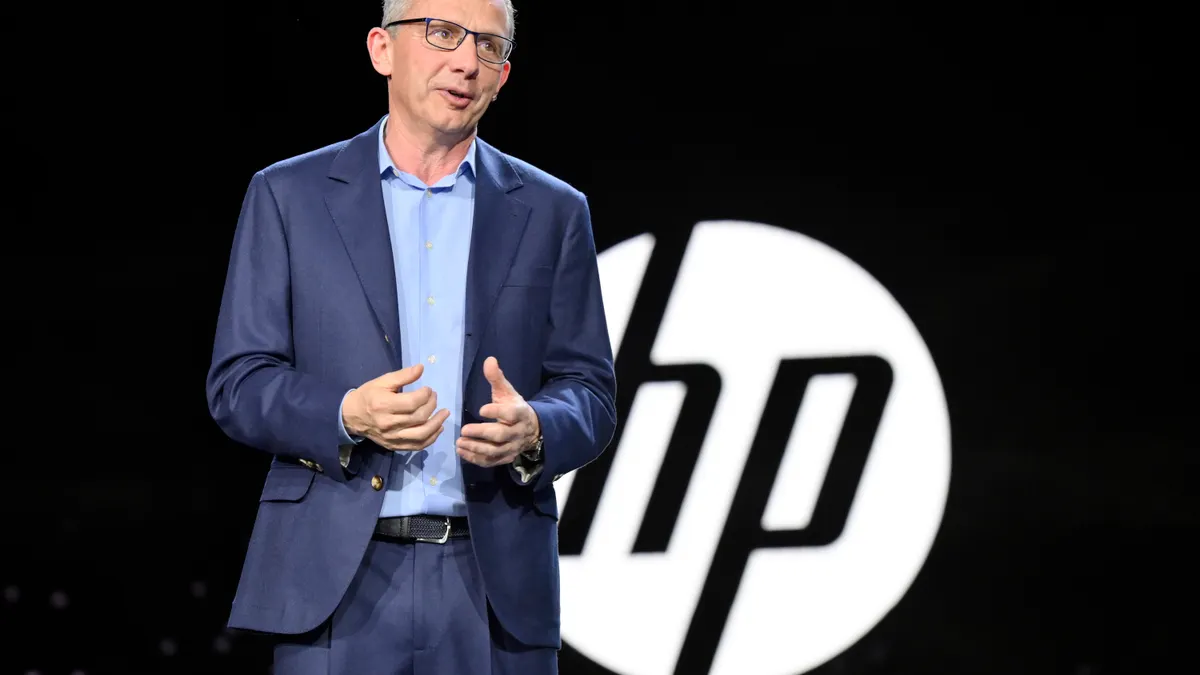
The company will rely on the experience and skills of Lores as a key to unlocking better execution on plans this year. Lores was formerly CEO at the technology company HP and has served on PayPal’s board for five years.
“2026 will be about continuing to scale with strategic merchants and partners at the same time that we drive biometric enrollment,” she said.