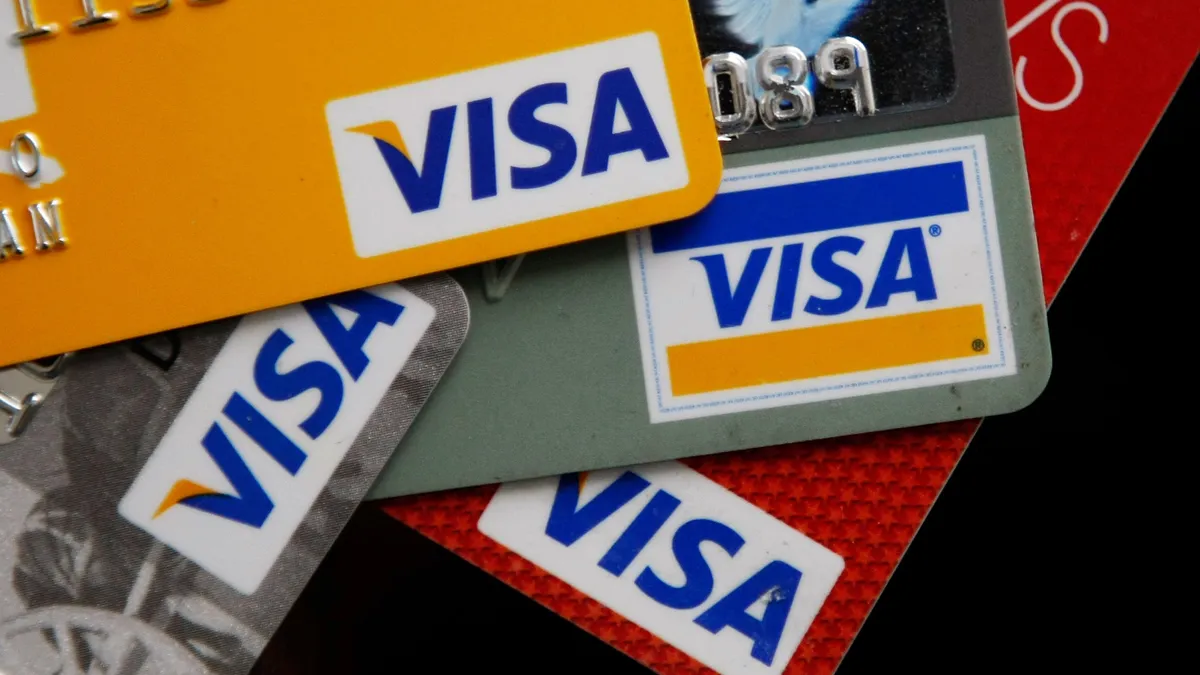
Since card giant Visa instituted a new program for assessing credit card interchange fees in October, some merchants have been blind-sided by higher expenses.
While the card network, bank issuers and processors have been preparing for Visa’s new Commercial Enhanced Data Program all year, consultants say many merchants were unprepared for the change. As a result, they were forced to pay higher fees becuase they were pushed into a new interchange level that sliced prior discounts.
Verisave CEO Jeremy Layton’s firm reviews credit card processing fees as part of its consulting services for small, mid-sized and large retailers, restaurants and other merchants. He said the majority of his clients are “struggling” with the change, incurring higher Visa fees because they’re not providing the data that the card network demanded under the new program. Merchants have had to recalibrate their systems to provide the data.
“Some of our largest clients that do billions of dollars a year in processing revenue fell short,” Layton said in an interview last week. “They’re in panic mode right now.”
Under the CEDP change instituted Oct. 17, Visa is demanding more data from merchants as such information becomes more important to the financial institutions that issue credit cards and to a host of intermediaries like the network. Visa and its partners say that more data is essential to their fight against rising credit card fraud.
Visa, the largest U.S. card network, has had three levels for assessing interchange fees, with the level three requiring the most data from merchants, and offering the highest discount on interchange fees when consumers swipe a credit card. The level two requires less data and offers a lower discount, with the level one acting as a base interchange rate.
Merchants fail to adjust
For years, merchants have received the level three discount even when they submitted the equivalent of dummy data for transactions. Visa’s new program is designed to stop that practice and accept only real data, with the level two discount ceasing altogether next April.
Under Visa’s new program, “it has been much more difficult for these merchants to actually achieve the new level three rates,” Layton said.
Layton, whose Salt Lake City-based company has 26 employees, largely blames Visa for poor communication about the new program and merchants missing their discount targets in the weeks since the new program went into effect, he said. The network has been “tight-lipped” about the change, forcing his firm to wait for answers to many questions over the past six months, he explained.
Despite his complaints about the new program, Layton says he understands that the additional data could help mitigate fraud. And he knows bank card issuers have lost revenue as a result of receiving lower interchange fees for fake data.
Spokespeople for Visa didn’t respond to a request for comment.
The carrot that Visa is dangling to entice merchants to get with the new program is even lower level three rates than before if they’re able to satisfy the new rules for submitting data.
Visa’s AI sifts transaction data
While Layton’s firm is attempting to lead clients to solutions that allow them to achieve desired discounts, it’s also reminding customers Visa will use its digital tools, including artificial intelligence, to monitor the data and keep driving home the new program.
“Visa has invested billions of dollars into their AI technology,” and is “really serious” about the new program, Layton said. “The fact that some of these big clients that we have are already losing hundreds of thousands of dollars tells you that Visa is not messing around here.”
Other industry consultants that provide services to merchants, including PayBright CEO Dustin Magaziner, have also been bracing for the impact from Visa’s switch to CEDP. Some are particularly concerned about what happens when Visa’s new surveillance for data makes a mistake and saddles merchants with higher costs, and maybe even penalties.
Magaziner, whose Raleigh, North Carolina-based firm provides merchants with software to manage their payments, said it’s still too early to get a real reading on the impact of the Visa program. The first full monthly statements, for November, are only arriving at merchants now, he said.
Still, it is clear that Visa poorly prepared the industry for the new program, he said.
“One of the most concerning challenges is the confusion we’ve seen at the processor level,” Magaziner said in a message Monday. “With CEDP, merchants must be enrolled in CEDP to be eligible, and there is mass confusion across the industry about how to commercialize and properly enable CEDP, let alone get updated reporting in regards to which merchants have and haven’t been enrolled.”
Fake data persists
Part of the challenge for merchants is that if they’re erroneously socked with higher fees, they’ll be forced to stomach the unexpected cost for some amount of time until Visa provides a rebate, Boost Payment Solutions CEO Dean Leavitt pointed out in an interview last month.
“Most transactions, most merchants – suppliers – are essentially being treated as guilty until proven innocent, Leavitt said.
Most merchants are not yet “verified” under the new program, he explained. That stumbling block is in addition to some transaction data not passing muster under the new parameters.
“Many of these suppliers are going to see transactions that were interchanged at 100 basis points higher than they thought they would be, so there’s going to be somewhat of a freak-out there,” Leavitt forecast last month.
Consultants are also blaming Visa for letting some merchant acquirers and gateway firms that process credit card transaction data continue to get away with using fake transaction data.
“What surprises me more than anything is that these processors and gateways are still playing that fake data game,” Layton said. “I think it’s undermining the integrity of the whole program.”
Magaziner said he’s also seeing such behavior. There are “certain large processors still passing total junk data successfully,” he said. He and Layton declined to name the companies.