Brian Gaynor is the European chief executive at global payment orchestration business BlueSnap, which is owned by suburban Chicago-based Payroc WorldAccess. He is located in Dublin.
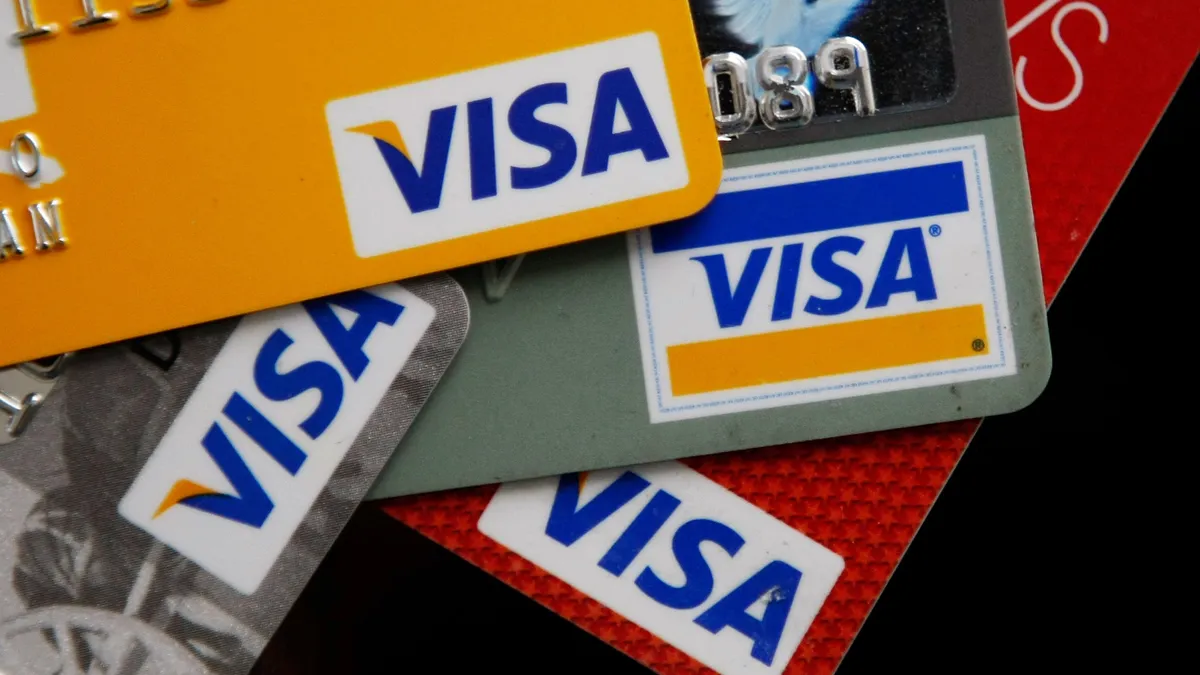
In seeking to reduce its reliance on Visa and Mastercard, the United Kingdom banking sector is justified, given the perceived risk that the two main schemes have too much control over the market.
The concern is valid. Both payment processing networks – the two largest in the world by acceptance – exert significant influence over global payments creating economic and strategic vulnerabilities for the U.K. and Europe. Governments and financial institutions are right to explore alternatives, and it’s all part of Europe's broader effort to reduce its dependence on U.S. technology and infrastructure, which is justified.
However, recognizing a problem and solving it are two very different challenges – and the current plan to replace, or wean the continent off, Visa and Mastercard is unlikely to succeed.
Payments are fundamentally different from other areas of technology. Unlike enterprise software, there is no straightforward “open source” equivalent waiting in the wings. Building a viable alternative to global card schemes is not just a technical undertaking; it is an ecosystem challenge.
To date, the most credible European initiative aimed at reducing U.S. dependency has been Wero, a unified European digital wallet and instant payment system which is being rolled out across the region. However, it remains limited in scope. It is not yet available across the entire European Union, has only recently begun supporting e-commerce payments, and does not yet offer key capabilities, such as near-field communication (NFC).
The fundamental issue is adoption. For any new payment system to succeed, it must achieve a critical mass of both consumers and merchants – there needs to be a network. Without a large number of users on both sides, any new payment scheme will struggle to compete. Consumers (and merchants) in the U.K. and Europe are deeply accustomed to card payments, and there is little incentive to switch unless the alternative offers a significantly better experience.
At present, it is not evident that this is forthcoming – card acceptance is everywhere, secure and cost-effective -- a difficult incumbent to better.
Comparisons to systems like Unified Payments Interface (UPI) in India or Pix in Brazil are often cited, but they are misleading. In both cases, adoption was driven by the shift away from cash rather than by the displacement of well-established card networks. In both countries, card penetration was relatively low anyway. But the U.K. and Europe already have highly mature card ecosystems – making behavioral change far more difficult.
In the meantime, businesses should focus on resilience rather than replacement.
Governments are already advising citizens to keep cash on hand for emergencies, reflecting broader concerns about systemic vulnerabilities, whether from connectivity disruptions or infrastructure risks. For merchants, this means diversifying payment options and working with providers that can offer alternative routing in the event of scheme outages.
In the long term, a more realistic outcome is not the displacement of Visa and Mastercard, but their evolution. Regulatory pressure may lead to greater localization of processing and data within the U.K. and Europe, potentially restoring elements of regional control that existed in the past. This would allow governments to address sovereignty concerns while maintaining alignment with global payment networks.
The ambition to build alternatives is right. The expectation that they will meaningfully replace existing schemes may not be.