The Justice Department’s ongoing antitrust case against card network Visa may hinge on how the U.S. debit card market is defined.
A company’s ability to compete against Visa and others in the debit card processing market will be crucial in deciding how the litigation turns out, two attorneys who follow the industry said last week.
“Market definition is the whole ballgame,” Gregory Dickinson, an assistant professor at the University of Nebraska College of Law, said in an Aug. 3 email about the case.
In its unsuccessful motion to dismiss the lawsuit last year, Visa argued that the government had drawn the debit market too narrowly as part of its allegations, noted Dickinson, who teaches courses on unfair competition and remedies.
That argument is likely to return as the case moves to trial, he said.
Visa “has every reason to run it again on a full factual record,” Dickinson wrote Monday in an email about legal strategy in the case. “The expert phase will be a fight about market substitution – whether ACH, pay-by-bank, and newer payment networks belong in the same market as debit network services.”
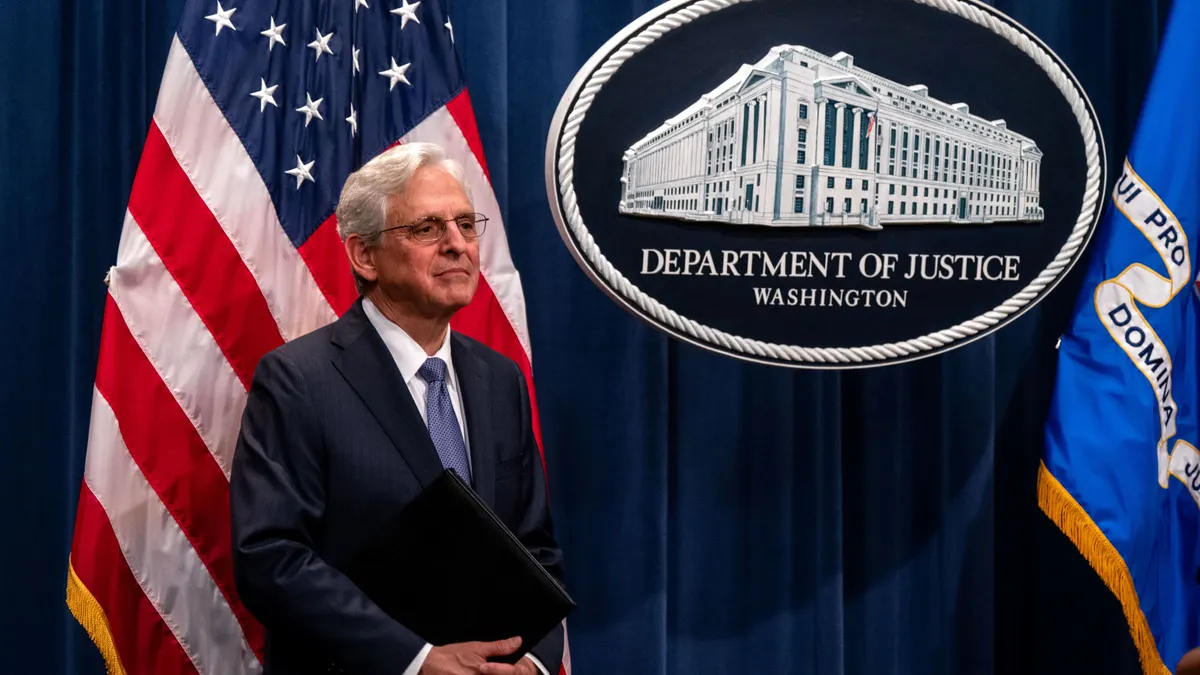
The DOJ brought the case against Visa in September 2024 under former Attorney General Merrick Garland, with President Donald Trump’s administration carrying it forward. The government argues that the company has carved out an illegal monopoly in the debit card market. Visa has denied those allegations.
“Watch the early fight over how you define the market, because whoever wins that argument wins the case,” said Stephen Aschettino, chair of the fintech and digital assets group at law firm Fox Rothschild in New York.
“The DOJ is coming after Visa with a playbook we’ve seen before: network effects and exclusive deals that allegedly boxed competitors out of debit routing,” he wrote in an email Aug. 3. “Visa is going to fight back hard, framing its practices as innovation and security, not a lockout.”
The odds of a settlement before trial are “above 50%,” Aschettino estimated. “It’s just easier to hash out changes to routing and network access at the table than to fight it out in court for years,” he said.
The alleged monopolization in the debit case “runs through contracts rather than through a merger or a product design,” Dickinson said in an email. Such “a tech-forward Sherman Act case, whose machinery is a web of private agreements,” is intriguing in the legal world, he said.
San Francisco-based Visa had no comment on the case, a spokesperson said Aug. 3. The Justice Department did not respond to requests last week seeking comment.
Visa handles more than 60% of U.S. debit card transactions on its network, collecting more than $7 billion in annual processing fee revenue, according to the government’s complaint. Mastercard is a distant second, with less than a quarter of the debit-processing market, the lawsuit said.
The 2024 lawsuit faces an important deadline this month as the sides share their final witness lists and prepare to close discovery on Oct. 16, about 16 months after it began. The court hasn’t set a trial date.
Dickinson argued that the DOJ’s lawsuit shows that Congress failed in its effort to regulate debit card fees through the Durbin Amendment, the 2010 measure that caps interchange cost and requires at least two competing networks be available for a transaction to try to keep costs lower.
“The allegation is that Visa rebuilt the same exclusivity contract by contract – with merchants, acquirers, and issuers – and ended up right where the statute was written to keep it from being,” Dickinson wrote. “The regulation (perhaps unwisely) tried to act on a snapshot of the industry, and then the industry moved.”
He said that situation leaves regulators to rely on the Sherman Antitrust Act of 1890, a law “written at a high enough level of generality to operate on conduct its drafters could never have imagined.”
Visa has “substantially produced” materials the government had requested as part of the discovery process, the parties said in a June update to U.S. District Judge John Koeltl who is overseeing the case in the Southern District of New York.
Last month, Koeltl denied the DOJ’s request to compel Visa to produce deposition transcripts and exhibits from the separate, sprawling, multi-district merchant antitrust litigation it has defended since 2005, along with rival Mastercard.
Visa argued that these materials are under a confidential order from a federal court in Brooklyn, New York, and that it must obtain consent from those parties before providing a deposition or exhibit.
The card network suggested that government lawyers should negotiate directly with anyone objecting to the release of their material from the merchant case. Koeltl ruled at the July 2 hearing that Visa will turn over materials from parties that don’t object but won’t have to pursue discussions on behalf of the DOJ.
“I appreciate the parties’ continuing cooperation in this case,” Koeltl said according to a court transcript.
Visa and the Justice Department are scheduled to update the court by Aug. 21 on the status of discovery.