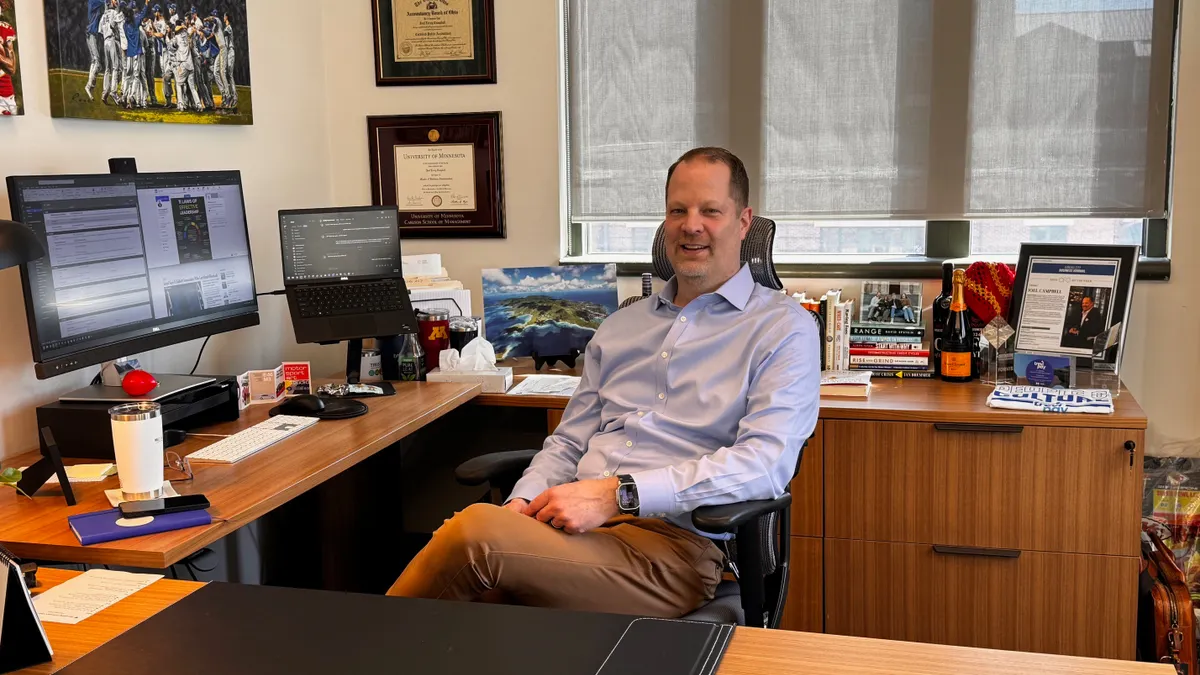

Welcome to The 6 a.m. CFO, where finance chiefs share how they jump-start their days and engage with the tasks that are in front of them.
Today, TreviPay's CFO, Joel Campbell, shares his morning routine.
Be sure to check out the entire 6 a.m. CFO series, and if you’d like to be featured in a future post, please email us here.
TreviPay
- B2B payments and invoicing platform based in Overland Park, Kansas, that helps businesses offer flexible payment options, including pay by invoice, while automating the order-to-cash process.
- Year founded: 1978
- Number of employees: Approximately 700 employees worldwide
- Revenue: Annual growth rate is in the 20% to 25% range
What is your morning pick-me-up? I wasn’t a coffee drinker for most of my life. That changed about four or five years ago when my daughter came home from college with a full caffeine habit and introduced her father to coffee.
These days, a good latte in the morning, either on the way to work or during the first hour of the day, is my small indulgence. For most of my career, I relied on energy alone to get going, but as I’ve gotten older, the latte does a nice job jump-starting the day.
What was a recent morning that didn’t go as planned, and how did you adjust? Most CFOs have mornings when they expect to jump straight into meetings and something unexpected disrupts the plan.
Earlier in my career, I was very prescriptive about how the day should unfold. My wife would say she’s methodically beaten that rigidity out of me over time.
Now, when things go wrong, I try to follow a simple approach: First, set the emotion aside and focus on solving the problem. Then, once the issue is addressed, step back and ask how we can prevent it from happening again. That might mean tightening controls or putting earlier warning signals in place. Staying calm and methodical usually leads to better decisions.
Favorite quote or mantra: I spent part of my childhood near the University of Notre Dame in northern Indiana, and there’s a phrase there that stuck with me: “Play like a champion today.”
To me, it means holding yourself accountable every day, doing what’s expected of you and pushing a little further. If you approach your work with that mindset consistently, good things tend to follow.
Favorite leadership lesson: Early in my career, I worked in the London Treasury Center for Travelers. One day, I went into my boss’s office complaining about a project I didn’t really want to do. I was hoping she’d tell me I could delegate it. After listening for a while, she just looked at me and said, “That’s why they call it work.”
It was such a simple moment, but it stuck with me. Work isn’t always easy or exciting. Showing up consistently and doing the job well, even when it’s not glamorous, is what leads to bigger opportunities later.
Who is the most influential or famous person you’ve ever met? I’m not someone who gets particularly excited about meeting celebrities, but I recently heard one of the founders of the brand Life is Good speak at an Association for Financial Professionals event.
He talked about how he and his brother started the company by traveling up and down the East Coast, selling T-shirts out of a van. It was a great reminder that many successful companies start with simple ideas executed really well over time.
What was the last job you did at your company that fell outside your traditional scope of work? The biggest one recently has been stepping in to oversee our people and culture team, effectively taking responsibility for HR.
I’ve worked alongside HR leaders for years, but it’s very different when you’re sitting in the chair and dealing with personnel issues, compensation structures, policies and benefits firsthand. It’s been an eye-opening experience.
What I’ve enjoyed about it is the connection between capital allocation and human capital. As CFO, you think about how to deploy financial resources. Leading HR gives you the ability to think about deploying talent and organizational resources in the same way.
How have you learned to manage work-induced stress? I’m not sure anyone ever fully learns how to eliminate work stress, but one thing that helps me maintain perspective is my faith.
I have a deep Christian faith, my father was a Baptist minister, and that grounding shapes how I approach leadership and life. It gives me confidence and perspective during stressful moments.
It also reminds me that leadership is about more than managing performance. It’s about respecting people as individuals and investing in their growth. That mindset tends to change how you approach challenges and pressure at work.
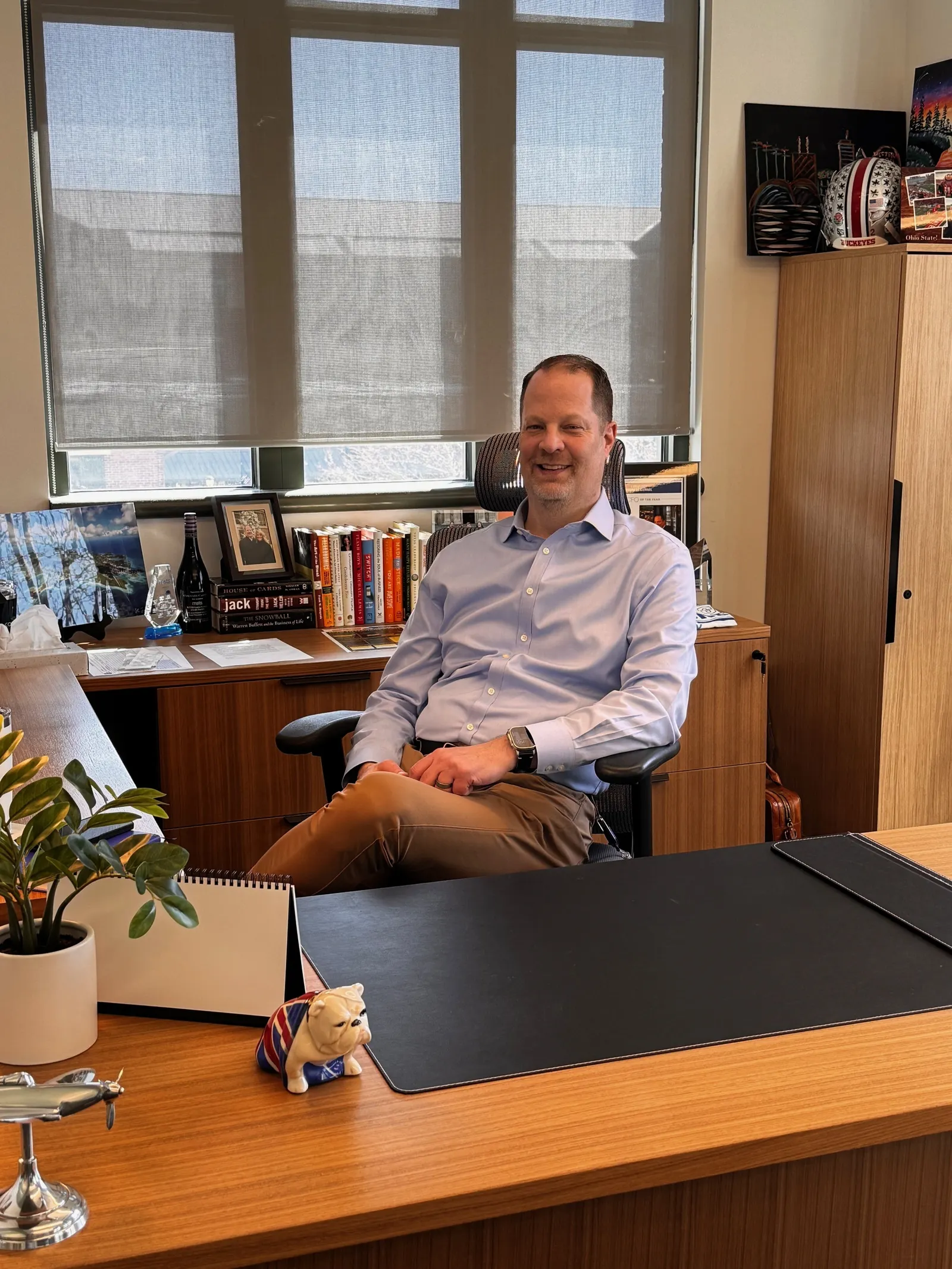
What are the most noteworthy items in your workspace? First would be photos of my family, which includes my wife, son, daughter and daughter-in-law.
I also have two items with a bit of personality. One is an ebony lion I picked up during a safari in Africa about a year and a half ago. The other is a replica bulldog from the James Bond films, the one that sits on M’s desk. My son gave it to me because he thought it was appropriate for a CFO to have a bulldog on his desk.
What is the year, make and model of your first car? My first car was a 1972 baby-blue AMC Gremlin.
It was a hand-me-down from both my older sister and my older brother. My parents bought it brand new in 1972 for about $2,600, and by the time I graduated from college in 1990, my brother and I sold it for $1,200 to a father who wanted it for his son to drive to high school. That car was famous in the small town where I grew up; everyone knew the baby-blue Gremlin.