Fraud represents a global financial scourge but people’s biometric connections to their mobile phones could help better thwart criminals.
A secure digital identification system paired with the common face and fingerprint ID tools in Apple and Google-Android devices could do more to reduce fraud schemes, Rep. Bill Foster, an Illinois Democrat, said Tuesday.
The “tool at hand” to provide a biometric-based identification system to fight fraud is “trusted electronics in your cell phone associated with a national ID, a Real ID, a passport, something similar to that,” Foster said. “Other countries get this. And it’s amazing how that just enables a flowering ecosystem of financial products.”
Foster and Rep. Dan Meuser, a Pennsylvania Republican, spoke at a financial conference sponsored by a banking trade group and The Hill, a Washington media organization.
A digital ID offers multiple anti-fraud benefits in that a digital passport or Real ID-compliant driver’s license offers “a legally traceable person,” said Foster, who sits on four House committees that deal with financial services, financial technology, national security and illicit finance.
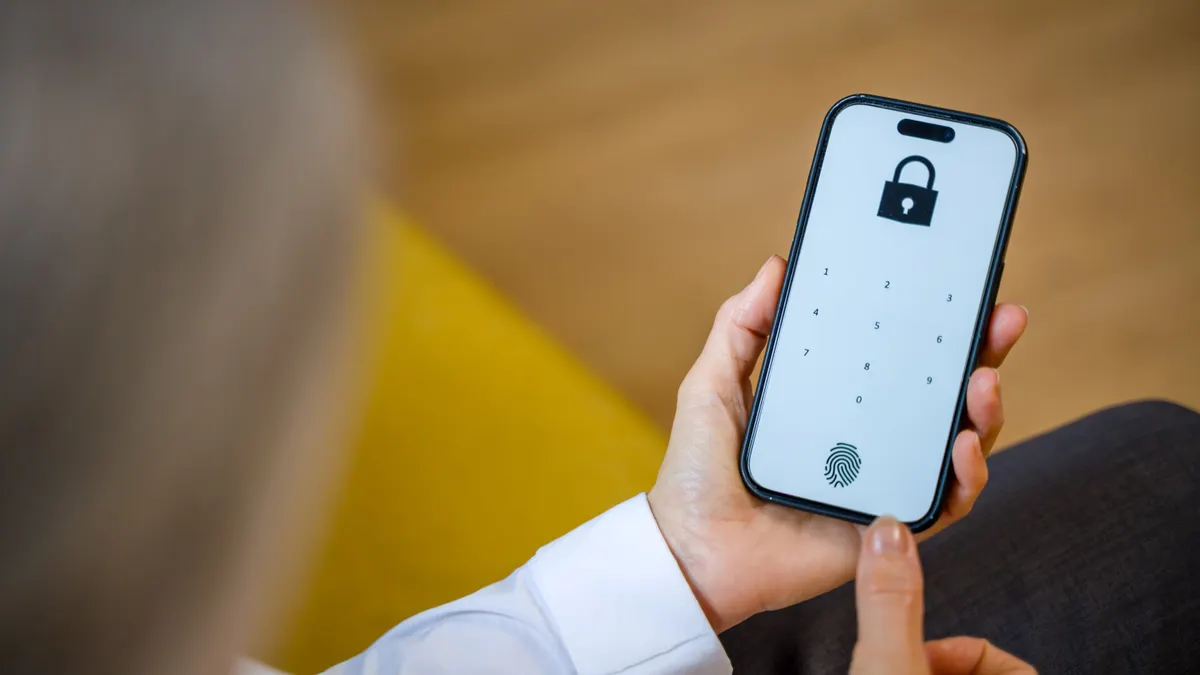
Additionally, the digital ID is being presented on a mobile phone associated with the same ID and the device can confirm that the rightful owner had completed a biometric login, said Foster, whose district covers western suburbs of Chicago.
A person’s biometric access and their digital ID within the device could become a potent combination to help quash many fraud attempts, Foster said, with Meuser in agreement.
Most of the recent Android-based and Apple phones require a biometric login to use them – Apple’s latest iPhone 17 is unlocked with facial recognition technology – but the concept of integrating one’s identification documentation into phones is far newer.
There are steps in that direction, however. Last month, Apple introduced a Digital ID function for its phones to allow users to load their passport information into its wallet tool.
That ID, accessed on an Apple phone or watch, is being tested for domestic travel at 250 airports with the Transportation Security Administration.To date, 19 states and Puerto Rico have begun allowing digital IDs, although not every state recognizes every device, and some states require use of their own app, according to the TSA.
Despite the growth of digital technologies, many U.S. businesses and government agencies still take a dated approach to identity security, said Meuser, who sits on the House Committee on Financial Services with Foster.
“They ask you your mother’s maiden name, things like that,” he said. “That’s sort of rudimentary compared to what could be done and is being done successfully elsewhere.”
Pandemic benefits distributed by the federal government in 2020 demonstrated the shortcomings of the U.S.’s current system of ID verification and payments, Foster said, explaining how hackers intercepted as much as $300 billion in benefits payments to U.S. taxpayers.
“And that did not happen in countries that had a secure digital ID,” he said.
In those countries, Foster said, people eligible for government benefits logged into their phones to authenticate their bank account information, with funds sent directly to that account holder.
“That stopped the North Korean hackers cold, because they can steal a million passwords, but unless they also steal a million cellphones and can do the biometric login on those stolen cell phones, they’re out of business,” he contended.
One big challenge for digital ID efforts – or what Foster termed “something that sort of smells like a national ID card” – is that people on the left and right sides of the political spectrum object vociferously, he noted.
“The vast majority of people in the middle just want a system that is reasonably secure and reasonably private and very trustworthy,” Foster said. “People are sick and tired of spending the afternoon on hold, changing all of their credit cards and magazine subscriptions because someone’s stolen their numbers.”