Dive Brief:
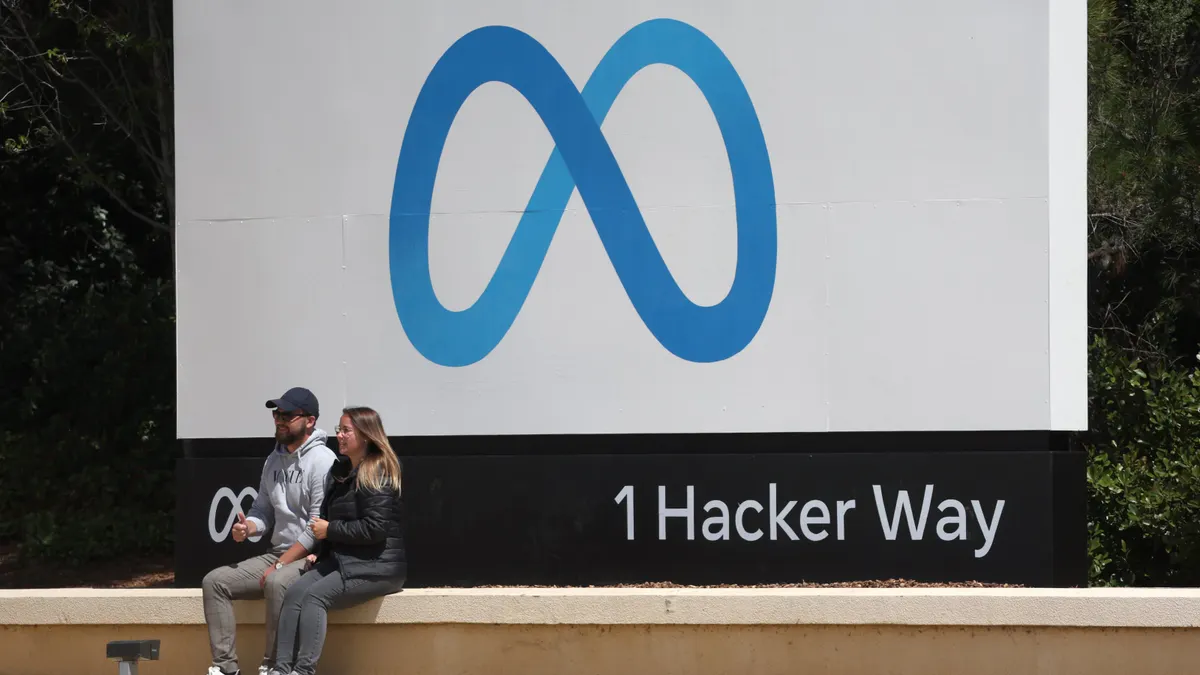
- Meta Platforms is requiring some advertisers to abandon credit card payments and use monthly invoicing or direct bank debits starting April 1. The social media giant declined to say Monday how many advertisers are affected or why it’s making the change.
- Smaller advertisers aren’t affected by the change, a Meta spokesperson said Monday in an email. The owner of Instagram, Facebook and WhatsApp will continue to accept credit cards, but is reducing the number of advertisers allowed to pay with them.
- “Like other companies in the industry, we are updating and streamlining our billing experience for a very small percentage of advertisers,” the spokesperson said. Meta began announcing the change in early March, sending advertisers notification via email and in-product notices.
Dive Insight:
Meta did not disclose any advertising spending thresholds associated with its move to decline some advertisers’ credit cards, and the Meta spokesperson declined to comment in a phone call.
“We are dedicated to making the transition as smooth as possible,” the spokesperson wrote.
Meta’s payment change was first reported in a March 3 blog post by Chris Pollard, the founder of Ads Uploader, a platform for media buyers.
An attractive platform for advertisers, Meta had about 3.58 billion average daily users across its applications in December 2025, the Menlo Park, California-based company said in its latest quarterly financial report in January.
Companies moving to monthly invoicing for payment are assigned a credit line for their advertising spending, showing the “the maximum amount you can spend across ad accounts and WhatsApp business accounts,” according to a Meta summary of payment options.
Payments are due 30 calendar days from the invoice date. Meta advertisers’ prior credit card payments were triggered automatically by spending thresholds, Pollard wrote.
Meta will pause advertising and WhatsApp business accounts if the credit limit is reached until a payment is made or the limit is increased. The credit line is not credit or financing, Meta notes in its terms. Debit payment includes direct debits from a linked bank account or a manual transfer to a Meta bank account.
The invoicing effort could help to reduce fraudulent advertising or scams enabled by credit cards because a business will need to verify bank or other information with Meta, Pollard noted.
In November, Reuters reported that Meta had projected about 10% of its 2024 revenues, or about $16 billion, would be from advertisements from fraudulent or banned goods, based on internal company documents the news service reviewed that covered four years.
Marketers’ loss of credit card rewards, such as points and cash back, appears to be “collateral damage” from Meta’s battle against such advertising fraud, the trade journal AdExchanger reported Thursday.
U.S. merchants that accept credit card payments typically pay interchange fees of 1% to 4% on a transaction, with an average around 2%, according to the Merchants Payments Coalition, an industry trade group.
A large group of merchants has been engaged in litigation against Visa, Mastercard and multiple large banks over card swipe fees for the past 21 years. A federal judge in New York City will hear arguments next month over a proposed settlement in the case.