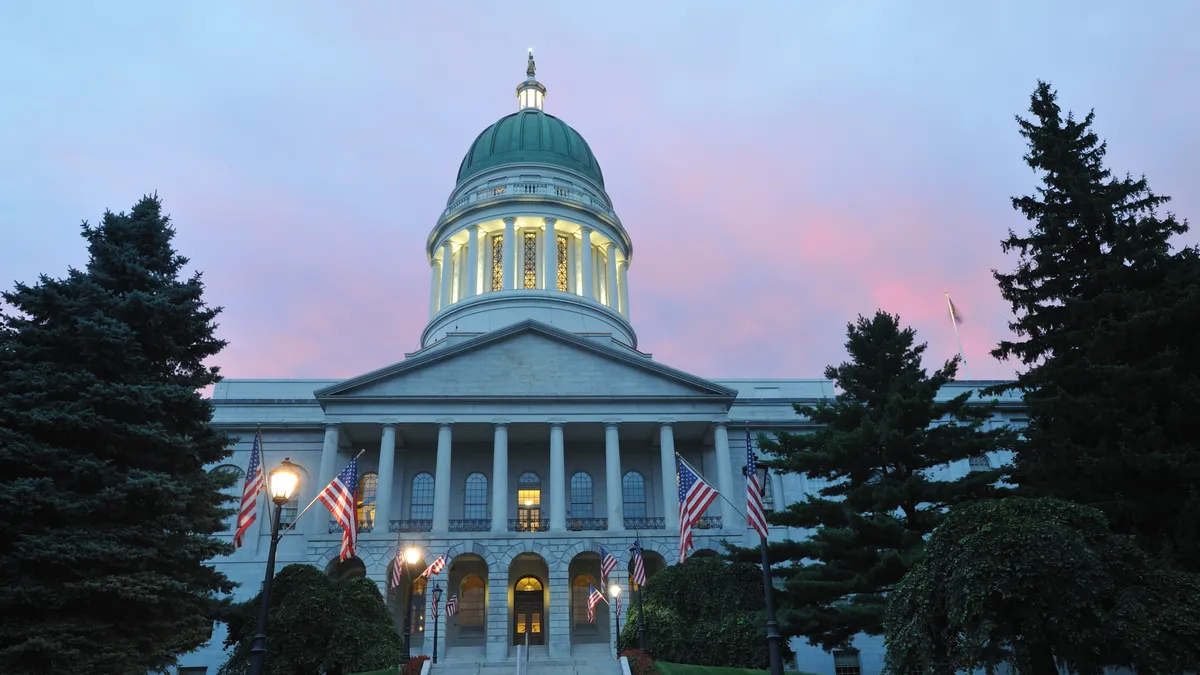
The state of Maine and the District of Columbia are both considering new regulations for earned wage access providers.
While the state is weighing legislation to impose oversight of the industry, the District’s Department of Insurance, Securities and Banking is reviewing public comments on how best to regulate the industry.
Earned wage access, also known as on-demand pay, is a payments trend that has surged over the past decade as providers of the services have offered workers various digital methods of tapping their earned wages before a regularly scheduled payday. Dozens of companies in the industry offer different EWA tools, with some providing them through employers and others providing them directly to workers.
EWA providers have developed multiple business models, including revenue from fees associated with the services or earning interchange fees if the wages are distributed by way of a debit card for workers.
Lawmakers and regulators have wrestled with how to oversee the growing industry, with states and the federal government grappling with whether to treat at least some of the payments like loans.
Maine’s Joint Committee on Health Coverage, Insurance and Financial Services is deliberating on a bill that would require EWA providers that do business in the state to register with it and be subject to oversight by the Superintendent of Consumer Credit Protection, which could conduct examinations and investigations of providers.
In addition, Maine EWA providers would have to meet certain operational parameters, including offering at least one no-cost option for services; letting users cancel services easily; and barring excessive fees by way of a $7 cap.
Importantly, the legislation would not deem EWA payments to be loans or money transfers, thereby creating a new category of financial services oversight for earned wage access disbursements in the state.
The American Fintech Council, which represents some EWA providers, supports the legislation and has worked with the state's Department of Professional and Financial Regulation on the issue.
Last week, the fintech trade group wrote to the committee to underscore its support for the bill and to suggest that the department shouldn’t get ahead of the legislative process.
“We are hopeful that responsible EWA providers can continue to operate in Maine until such time that we reach a conclusion and the Maine Legislature codifies a regulatory framework for EWA in the State,” the AFC said in its Jan. 28 letter. “We ask that the Department provide the appropriate deference to the legislative process.”
About a dozen states passed laws in recent years related to EWA, with many similar to the legislation being considered in Maine.
Meanwhile, the District of Columbia’s Department of Insurance, Securities and Banking said it’s weighing whether such payments should be treated as loans for the purposes of regulation.
“Stakeholders have expressed concerns regarding the nature and transparency of these fees, how frequently individuals rely on EWA services, and whether such products should be classified and regulated as loans or credit,” the department said in its request for information. “This classification would determine whether they are subject to existing consumer lending laws.”
Some consumer advocates have argued that the services should be subject to lending laws, such as the federal Truth in Lending Act, citing excessive fees charged for some services. There have also been concerns about users becoming locked in a cycle of debt, if they tap wages early and then are unable to pay other bills.
By contrast, EWA providers contend that their services are a positive alternative to higher-cost payday loans.
The District’s deadline for comments was Friday so it will review the comments it solicited from consumers, consumer advocates, EWA providers, employers, and others as it develops a regulatory approach.