JPMorgan Chase, the largest U.S. bank, has been rounding up payments partners over the past three years to help the bank better integrate with clients’ software and keep an eye on industry trends.
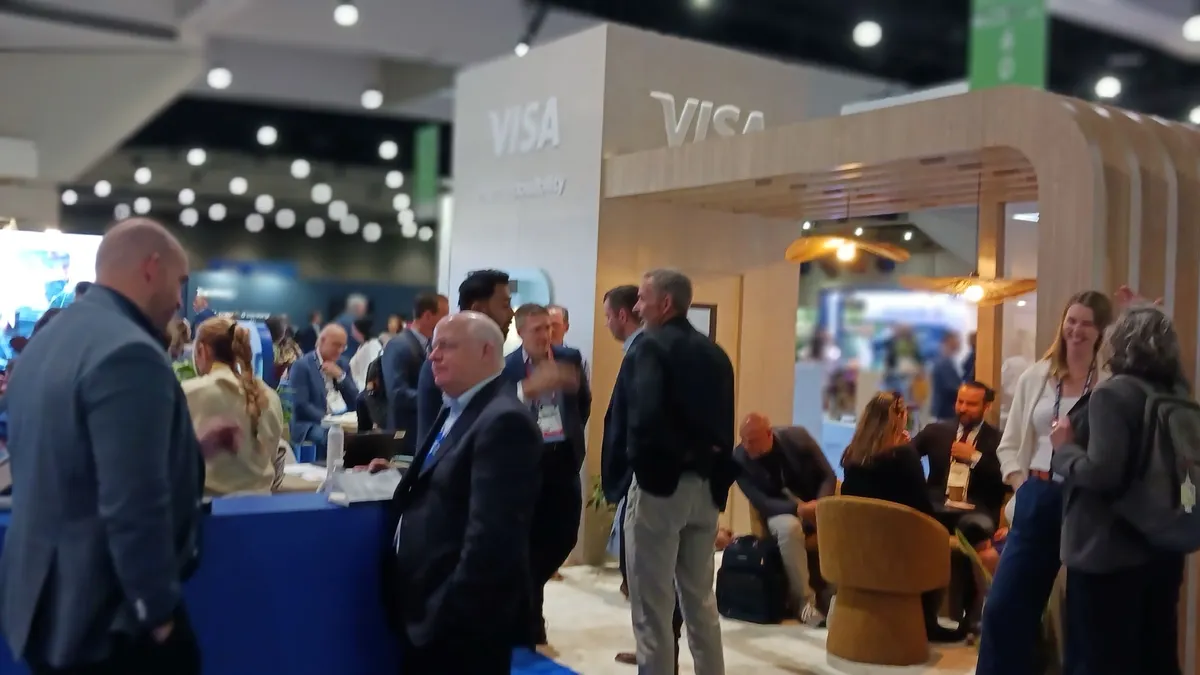
Those are two of the ways that Todd Manning, who leads the bank’s payments partner network, sees the collection of about 120 companies serving the purposes of JPMorgan and its clients. Some of the partners include card network Visa, point-of-sale services provider Ingenico and software company Epic Systems.
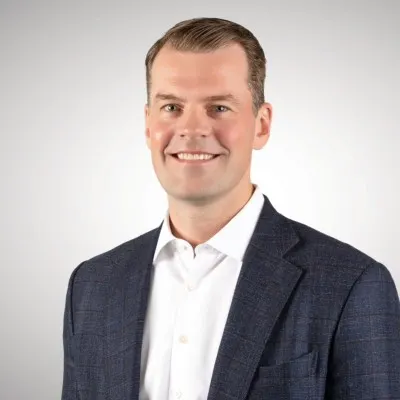
Manning joined JPMorgan earlier this year as a managing director and head of corporate development and partnerships for the bank’s payments arm. Prior to that, he was at credit card company American Express for almost 17 years, most recently as head of commercial strategy, M&A and alliances, according to his LinkedIn profile.
He spoke during an Oct. 2 interview with Payments Dive about how the JPMorgan’s payments partner network, formed in 2023, contributes to the bank’s overall business as it brings payments players, software companies and fintechs into the fold.
Editor’s note: This interview has been edited for clarity and brevity.
PAYMENTS DIVE: Tell me about the network and how the bank adds partners.
TODD MANNING: The intent was to make sure that we had access to platforms that our customers are already using, where JPMorgan can form an integration to increase customer utility of using those platforms, and also just be where our existing customers are doing business. We have over 100 partners that are part of the program right now, ranging from large-scale entities like SAP and Oracle, where we've done a lot of work to look at how we can integrate some of our payment products or some data products to just make our customers' lives easier, to some smaller early-stage fintechs where we think they’re innovating, and we'd like to be able to bring that innovation in conjunction with JPMorgan payment products to our customers.
So, does the bank integrate its software with those platforms, or does it just help the bank become more knowledgeable about how the clients are using them?
A really straightforward example that a lot of people have experience with is with an [enterprise resource planning] relationship where a customer is making a purchase, or they're using their ERP platform, to run their day-to-day business. It's a lot more convenient if you can execute a payment from within that platform. So, we have some payment integrations that take place so that a customer doesn't need to leave that environment, go to a different platform, and then go back by having a payment integration directly inside a third party's platform that we have a trusted relationship with. We can just make our customers' workflows a little more streamlined. So that's one example. There are many others, but I'd say that's one of the most basic use cases.
How big is your payments partner network staff?
We have about 30 people in the payments organization that are focused on new partnership origination, so identifying where there's innovation taking place, maybe an adjacency where we want to bring that company in and see if we could form something that would generate utility for our customers. We have a team that looks at where we'd want to make venture investments, and my team also looks at where we have merger and acquisition opportunities, so where there are technology companies that we think would be a good addition to help us accelerate our product roadmap…Probably about 75% of those employees are based around partnership and ongoing monitoring of those partners.
Talk to me about how the bank decides to invest in some of the partners, what those dollar amounts look like, and then how the bank finds and pursues these venture investments.
Our team is active in the venture community, trying to identify where innovation is taking place, meeting with companies. We have regular meetings with founders across fintech. We have meetings with some venture capitalists as well to understand how their portfolio is evolving and what direction they're heading when it comes to the investments themselves. We try to identify high-quality companies that we could see ourselves developing a commercial relationship with. [The bank doesn’t invest in all of its partners, but rather less than a third, Manning said.]
When the bank invests, how big are the investments?
The investments themselves are typically pretty small. It really depends on the stage of the company and the valuation. We're typically looking for non-controlling investments, and so that would be somewhere typically under a 5% equity ownership stake. [Some of the investments happened prior to 2023.]
What do the companies the bank invests in get from the partnership?
The main point is it creates a bigger alignment between the two companies and an opportunity for us to learn from each other. I think one of the biggest benefits from an early stage fintech partnering with a company like JPMorgan is that they can learn from some of the control and compliance environment things that we care about a lot… Also, as we're looking at developing these relationships, we could potentially give them access to a large number of JPMorgan customers if we get it right. So, there's a lot of work that goes into making sure that the partnership is well-structured and that we have the right level of alignment in terms of expectations for control, and that we have the opportunity to bring innovation to our clients with it.
What about the potential for the bank acquiring a partner?
It could be a potential outcome. What we're hoping to do with the partner network is to get to know companies better, see if our customers find utility in the joint solution, and then as that relationship matures, it could turn to a point where there's a venture investment made. It could mature to a point where we think the two companies can create more value together than separate. So, it could lead down the path to an acquisition, but I wouldn't say it's something that happens frequently, but there's always a chance that that could be the outcome here.