Visa is eyeing the estimated $145 trillion business-to-business payments market, pursuing it vertical at a time, said a top executive for the card network.
The card behemoth is looking to better penetrate the market by targeting industry verticals, Chris Newkirk, Visa’s president of commercial and money movement solutions, told attendees at an investor conference last week.
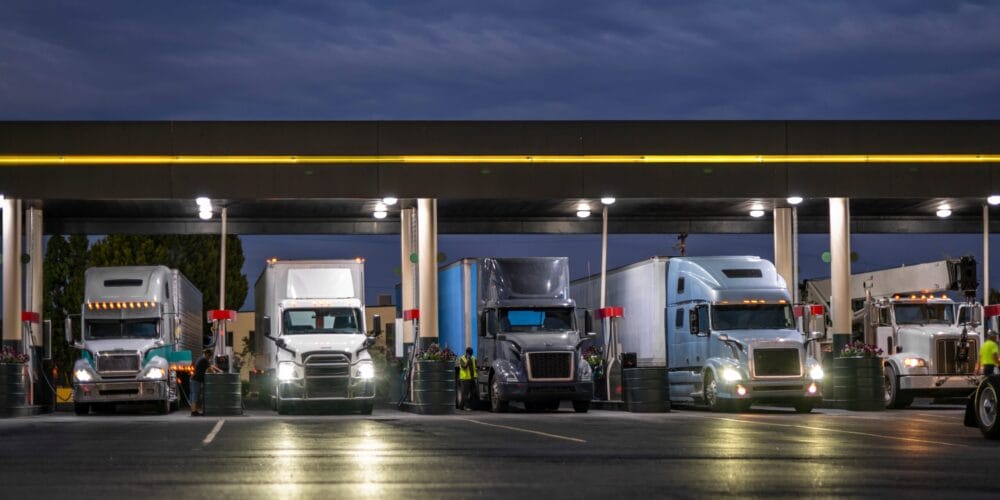
Specifically, the card network sees the trucking fleet and mobility payments segment as ripe for new competition.
“There's enormous opportunity for us to bring a bit more configurability to our Visa commercial pay solutions, and then find the right way to solve the needs of verticals and reach into [total addressable markets] that we've not been able to previously,” Newkirk contended.
Visa estimates the trucking sliver of the B2B market includes about $1.4 trillion in payments today. Other competitors that specialize in fleet services include Portland, Maine-based Wex and Atlanta-based Corpay, formerly Fleetcor Technologies.
Currently, rivals in the market operate on “closed loop” systems that mainly allow their fleet clients to manage truck drivers’ payments for fuel, along with tracking vehicles and other metrics, Newkirk said at the Baird Equity Research Global Consumer, Technology & Services conference last Wednesday.
In closed loop systems, the payments provider has agreements with a merchant and a company providing the cards, and then the cards can only be used at a particular merchants.
That creates a big target for Visa to pursue, with its “open loop” system, which could allow drivers to pay for other services, like their meals and accommodations, and receive the benefits of other Visa services, such as fraud protections or digital wallet capabilities, Newkirk contended.
Still, Baird analyst David Koning doesn’t see Visa materially impacting the current market. “Closed loop providers have a reasonably small share (maybe 40% or so), since a lot of fleets already use a Visa card,” he said by email. “So, I don’t think there’s a big change coming.”
Part of the opportunity for Visa to pitch more digitized payments on the business-to-business front stems from the “consumerization” of B2B payments, as businesses increasingly come to expect the digital ease of payments that consumers now take for granted, he explained.
Visa began offering some such fleet services in South Africa last year and has extended it in Europe, he said. Aside from fleet operators, the client list includes energy companies.
Another vertical to which Visa is turning its attention to woo more business-to-business payments is in the online travel agency market. The card network is providing services to aid such travel firms in better managing their supplier payments, Newkirk said.
Last year, Visa won Trip.com’s online travel agency business, Newkirk said. He also noted Visa expanded its work with Checkout.com in the area.
Artificial intelligence could super-charge the B2B opportunities, Newkirk said. B2B payments today don’t work that well, and there is a lot of human involvement for manual invoicing, reconciliation accounting and chasing down payments, but that will change with AI-driven agents, he predicted.
“It's a very manual and fragmented ecosystem, and agentic is really going to have so much potential to streamline all of that,” Newkirk said.