It’s easy to think that rideshare and app payments have conquered the world, from Uber to Lyft to Bolt.
But fly into a foreign city and suddenly glitches summoning a rideshare can abound: Your phone’s battery is dead or dying; you don’t have the app for the local rideshare service; or your language isn’t available on the local app.
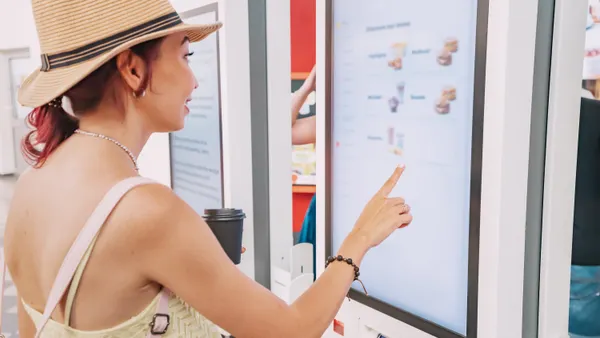
To address these – and to expand its customer base – Uber Technologies and its payment partner, Adyen, are installing rideshare kiosks for travelers to summon and purchase a ride. The kiosk screen replicates Uber’s app, while an attached card reader allows for payment. A printed receipt has vehicle and destination information.
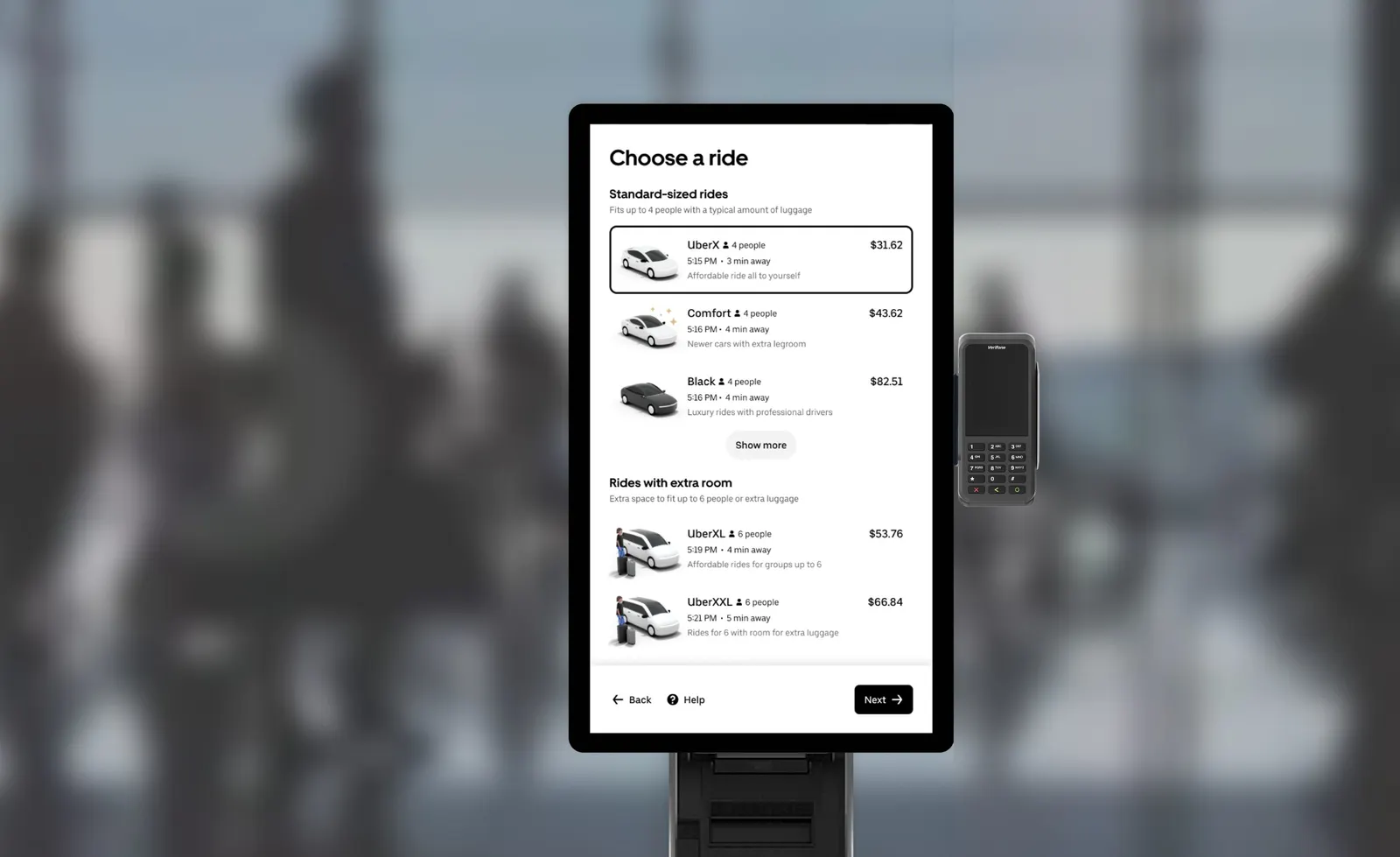
The first Uber-Adyen kiosk debuted in December at New York’s LaGuardia Airport Terminal C, with additional kiosks planned for “hotels, ports and international airports in the coming months,” the companies said in a Feb. 9 press release.
Amsterdam-based Adyen is a primary payment partner for Uber in 70 countries. Trevor Nies, an Adyen senior vice president and global head of digital, discussed the kiosk project in a Feb. 12 interview.
Editor’s note: The following interview has been edited for clarity and brevity.
PAYMENTS DIVE: Is this a product meant to solve a specific problem Uber might have in its business?
TREVOR NIES: As they started looking at where are the opportunities to gain access to more users, not everybody has the Uber app on their phone. The second, though, is travel. I travel all the time and if there are countries that don’t have Uber or something that I’m familiar with, having a kiosk that I could walk up to that’s in my language, that accepts my payment types that I’m accustomed to, would be amazing. Going to China, for example, is very challenging as an American. The services that we’re used to are not there. How do you get WeChat Pay, or some other payment method, downloaded on your phone? And then to figure out what is the app that they’re using for mobility is a challenge.
Is this application focused on international travel or do you see potential kiosk use in other areas?
Uber has stated that it’s focusing on travel, hotels and airports, for now.
Are there fraud issues to consider with these kiosks?
We have trillions of data attributes in our system, and so we manage fraud for a significant number of very large merchants. And the idea is that it really focuses on not just those raw data attributes, whether it’s the device location or IP [address], because in the kiosk that doesn’t actually help you, but what does track is contacts and behaviors. For example, if you had a flight – Justin over to New York from another city – there’s a chance we processed that particular flight. There’s also a chance that we’ve seen your behaviors in the past on what you typically do. Maybe we’ve seen you never actually have used Uber before. Or perhaps you’re a new customer for Uber. We know which cards you typically have used, whether that's on your subscriptions for other streaming services, or maybe for food and beverage at restaurants. But we can also do interesting things, for example, personalize. We could tell Uber which payment methods to present. We know which ones you already like. It’s an area of huge investment for us.
Beyond rideshare, are there app-based goods and services that lend themselves to a kiosk?
There’s a company called iFood in Brazil. We’ve been working with iFood for quite some time. It's very similar to Uber Eats or DoorDash. They decided to put kiosks in fast-food restaurants, and so you can actually walk up to the kiosk because you're running by perhaps on your way to your house. You want it delivered to you or perhaps you want to deliver to somebody else. You can go to the kiosk and it will deliver on your behalf [from] that kiosk if you don’t have an iFood app on your phone.
Will kiosks migrate to everywhere travelers and tourists are hiring a ride, or is that platform perhaps limited to certain locations?
It’s too early to tell. I think this is exactly where we were asked to experiment and see where it makes sense. I’m sure some markets may not make sense, while others will make more sense. The data will tell us.