Despite payment players’ lofty aspirations for agentic commerce, consumer adoption is likely to be a gradual process as people acclimate themselves to the idea of a digital robot choosing their goods and services. (And using their credit and debit cards.)
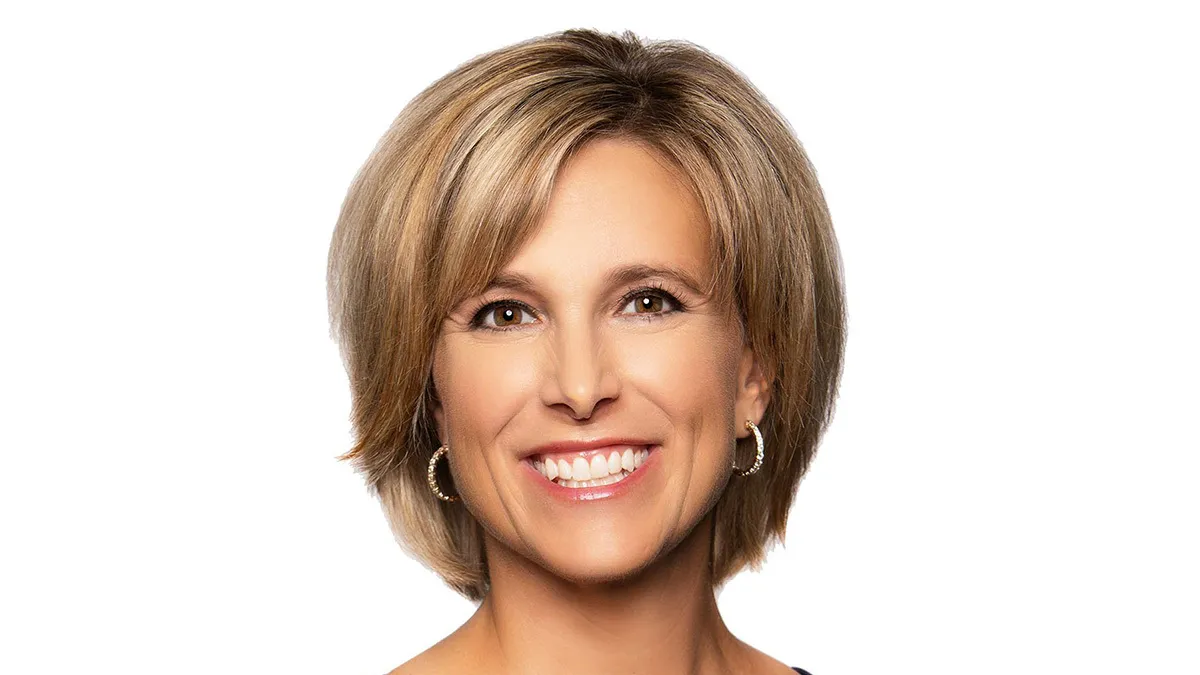
One avenue for agentic commerce growth will be people’s interactions with artificial intelligence tools like OpenAI’s ChatGPT and Google’s Gemini, Nick Campbell, chief product officer at Xplor Pay, said in an interview last month. Companies that consumers already trust are also likely to be the early leaders in agentic commerce, he said.
The firm is the embedded payments unit of Xplor Technologies, an Atlanta-based financial software company. Campbell joined Xplor in 2022 after product roles at Xero and Visa.
Agentic commerce is expected to reach $1.7 trillion in sales by 2030, according to a forecast last year from Edgar Dunn & Co., a financial services consulting firm.
Multiple companies have spied the chat-to-commerce potential, with Stripe partnering in September with OpenAI and New York-based retailer Etsy to drive new AI-generated sales. Stripe also laid out plans to work with other AI companies, including Anthropic, Microsoft and Perplexity.
That same month, Google and dozens of payments companies, including Adyen, PayPal Holdings and Worldpay, also announced a new technical protocol to enable agentic commerce transactions.
Editor’s note: This interview has been edited for clarity and brevity.
PAYMENTS DIVE: One agentic commerce selling point is less friction and wasted time, with an agent handling search and payment. How will U.S. consumers react to this shift away from browser shopping on laptops and phones?

NICK CAMPBELL: It’s a bit of a crystal ball for me as a consumer and a person watching in the payment space. What will that feel like for a consumer? Right now you would interact with AI research and say, ‘Hey, recommend me king size beds in my local region.’ And it would come back, but then you would still need to click a link to jump to a site to do it. Being able to say, ‘Great, purchase that for me, have it shipped to my house’ and it uses your default card that’s on file, that feels really natural. But I think that we’re going to have a consumer adoption challenge, in that consumers are going to need to trust that AI has their secured data and actually see that completed transaction go through.
With your example of a king bed, what are the purchases that lend themselves to AI — clothes, shoes, mattresses?
This is where I think user adoption will be really interesting to watch. I would buy a pair of shoes because that’s a trusted (retail) entity. Amazon, I think, is going to be a really great entry point for [agentic commerce]. Let me buy some low-level, trusted items. And so in that context, it’s going to be very much the consumer retail space.
There’s always that funny joke, ‘I’m a millennial, and buying a flight is a big-screen purchase for me. I can’t buy a flight on my phone.’ This will be, over time, one of the things that changes that behavior for us, but I’m going to need to trust it on a big screen first, and so I will probably start by buying shoes, and then eventually, once that trust has built up, I’ll then use it to buy a flight. Consumer adoption is always the unquantifiable aspect and I think that that is going to come down to trust.
We’ll start with a $40 or $50 item before we purchase our three-week holiday to Australia?
Almost inherently so. And another [area], I think, it would be used well in is the field services space. If I need to hire an HVAC technician to come out, I could research who they are and I could potentially put the deposit down to pay for that. That still means that they need to come out to my site to complete it, but it initiates that deposit [payment] process to be able to bring them there. It’s going to be small items, or items where there is low risk, until consumer behavior builds trust and then it will start to build from there.
Who will own the agents? Is it my personal representative or furnished by a merchant? And would I trust mine more than a seller’s agent, which could put their economic interest ahead of mine in a transaction?
I think that that is potentially the existential question facing all of us with AI right now. I should trust Amazon’s AI because it’s an extension of a company I really trust. And this is where I think a number of smaller companies building agents are actually going to be challenged. Am I going to trust an AI agent called Bob when I don’t know where Bob comes from? Bob might be built on OpenAI, but as a consumer I don’t know that and so I don’t know what the security walls built around that actually are. Am I going to give Bob my credit card information?
Or is that going to be abstracted to a place where it is my AI that is interacting with [the agent], which is where I think the likes of Gemini are going to be a much easier on-ramp for the vast majority of consumers. I already have Gemini on the home screen of my mobile phone. That’s the one that I interact with the most in the consumer space. I would trust Gemini, because Google knows everything about me right now anyway, and so that’s kind of a trusted place for me to access through. That’s where a lot of large e-commerce companies are going to need to lean into: Do they build out their own tool, or do they interact with a tool in AI that consumers inherently already have a trusted payments relationship with?
How will agentic commerce affect sales volumes?
I think a lot more microtransactions will start to happen. Uber was kind of the first. You didn’t have to type in your credit card each time you got an Uber. So, it became much easier to do microtransactions. It just felt easy. If it becomes ubiquitous for me to be talking to my AI and saying, ‘Hey, can you get me that bottle of milk and get it delivered?’ then a lot more microtransactions will start to come through.