
Dive Brief:
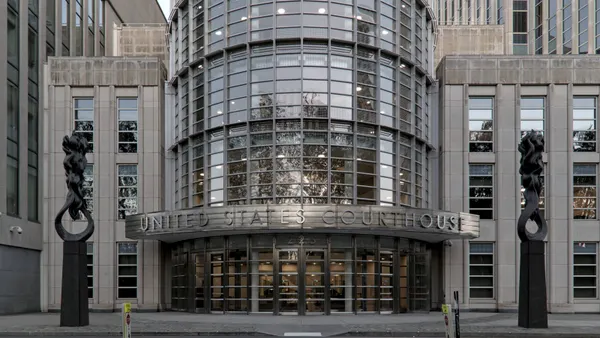
- A federal judge in California ruled Friday that the Consumer Financial Protection Bureau’s refusal last year to request funding from the Federal Reserve was unlawful.
- Judge Edward J. Davila called the CFPB’s arguments “unpersuasive” and “deficient,” and ordered the agency to continue soliciting funding from the central bank, according to a Friday court filing in U.S. District Court for the Northern District of California.
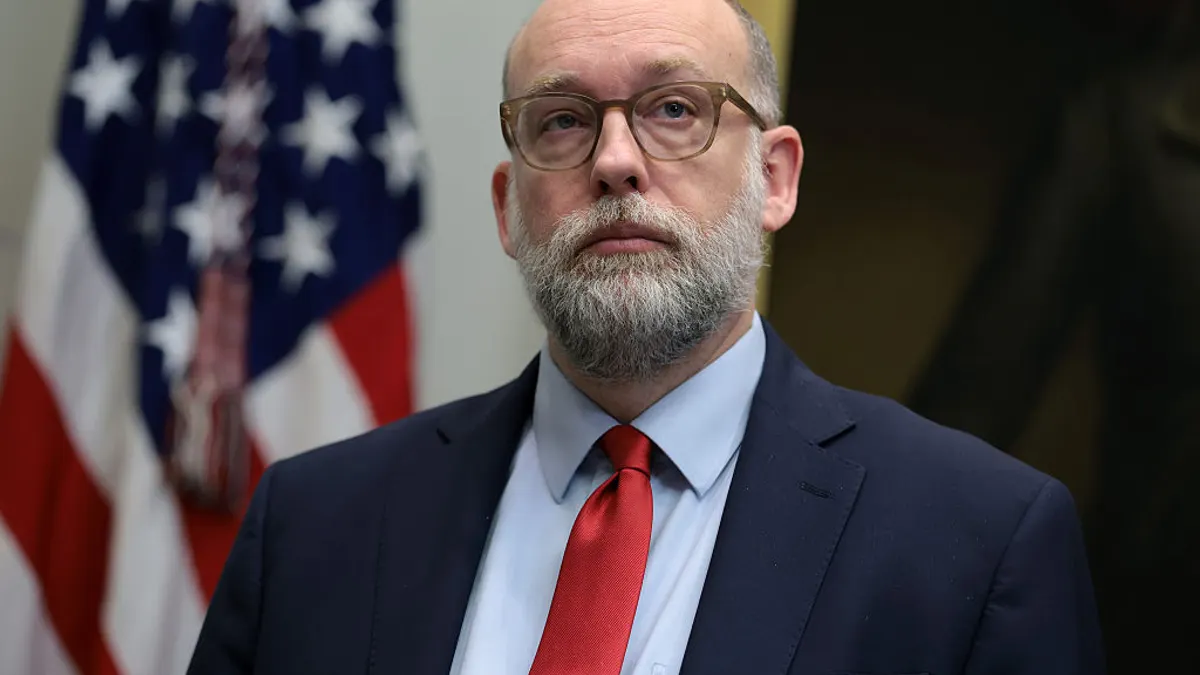
- Acting Director Russ Vought, in asserting that the CFPB could not legally request funds from the Fed based on an interpretation of the term “combined earnings” and therefore refusing to do so, “acted arbitrarily, capriciously, and contrary to law,” Davila wrote. “Vought’s plan to ‘shut down’ the CFPB using this clearly erroneous interpretation of [federal statute] frustrates Congress’s intent to insulate the Bureau’s funding stream from this exact transparent display of partisanship.”
Dive Insight:
The CFPB didn’t immediately respond to a request for comment.
The consumer watchdog agency should not be “subject to ever-changing Director fiat,” Davila wrote.
The judge disagreed with the CFPB’s characterization of “combined earnings,” accusing officials of “cherry-picking” desired definitions.
Adopting the CFPB’s new definition of “combined earnings” – as the “profits” remaining after deducting the Fed’s interest expenses from its revenues – “would not only destroy the CFPB’s independence from the appropriations process by forcing it back to Congress to request funding, but would also subject the CFPB to intermittent defunding based on unpredictable fluctuations in the Federal Reserve’s balance sheet,” the judge wrote.
That would likely leave the CFPB “deprived of its funding in times of nationwide economic upheaval, exactly when the need for its regulatory and consumer protection functions is most urgent,” Davila continued.
The judge also said he doesn’t see “any authority that would allow a director from a different agency, with no financial expertise or familiarity with the Federal Reserve System, to tell the Federal Reserve how to define their ‘combined earnings’ and calculate what those combined earnings are.”
Given that “crucial gap” in the CFPB’s position, the agency’s “entire basis for not requesting funding from the Federal Reserve crumbles,” Davila wrote.
Public Citizen, representing Woodstock Institute, Rise Economy and the National Community Reinvestment Coalition, sued Vought and the Trump administration in December, alleging they attempted to defund the agency.
The Consumer Financial Protection Act requires the Fed to transfer quarterly an “amount determined by the Director to be reasonably necessary.”
Davila also rejected the CFPB’s urging to dismiss the case or transfer it to D.C. district court, because the same issue is pending related to the National Treasury Employees Union, which has been locked in a legal battle with the CFPB since February 2025.
In that case, Judge Amy Berman Jackson of U.S. District Court for the District of Columbia also ruled, in late December, that the CFPB must continue to request funding from the Fed. In January, Vought noted he disagreed with Berman Jackson but requested $145 million from the central bank, to carry out duties for the second quarter of fiscal 2026.
Horacio Mendez, CEO of Woodstock Institute, said “the judicial system has once again affirmed the legality of the CFPB’s funding in the face of yet another effort to defund the agency and weaken consumer financial protection,” and blasted Vought’s “brazen attempt to manufacture a funding crisis for the agency.”
“Americans are already facing an affordability crisis and can’t afford an economy where the only federal agency charged with protecting consumer’s financial wealth is defanged, and harmful financial practices go unchecked,” Mendez said in the Friday statement.
Vought has repeatedly tried to decimate the CFPB since he took charge of the agency in February 2025. He has pursued mass layoffs at the CFPB, dropped a number of its lawsuits and enforcement actions, and made clear his desire to shutter the bureau sooner than later.
“We want to put [the CFPB] out and we will be successful probably within the next two or three months,” Vought said on an October podcast.
Sen. Elizabeth Warren, D-MA, an architect of the CFPB and the ranking member of the Senate Banking Committee, on Friday pledged to continue “fighting to defend the agency that has returned more than $21 billion to Americans who have been tricked and trapped by big banks and giant corporations.”