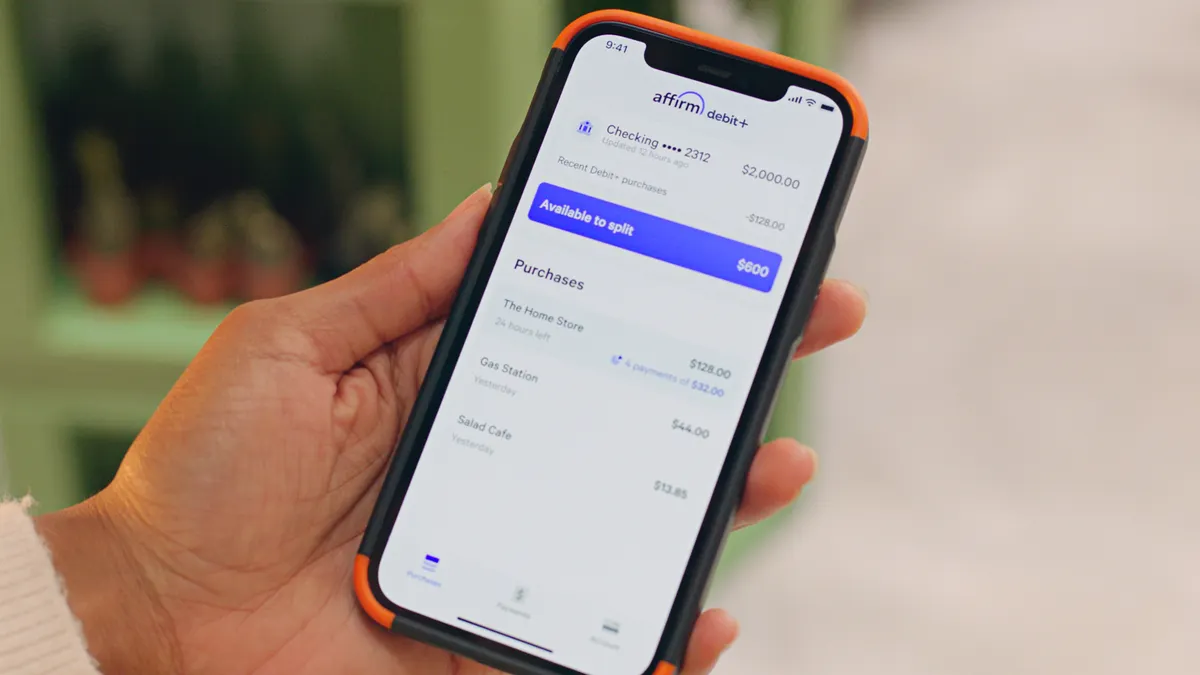
Mental health researchers have identified a link between poor mental health and the use of buy now, pay later loans.
Adults in the U.S. who reported symptoms of depression, anxiety or post-traumatic stress disorder acknowledged heavy use of BNPL over the previous year, according to a Johns Hopkins University study published online Friday. The nonprofit health policy group the de Beaumont Foundation assisted in the study.
People with all three of those mental health challenges were more likely to use pay later services when compared to those who don't report any symptoms, the research showed.
But study participants reporting symptoms of depression were nearly twice as likely to use buy now, pay later services as those who don't report symptoms of mental health problems, according to the study, which is title “Poor Mental Health and the Use of Buy Now, Pay Later Loans.”
Similarly, participants with symptoms of post-traumatic stress disorder were more than twice as likely to use buy now, pay later to pay for goods and services than participants with no symptoms, the study found.
The research was collected from March 2024 to April 2024 and included a sample of roughly 2,100 U.S. adults.
"Our findings suggest that people with poor mental health may be more likely to use alternative financial products," Catherine Ettman, an assistant professor at the Johns Hopkins Bloomberg School of Public Health, said in a news release Monday. "It underscores the need for greater clarity for users on the terms of BNPL and the potential repercussions of missed payments, which could worsen financial standing."
A spokesperson for the Financial Technology Association, which counts the BNPL players Klarna, Zip, Afterpay and PayPal among its members, declined to comment on the study.
The study builds on previous research that suggests poor mental health impairs financial decision-making and encourages impulsive shopping, said Ettman, a researcher in the school’s Department of Health Policy and Management.
The authors noted their study’s limitations. The short time frame and small sample size make it difficult to determine if the use of buy now, pay later loans impact mental health, or if mental health problems make it more likely that adults will use BNPL, the news release said.
The authors also acknowledged that buy now, pay later borrowing could be a safer alternative to payday loans or high-interest credit cards for some people.
The Consumer Financial Protection Bureau warned in a study released in January that consumers can take buy now, pay later loans from multiple companies at one time, which encourages loan stacking, a practice that makes it difficult to know how much an individual owes and to whom.
Executives in the industry have defended their products in the past as a more accessible alternative to traditional forms of credit for many people. They also say that BNPL loans help consumers avoid revolving credit card debt.
Industry groups also touted a different CFPB study quietly released this month that shows only a small percentage of BNPL users are charged late fees, and charge-offs or unpayable loans make up a minuscule portion of overall buy now, pay later loans.
The study’s authors include Ettman; Hridika Shah, a Johns Hopkins doctoral candidate; Emma Prus, a senior program and research associate at the de Beaumont Foundation; and Brian Castrucci, president and CEO of the de Beaumont Foundation.