
When Block co-founder Jack Dorsey announced Thursday that the company would cut more than 4,000 employees from its 10,000-person workforce, he made clear the move was not tied to financial performance.
In a post on X, Dorsey wrote that the company “is doing well,” but said Block must operate differently in an AI-driven environment, arguing that it needs to move faster with smaller teams using AI to automate more work. He warned that “repeated rounds of cuts are destructive to morale, to focus, and to the trust that customers and shareholders place in our ability to lead,” and predicted that within a year, most companies would reach a similar staffing reset.
Dorsey’s move follows through on a topic that has circulated quickly in finance circles, particularly among mid-market CFOs evaluating their own automation strategies. Inside the CFO Alliance, where founder and CEO Nick Araco Jr. convenes finance executives across more than 21 markets, including recent roundtables in Dallas, Houston, Austin and San Antonio, the discussion has centered on operating design.
Araco said the CFOs in his sessions are examining how AI reshapes workflows, ownership structures and execution alignment before treating mass workforce reductions as the default outcome of AI integration.
Automation’s execution design problem
In recent CFO Alliance roundtables across Texas, Araco said finance leaders have been evaluating how AI alters operating architecture. “It’s not being framed as AI replacing people,” Araco said. “Mid-market CFOs are framing it as an execution design problem.”

Across those sessions, CFOs acknowledge that automation can reduce headcount. The more pressing question, Araco said, is whether leaders have redesigned the work itself before resizing the workforce that performs it.
“What emerging and mid-market CFOs are wrestling with isn’t whether automation and AI can reduce headcount. It can,” he said. “The harder question is whether they’ve intentionally redesigned the work and the processes before redesigning the workforce.”
That distinction surfaces in operational detail. In Araco’s roundtables, CFOs are dissecting what work is actually disappearing and what is shifting elsewhere in the organization. They are weighing whether cost savings might also strip out institutional knowledge or analytical depth and whether automation truly increases decision velocity without weakening confidence in financial reporting. Conversations about staffing are happening alongside reviews of escalation paths, ownership clarity and internal controls, as finance leaders assess the full operating system before making structural changes.
“Execution doesn’t break because strategy is wrong,” Araco said. “It breaks when team structure, skills and decision rights fall out of sync with how the business actually runs. And AI accelerates that misalignment.”
Capital intensity and operating discipline
The roundtable discussions are unfolding amid sustained AI investment across the technology sector. Leaders such as Sam Altman of OpenAI, Dario Amodei of Anthropic and Emad Mostaque of Stability AI have described AI systems as capable of reshaping knowledge work and the role humans play in it at rapid scale.
At the same time, AI development has required massive amounts of capital. As reported by Forbes, Stability later faced mounting strain tied to heavy compute spending and limited revenue generation, culminating in Mostaque’s resignation as CEO in March of 2024. OpenAI has publicly acknowledged multibillion-dollar infrastructure commitments required to train and deploy frontier models, and other reporting has noted that Altman-backed consumer experiments outside OpenAI, including the Loopt social app, despite hype, have remained limited in scale.
For Araco, those realities reinforce the execution lens his members are applying. He said CFOs are reinforcing the idea that ambition cannot replace discipline in finance. “In 2026, the binding constraint for the mid-market CFO is [ultimately] execution capacity,” he said.
Designing before resizing
Sequencing remains a defining theme in Araco’s roundtables. Mid-market CFOs, he said, are being deliberate about order of operations and resource allocation before making workforce reductions.
“Mid-market CFOs are far less likely to make abrupt, headline-grabbing cuts because their teams are smaller, institutional knowledge is concentrated and the human cost is visible,” Araco said. “They can’t afford symbolic decisions.”
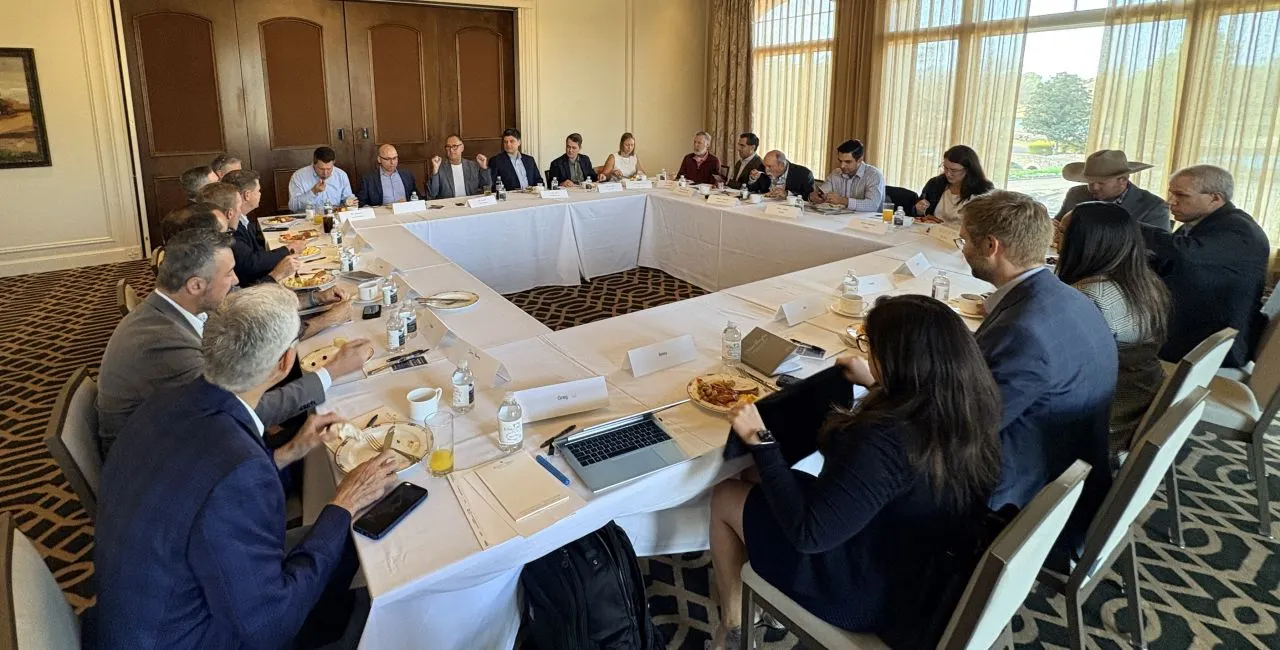
He described one Dallas-based CFO who referred to team members as “compounds,” meaning finance plus operations plus analyst plus technologist plus additional responsibilities depending on business need. In that environment, a single role may encompass financial modeling, systems oversight and operational fluency simultaneously. Eliminating one position can affect multiple functions at once, creating downstream execution risk if workflows and ownership structures have not been redesigned first.
“There’s also a real distinction between cutting because the business is in trouble versus cutting because the operating model has changed,” Araco said. “In the mid-market, gradual redesign is often more practical and less destabilizing.”
Capability and transparency preservation
Capability preservation has become another recurring theme in Araco’s discussions. CFOs are focused on protecting FP&A integrity, maintaining judgment quality and preserving cross-functional fluency as automation is introduced into workflows.
Transparency also surfaced frequently, he said. Finance leaders shared at roundtables that they want to communicate clearly with fellow executives about why work is changing and how roles across the business will evolve. Araco noted an agreement between CFOs that clarity at scale requires trust within the leadership team, particularly when automation alters responsibilities and reporting lines.
“Automation works when processes are stable and ownership is clear,” Araco said. “It becomes morally risky when it scales ambiguity and replaces judgment prematurely.”
Across both the CFO Alliance’s roundtables and its online community, Araco said the emphasis remains consistent. “What is being discussed in our Roundtables and in our online community is not ‘how do we cut faster?’ It’s ‘how do we redesign intentionally?’”