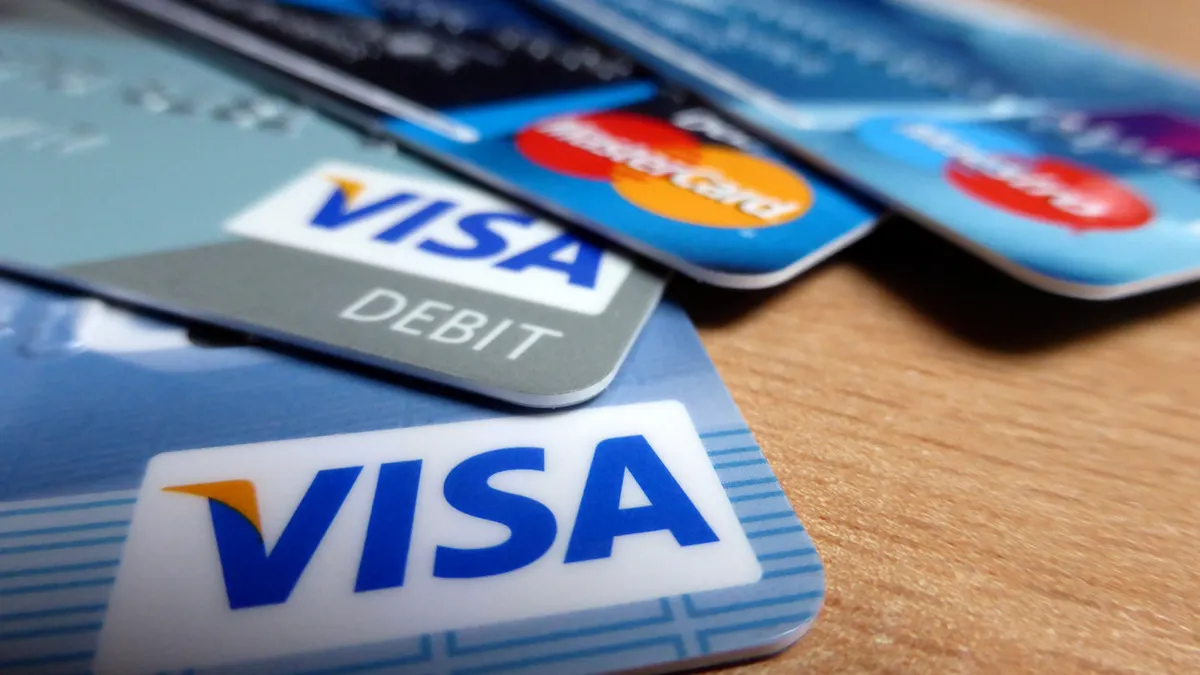
The debit card has become the latest battleground between banks and fintechs over installment lending.
As buy now, pay later players like Klarna Group and Affirm Holdings encroach further into banks’ traditional purviews – introducing new loan offerings and high-yield savings accounts – banks are responding to the competitive pressure with their own pay-later products.
Four of the five largest U.S. banks now offer installment lending plans on their credit card accounts. Last week, Bank of America introduced a new flexible-payment option for its credit accounts, letting cardholders replace interest payments on particular purchases for a fixed monthly fee for terms of three to 18 months.
Meanwhile, JPMorgan Chase, the largest U.S. bank, also has a “Pay in 4” plan for debit card purchases of $50 to $400, allowing card users to split a purchase amount into four payments. The bank introduced the debit option three years ago, and assesses a $5 fee for missed or late payments.
These bank installment plans have emerged as buy now, pay later lending has grown in the U.S. – especially among younger consumers – fueled by marketing efforts from the larger players including Affirm Holdings, Klarna Group and PayPal Holdings.
“The very largest banks … to the extent that they have built BNPL so far, it has been a feature of their credit card offering,” Wayne Pommen, Affirm’s chief revenue officer, said in an interview last week. “This debit card-based offering is sort of new and unique, and we haven't really seen that much anywhere. So, we'll see how it plays out.”
About 54 million Americans used a BNPL product in 2023, with an average loan of $135, the Consumer Financial Protection Bureau said in a December 2025 report, based on data from a half dozen large BNPL providers.
Such BNPL loan originations surged from about 20 million in 2019 to 336 million in 2023, according to the CFPB survey. The agency queried Affirm, Block-owned Afterpay, Klarna, PayPal, Sezzle and Zip.
Since then, there’s no sign that consumer interest has dropped off, especially given recent U.S. inflation and affordability pressures.
Bank of America, the second-largest U.S. bank by consolidated assets, devised its flexible-payment option because customers were “looking for more structure on knowing what their monthly payment and terms would be,” Lora Monfared, BofA’s head of consumer credit card products, said Friday in an interview. BofA doesn’t have a similar pay-later plan for debit cards.
Citi introduced a flexible payment option for its credit cards in 2019; the bank doesn’t have a similar product for debit cards, a spokesperson said Tuesday.
Last year, U.S. Bank, debuted a credit card that lets holders split purchases into three equal payments over three months. The card allows holders to extend the repayment for a fee of 1.5% of the original purchase amount.
More than one third (37%) of U.S. adults – and half of those under 40 – used a BNPL product for a purchase within the past 90 days, market data and analytics firm JD Power reported in March from a survey of about 3,900 consumers.
For banks, that survey came with another finding: BNPL users expressed higher satisfaction with the products from banks than those from traditional BNPL providers, JD Power said.
That presents traditional financial institutions “an enormous opportunity” in the pay-later market, Sean Gelles, JD Power’s senior director of banking and payments, said in a press release. “Customers are looking for BNPL solutions from the brands they already know and trust,” he said.
Still, as banks beyond the behemoths explore pay-later financing, Affirm is reaching out to the industry with a new product aimed at helping smaller banks and credit unions add BNPL-style lending to debit cards using Affirm’s underlying technology.
Affirm’s new service, introduced last month at the company’s investor event, aims to drive new revenue for the company by merging Affirm’s pay-later solution into banks’ debit accounts, an area of consumer finance that has traditionally resisted lending.
Affirm estimates that there are 130 million “debit first” consumers who eschew credit cards, with the potential for $2,000 more in annual spending among this group. Overall, Affirm estimates $140 billion in annual spending among U.S. debit card users.
“There’s an enormous opportunity to partner with those banks and bring them that functionality and allow them to capture BNPL spending in their own ecosystem,” Pommen said June 11.
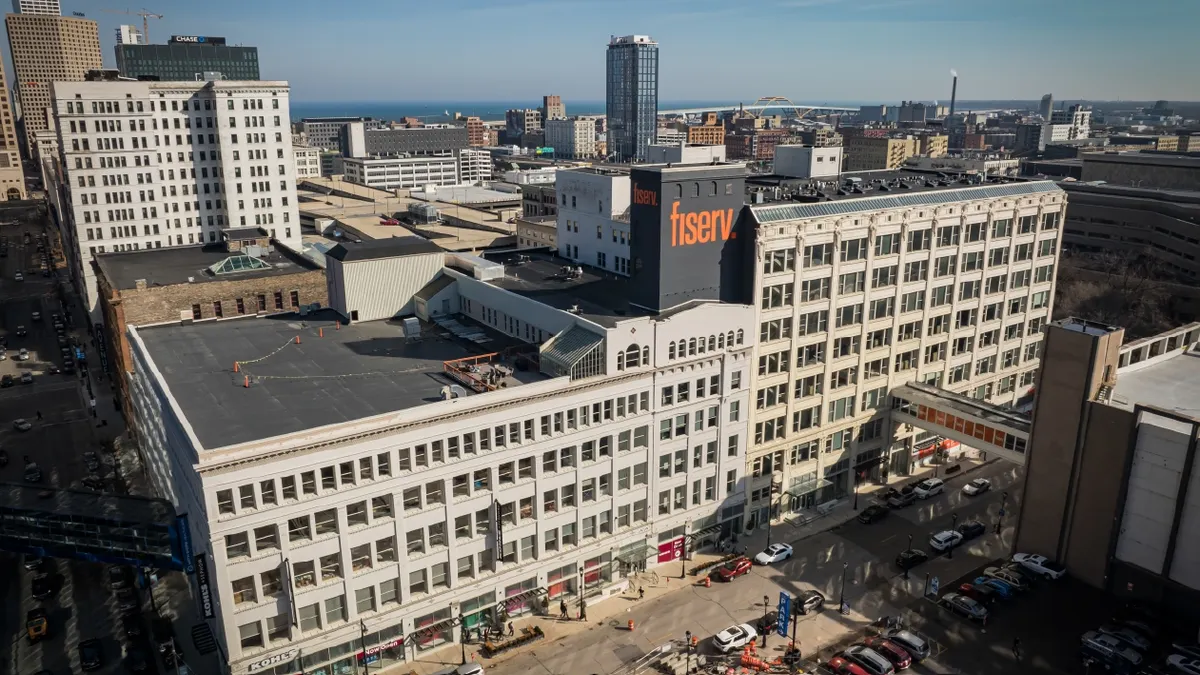
Most of Affirm’s discussions to date have been with mid-sized and smaller banks, Pommen said. The new tech offering arose as part of flexible-financing partnerships Affirm inked with Fiserv and separately with Fidelity National Information Services over the past 16 months to integrate BNPL offerings into banks’ debit accounts.
Affirm declined to provide details about the timing of the launch of the new service for banks or how many banks have signed on to integrate the debit product. The only bank Affirm has thus far disclosed as a customer – Old National, an Evansville, Indiana-based regional bank – declined to discuss pay-later debit card plans.
As part of its pitch to potential financial institution customers, Affirm says there’s no credit risk with the new service and “minimal” integration work required.
“We can give them an offering that allows them to get the capability to serve the customer’s need, to participate in the economics, without having to do really barely any technical lift,” Pommen said. “That is music to their ears, and that general value proposition has been resonating.”
Other banks are certainly watching pay-later growth among consumers, said Josh Miller, who oversees product development and consumer acquisition for KeyBank, a large regional bank based in Cleveland.
A BNPL product isn’t an immediate priority for KeyBank but “we’re constantly scanning the market landscape and prioritizing accordingly,” Miller said in an April interview. “If we saw all of the herd all of a sudden launch a BNPL product that would certainly influence a potential change in our prioritization.”