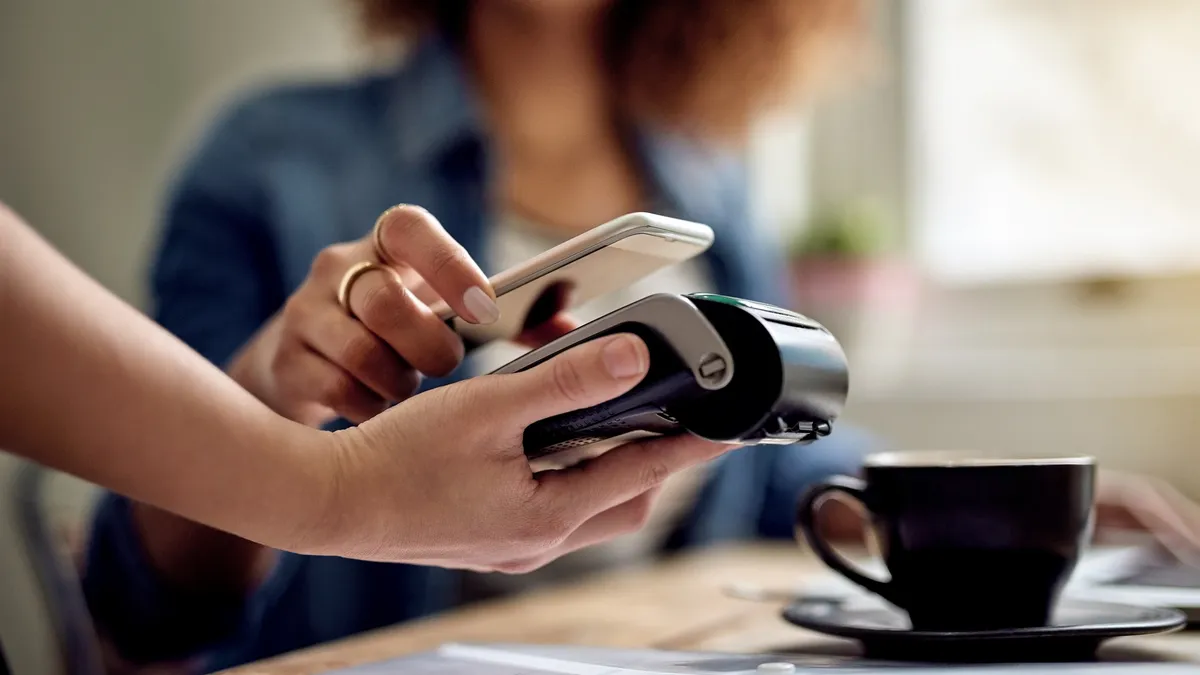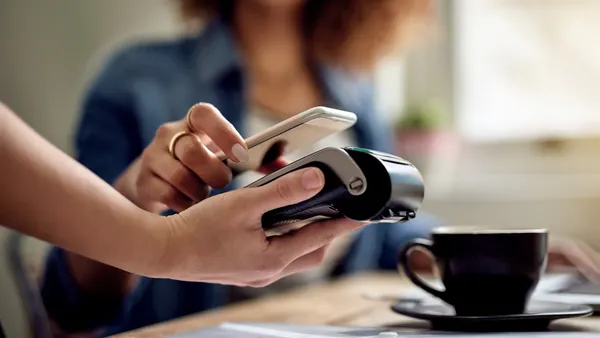
Beyond payments, digital wallets from Apple and Google traditionally haven’t done much.
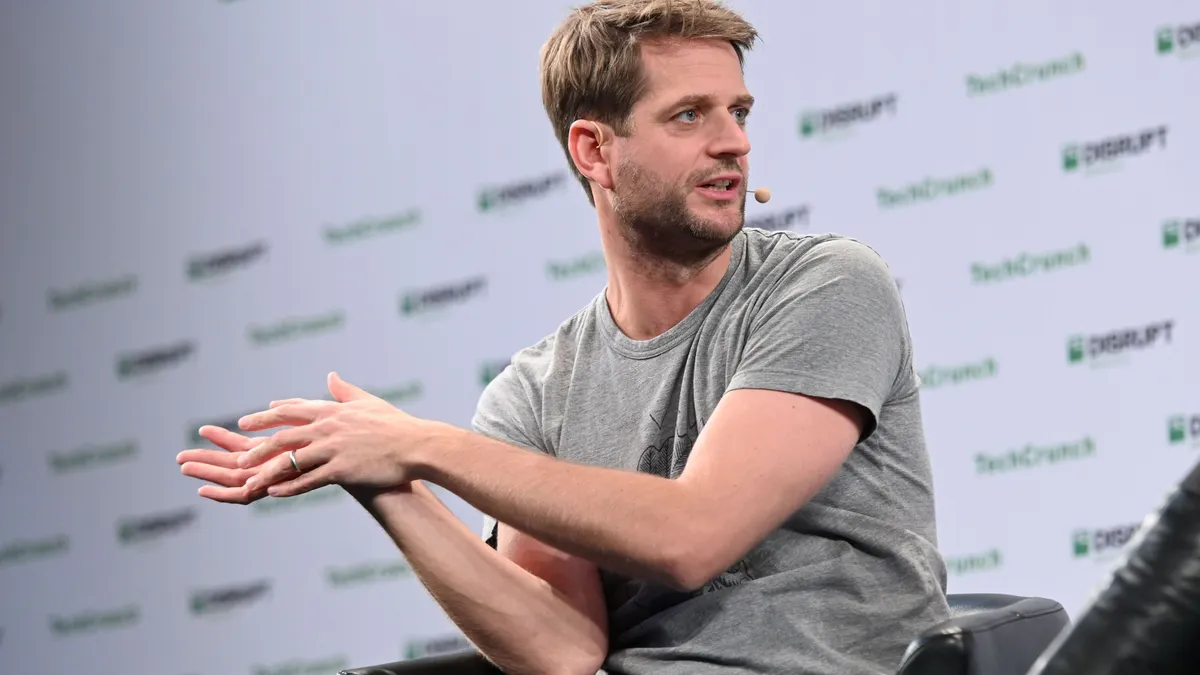
In the future, however, wallets are likely to become commerce platforms where consumer brands extend their loyalty and marketing pitches far more than they do today, said Eric Senn, the co-founder and CEO of Badge, a software startup that offers infrastructure for companies to interface with wallets.
Wallets will “become more and more dynamic,” Senn said Monday in an interview. “We’re still kind of in that phase where you’re taking physical loyalty cards and gift cards and we’re digitizing them. But within that digitization, there’s this huge opportunity for things to become alive and more dynamic, truly interactive for the customer.”
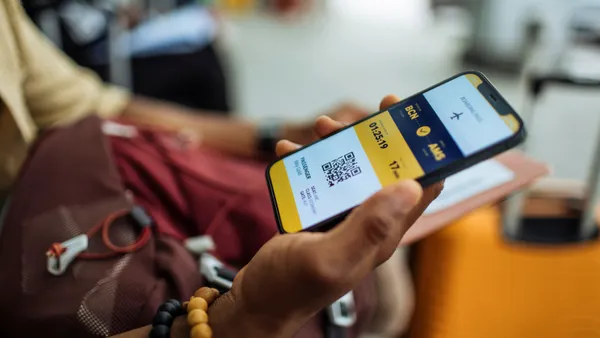
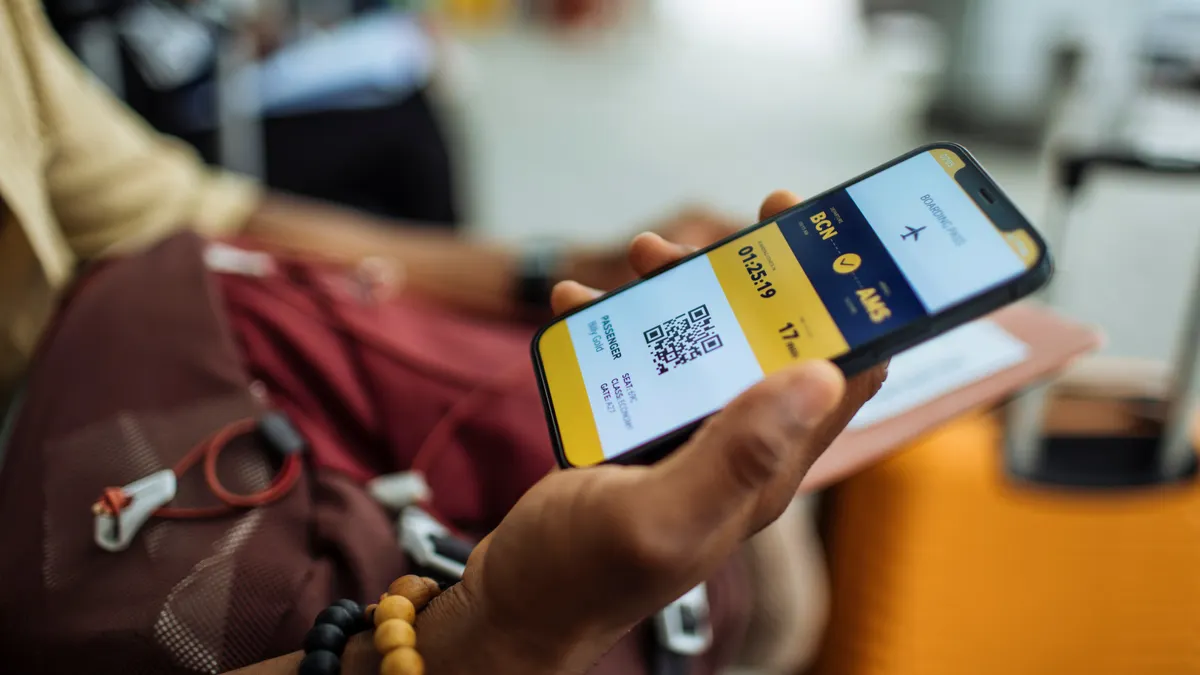
Atop increasing wallet use for payments, Americans are also diversifying their wallets to house an array of identification and other digital needs: Drivers licenses, concert and sports tickets, passports loyalty cards and airline boarding passes.
Badge, based in San Francisco, was founded in 2023 and calls itself “the operating platform for mobile wallets.”
Badge customers use its technology to enable wallet push notifications, real-time updates and geofencing, so the phone wallet knows where you are and merchants can automatically drop pitches to the wallet. “If you have a loyalty card, you pull into a parking lot, you get an offer that pops up in the wallet,” Senn said.
Last month, Badge announced that it had raised $13.8 million from a series of investors led by Atlanta-based venture capital firm TTV Capital, with others including payment processor Stripe, Synchrony Ventures and Infinity Ventures. The capital raise brought Badge’s total funding to date to $17.1 million.
Lynne Laube, the co-founder and former CEO of Cardlytics, an advertising platform, and a partner at TTV Capital, will join Badge’s board of directors as part of the firm's investment.
Badge maintains “a very close relationship” with Apple and Google and formal contractual partnerships with both companies through which it offers customer feedback, Senn said.
Both tech giants offer guidelines on what functions can and can’t be done within their wallets and listen to feedback and suggestions from merchants about changes they’d like to see, Senn said.
“And then we go to Apple and Google and we’re like, ‘hey, just so you know, this is the feedback we're getting,’” he said. “And sometimes they implement it, sometimes they don't. It’s a little bit of a push and pull.”
Badge’s customers include Carrefour Group, the European grocery and retail giant; HOKA, a footwear brand owned by Deckers Outdoor; and Shift4 Payments, the large point-of-sale merchant services provider with a major sports venue business. Badge declined to disclose how many customers it has.
Instead of sending customers email, Carrefour can now put offers into customers’ wallets as they drive into a store parking lot, Senn said. “It’s just kind of using the existing programs and extending them into a much more preferable channel.”
Badge focuses on three of the most popular U.S. wallets — Apple, Google and Samsung — although the latter accounts for less than 1% in Badge’s business, Senn said. For businesses, this trio presents a challenge because each wallet is technically unique “and the wallets are constantly changing and evolving,” he said.
“That's why we built this infrastructure layer that gives companies a single entry point into the wallets and allows them to build a lot faster, and it also allows them to do more.”
Badge earns money through a software access fee for its platform and a fee for each push notification a customer wants to send to the wallet, similar to the charges retailers pay for sending their customers SMS text notifications, Senn said.
Wallet innovations from Badge and others are likely to come as virtual cards also delve more deeply into personalization, with new technical capabilities from fintech card issuers.
Mike Milotich, the chief executive of Marqeta, a digital card issuer and embedded finance company, predicted Monday that consumer loyalty programs will become a natural fit for personalized offers via cards.
“If you and I have the same credit card today we get the exact same reward,” he said at the Morgan Stanley Technology, Media and Telecom Conference in San Francisco. “We don’t think that’ll be the case in the future. Everything else is personalized and customized in technology and we think that’s going to come to card.”
Artificial intelligence “will take it to the next level” to adjust in real-time and to craft unique consumer offers via cards, Milotich said.