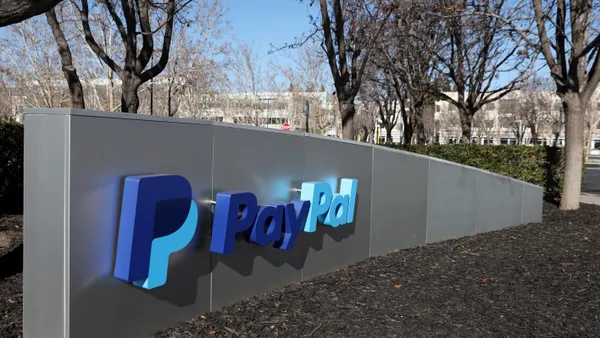
As companies like Google, PayPal Holdings and Stripe race to establish agentic AI commerce in the consumer realm, another large opportunity for the technology lies in business operations.
The technology carries enormous potential in the world of commercial finance and business-to-business functions, Deloitte Consulting noted in its 2026 trends and insights report.
“We’re going to see a little bit more of the middle and back office type of things, where agents are doing things like reconciliation, invoice matching, handling exceptions,” Zachary Aron, Deloitte’s global and U.S. banking and capital markets payments leader, said Wednesday in an interview about the November report.
Companies are likely to deploy artificial intelligence agents, initially, in areas with “definable ecosystems of buyers and suppliers,” with less variability, said Aron, a 31-year veteran of the payments industry.
He cited corporate travel, with its flow of “repeatable” transactions and defined parameters as a likely area for agentic AI efficiencies, along with commercial real estate contracts, leases and payments that occur in “a regular, synchronized type of fashion.”
Agentic AI is also likely to have “significant impact in domains like e-commerce and procurement, where agents can assist both customers and businesses in optimizing financing options, payment timing and methods, and logistics management,” according to the Deloitte report.
By 2030, about 40% of “enterprise software will include custom applications built using AI-native platforms,” up from 2% last year, according to another global research firm, Gartner, which issued its Strategic Technology Trends for 2026 report last month.
Many companies with AI pilot efforts will see 2026 as the time when they need to capitalize on their AI investments, Aron said.
“Organizations that don’t just sort of have four or five [AI] initiatives, but understand how these things are working together to change payments, are going to experience a lot more success,” he said.
For many companies, these B2B agents will spur changes to existing operations because of the chance for managers to take a more comprehensive view of their business functions, according to the Deloitte report.
“How do you make these things work in concert?” Aron said, suggesting several questions agents will likely cause many executives to ponder:
“How could I have an agent actually start to think about my cash management? When do my suppliers need to get paid? What’s the optimal way around the cash flow? How do I construct an ISO 20022 message to be able to use a real-time payment rail or go crossborder?”
As companies adopt new technologies such as real-time payments and stablecoins, AI will increasingly assume some tasks businesses formerly gave humans, the report noted.
“Payments are becoming deeply embedded within business processes, driving greater efficiency and seamless integration across platforms,” the Deloitte authors wrote.