In recent months, the buy now, pay later company Affirm Holdings has been announcing partnerships at a dizzying pace.
Each one has a similar goal: Extend Affirm’s lending into new sectors of the economy to place the company's payment options before as many consumers as possible, industry analysts and consultants said.
The top buy now, pay later companies include PayPal Holdings, Affirm, Klarna Group and Block-owned Afterpay.
For BNPL companies, growth means branching out beyond the online purchases of expensive items the industry was once known for, they said.
“Scale is always a key to success,” said Tony DeSanctis, a senior director at the consulting firm Cornerstone Advisors.
In an emailed response to questions about its business strategy, a company spokesperson said the BNPL player is working on “expanding our reach to build the most valuable payments network in the world.”
The statement also took a swipe at credit card companies, calling the model of revolving credit “worn out.” BNPL players have long touted their product as a safer alternative to plastic.
Travel and tax preparation are just two of the sectors Affirm is targeting.
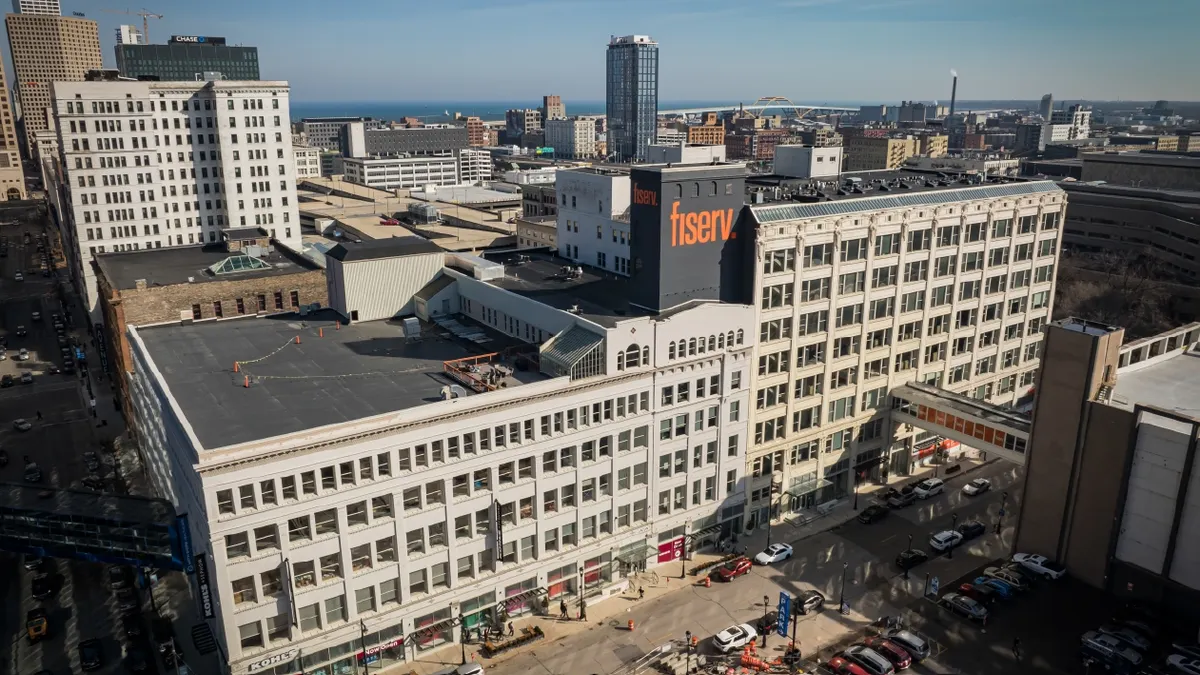
Tax prep software company Intuit and online travel agency Expedia are among the companies with whom Affirm has announced new or expanded partnerships in the past two months. San Francisco-based Affirm is also partnering with a tenant services company to offer split payments for monthly rent. The BNPL player is also partnering with payment processing behemoth Fiserv to bring a BNPL option to debit cards issued by credit unions.
While buy now, pay later options have grown precipitously over the past several years, the industry still makes up a comparatively small percentage of overall U.S. payment volume.
Market research firm eMarketer projected in March that buy now, pay later would make up roughly 1.5% of the total retail sales volume in the United States in 2025. The firm has not yet issued projections for 2026. And in a survey released last month, bank and credit card issuer Capital One found that only 15% of U.S. consumers used BNPL in 2024.
Affirm wants to grow, and “they can do that by having more consumers who want to use your product and by having more merchants that have Affirm as a checkout option,” said Matthew Coad, an analyst with Truist Securities, in an interview.
He cited a partnership with Milwaukee-based Fiserv that makes Affirm’s buy now, pay later services an option for users of debit cards issued by small credit unions.
The buy now, pay later firm has reported growing profits and revenue in recent months.
Earlier this month, Affirm reported $130 million in net income for the quarter that ended on Dec. 31, a 62.5% increase from the $80 million the company reported in the same time period in 2024. Quarterly revenue was $1.1 billion, a 30% increase over $866 million in the year ago quarter.
Affirm is hardly the only BNPL player to seek growth as the industry matures.
The pay later industry was initially known for big ticket online purchases when it first came to the U.S. around 10 years ago. Today, however, consumers can split purchases of everyday items like groceries, food delivery and concert tickets into installments. BNPL companies are also embracing longer-term loans that accrue interest, moving past pay-in-four, interest-free installment loans repaid over a few weeks that were once the industry's staple product.
Affirm seems to have acknowledged that it must expand beyond larger online purchases if it wants to gain a larger share of payment volume, DeSanctis said.
He noted that Affirm is trying to convince more people to use its debit card. Putting more payment volume on the card would make merchant partnership less important, he said.
"It's a lot easier to give one person a card they can use at every merchant than trying to get every merchant on board," DeSanctis said.